
Water management is one of the most critical aspects of maintaining a healthy, beautiful lawn in the Dallas-Fort Worth area. Whether you're dealing with standing water after heavy spring rains or chronic drainage problems in your yard, understanding your drainage options can save you thousands in potential property damage and landscaping repairs.
Two of the most popular drainage solutions—channel drains and French drains—offer different approaches to water management, each with distinct advantages depending on your specific DFW property needs. This comprehensive guide will help you understand how each system works, their key differences, and which option is best for your situation.
Quick Answer
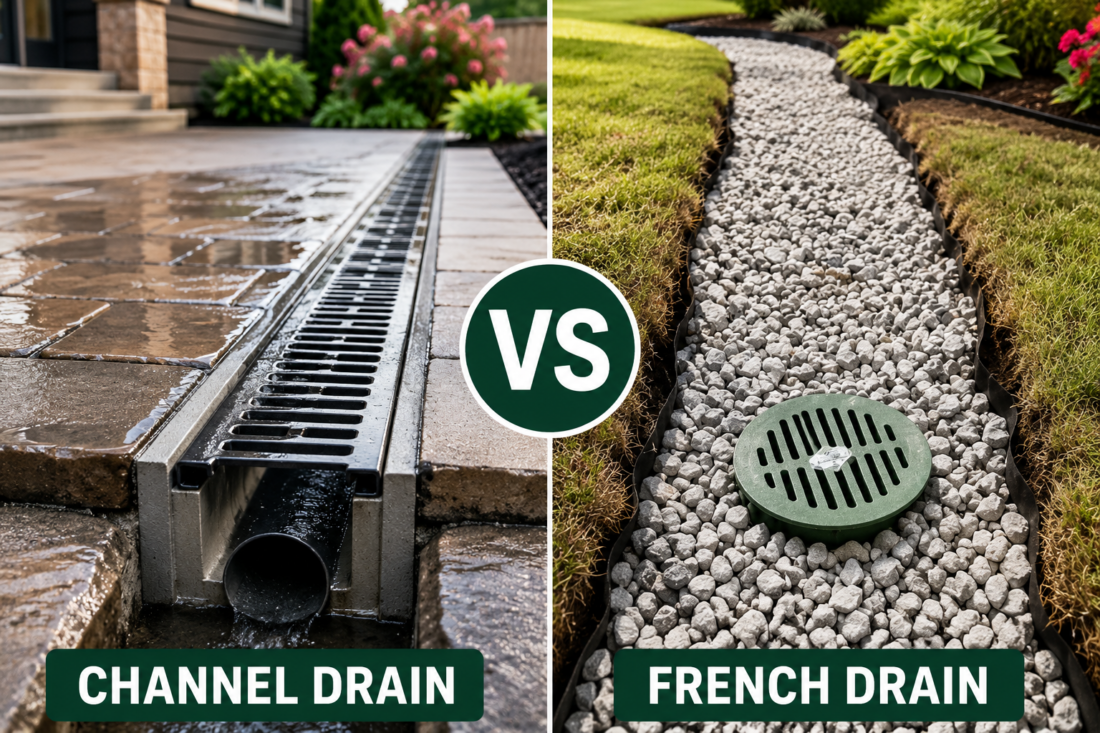
A French drain is designed to collect underground water and redirect it away from your property through a perforated pipe surrounded by gravel. A channel drain (also called a trench drain) collects water flowing across the surface using a long grated drain installed in concrete, driveways, patios, or walkways. French drains are best for saturated soil and soggy lawns, while channel drains are ideal for hard surfaces where water pools after rain.
What Are Channel Drains and How Do They Work?
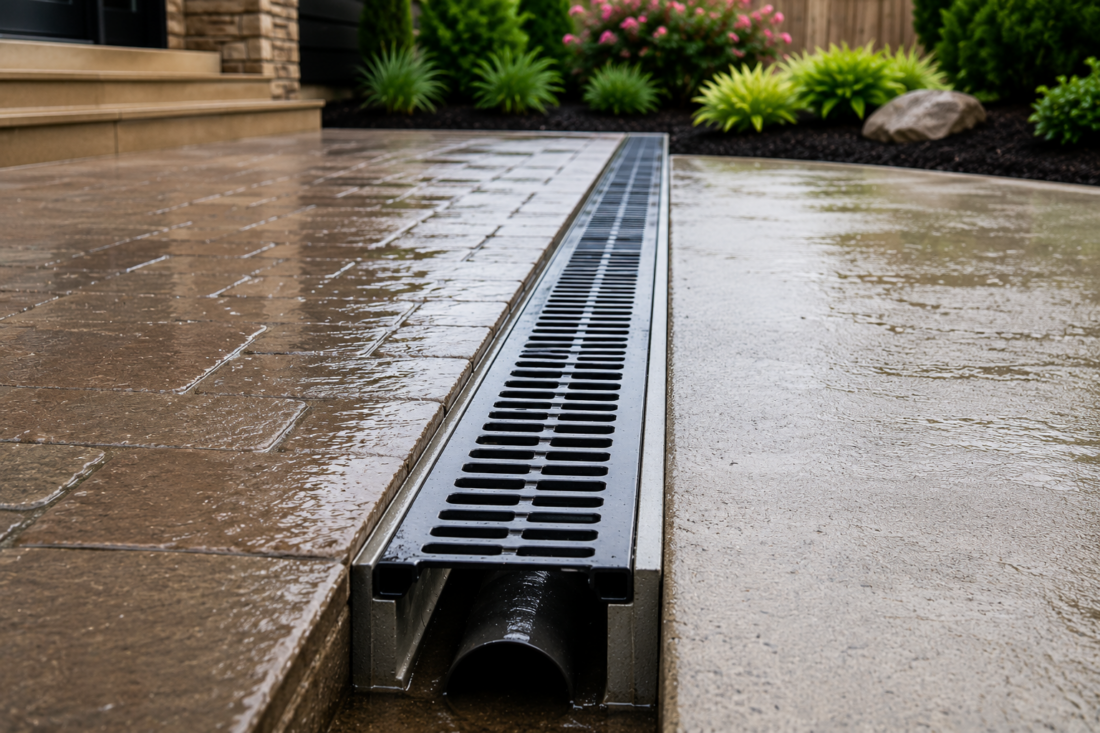
Channel drains, also known as surface drains or trench drains, are shallow drainage systems installed at ground level to capture and redirect surface water. These systems consist of a linear, open or grated channel that collects water flowing across your lawn and directs it away from problem areas.
How Channel Drains Function
When it rains, and we know North Texas gets plenty of moisture, especially during spring and fall, water flows naturally downhill. A channel drain is strategically positioned to intercept this water flow before it pools in low-lying areas of your yard. The water enters through a grate or open top, travels through the channel itself, and exits into a catch basin or drainage system that directs it away from your home's foundation, patio, or landscaping.
The beauty of channel drains is their visibility and accessibility. You can easily see where water is being collected and can clean out debris quickly when needed. In the DFW area, this is particularly important during pollen season or after heavy storms when leaves and debris accumulate.
Best Scenarios for Channel Drains in DFW
Channel drains work exceptionally well for:
- Driveways and patios: Preventing water from pooling on hardscapes
- Low-lying areas: Areas where water naturally pools during rain
- Around deck footings: Protecting structural elements from water damage
- Sloped properties: Capturing water as it runs downhill
- Areas with poor soil drainage: Providing immediate surface water relief
What Are French Drains and How Do They Work?
French drains take a different approach entirely. Rather than addressing surface water, French drains are subsurface systems designed to manage groundwater and water that infiltrates below your lawn's surface. These have been trusted drainage solutions for over 150 years and remain highly effective in modern landscaping.
The French Drain System Explained
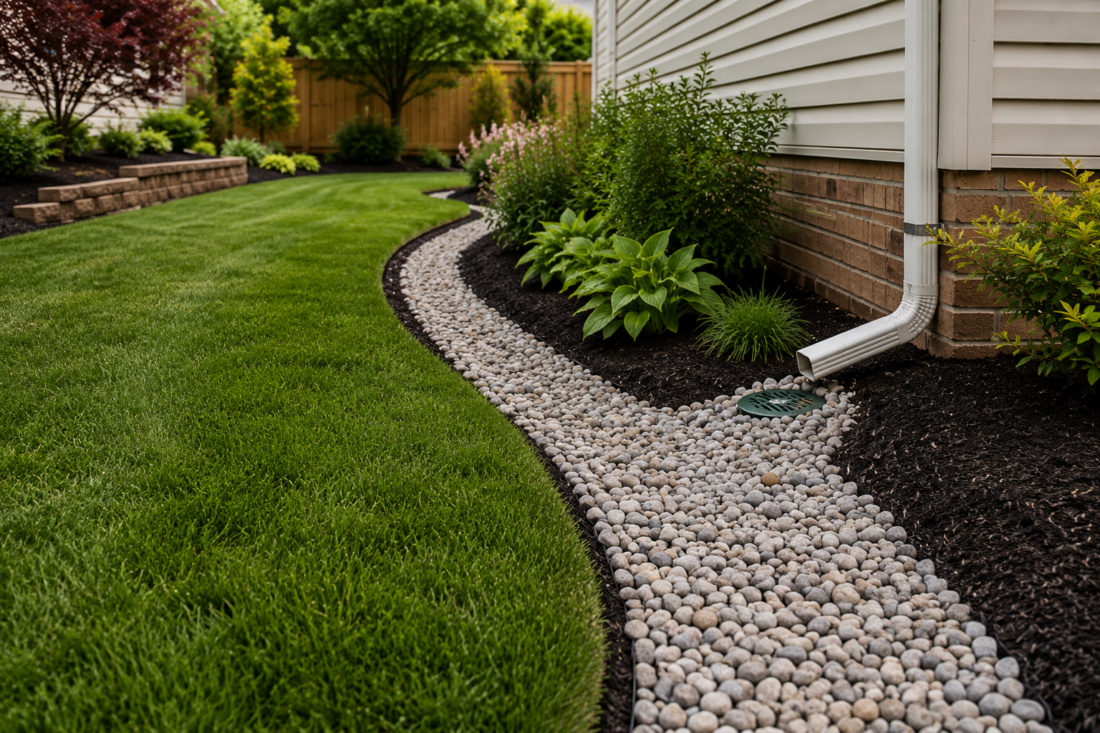
A French drain system typically consists of a perforated pipe buried in a trench, surrounded by gravel and filter fabric. Water from saturated soil seeps into the perforated pipe, which then carries it away to a designated drainage area or catch basin. The gravel layer acts as a filter, allowing water to pass through while blocking soil particles, preventing clogs.
The system works by gravity; water naturally seeks lower ground and moves through the gravel-filled trench toward the perforated pipe and away from problem areas. This makes French drains particularly effective for managing persistent moisture issues without requiring pumps or electrical systems.
Why French Drains Excel in DFW Conditions
North Texas presents unique drainage challenges due to its heavy clay soil composition. Clay doesn't absorb water quickly, causing drainage problems that persist long after rainfall. French drains are ideal for these conditions because they:
- Work beneath the soil surface where clay accumulation occurs
- Manage subsurface water movement effectively
- Prevent basement and foundation seepage
- Address wet basement issues common in the region
- Require minimal yard disruption once installation is complete
Find out how to improve clay soil for lawns.
Key Differences Between Channel Drains and French Drains
Understanding the distinctions between these two systems is crucial for making the right choice for your property. Let's break down the main differences:
Installation Depth and Visibility
Channel Drains: Installed at or near surface level, channel drains are visible landscape features. They can be integrated into patio designs or positioned along driveways.
French Drains: Buried 18-36 inches below ground, French drains are hidden from view. Once installed, they don't affect your yard's appearance or landscaping aesthetics.
Water Collection Method
Channel Drains: Capture water that's already flowing on the surface, making them excellent for addressing immediate, visible water problems.
French Drains: Handle water that's already infiltrated the soil, managing subsurface moisture and groundwater issues.
Maintenance Requirements
Channel Drains: Require more frequent maintenance, including regular debris removal from grates and channel cleaning. In DFW, expect to clean channels 2-4 times yearly, especially during heavy pollen seasons.
French Drains: Require less frequent maintenance once properly installed. An annual inspection and cleaning every 3-5 years is typically sufficient in North Texas.
Cost Considerations
| Aspect | Channel Drain | French Drain |
|---|---|---|
| Initial Installation Cost | $15-$30 per linear foot | $25-$40 per linear foot |
| Maintenance Cost (Annual) | $200-$500 | $0-$100 (minimal) |
| Long-term Cost (10 years) | $4,000-$7,000 | $3,500-$5,000 |
| Repairs (Average) | $500-$2,000 | $1,000-$3,000 |
*Costs are estimates for DFW installations and may vary based on property size and complexity
Aesthetic Impact
Channel Drains: While functional, visible grates and channels can be eyesores. However, modern grate designs are increasingly attractive and can complement contemporary landscaping.
French Drains: Zero visual impact on your landscape once installed. Perfect for homeowners who prioritize aesthetics.
Which Drainage Solution Works Best in DFW?
The Dallas-Fort Worth region presents specific environmental challenges that influence drainage system selection. Understanding these factors is essential for choosing the right solution for your property.
DFW Climate and Soil Considerations
North Texas experiences significant rainfall, with an average of 34 inches annually. Much of it arrives during intense spring storms. Additionally, DFW is famous for its expansive clay soils, which present unique drainage challenges:
- Clay soil: Expands when wet, contracts when dry, reducing water penetration
- Hardpan layer: Dense clay layer beneath topsoil restricts drainage
- Spring rains: Heavy rainfall in March-May creates temporary drainage emergencies
- Alkali content: North Texas soil minerals can affect drainage system materials
When You Need Surface Drainage (Channel Drains)
Install channel drains if your DFW property experiences:
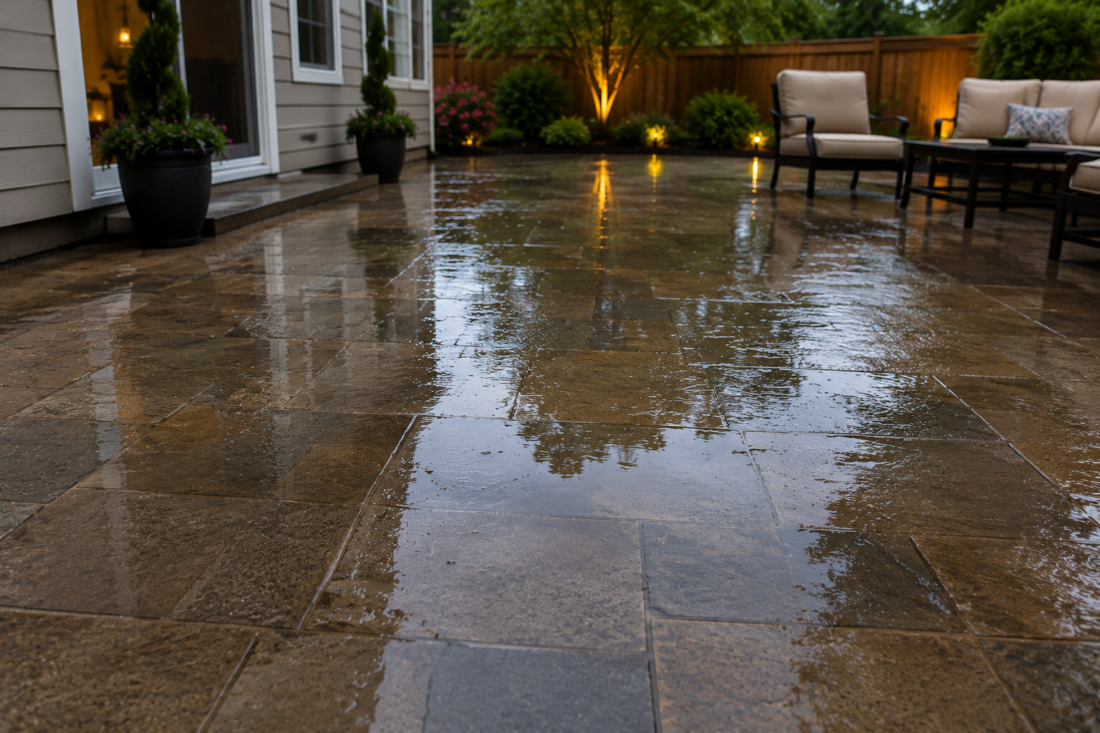
- Water pooling on patios or decks immediately after rain
- Driveway flooding in low spots
- Water running across surface toward your home
- Sloped landscape with obvious water flow patterns
- Need to protect concrete surfaces from water damage
When You Need Subsurface Drainage (French Drains)
Install French drains if your property experiences:
- Wet basements or foundation seepage
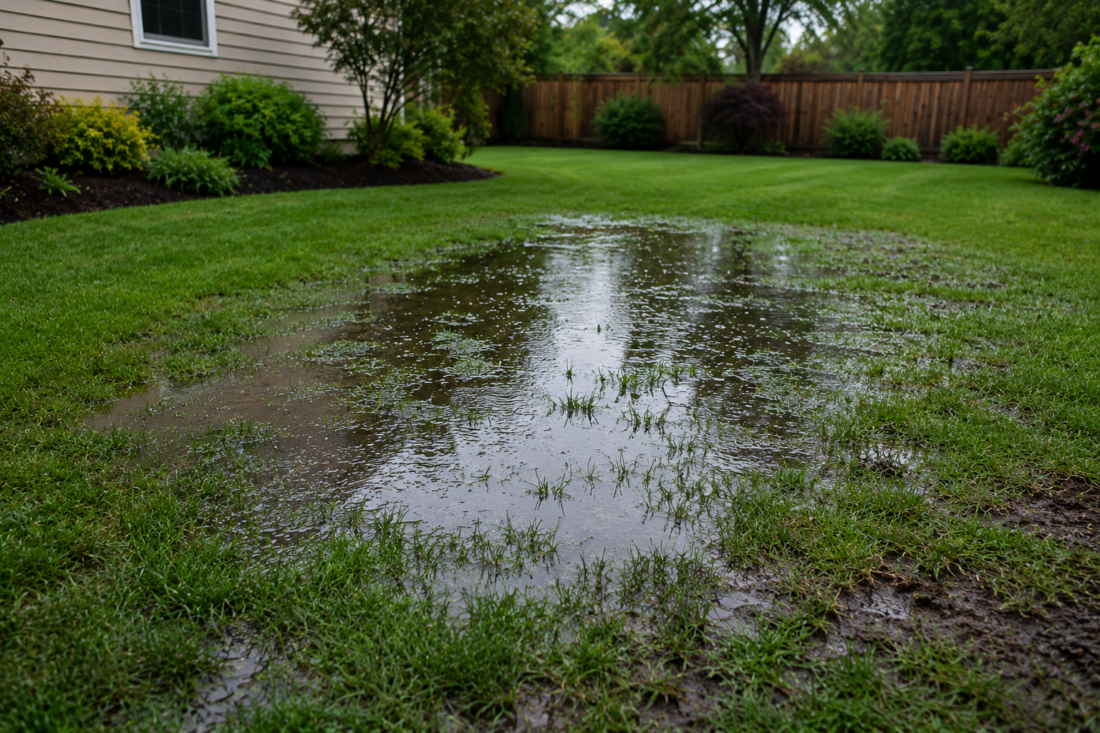
- Standing water in low areas that doesn't drain for days
- Soggy lawn areas that kill grass
- Water coming up from below the surface
- Saturated soil conditions even days after rain
Combination Approach: The Best of Both Worlds
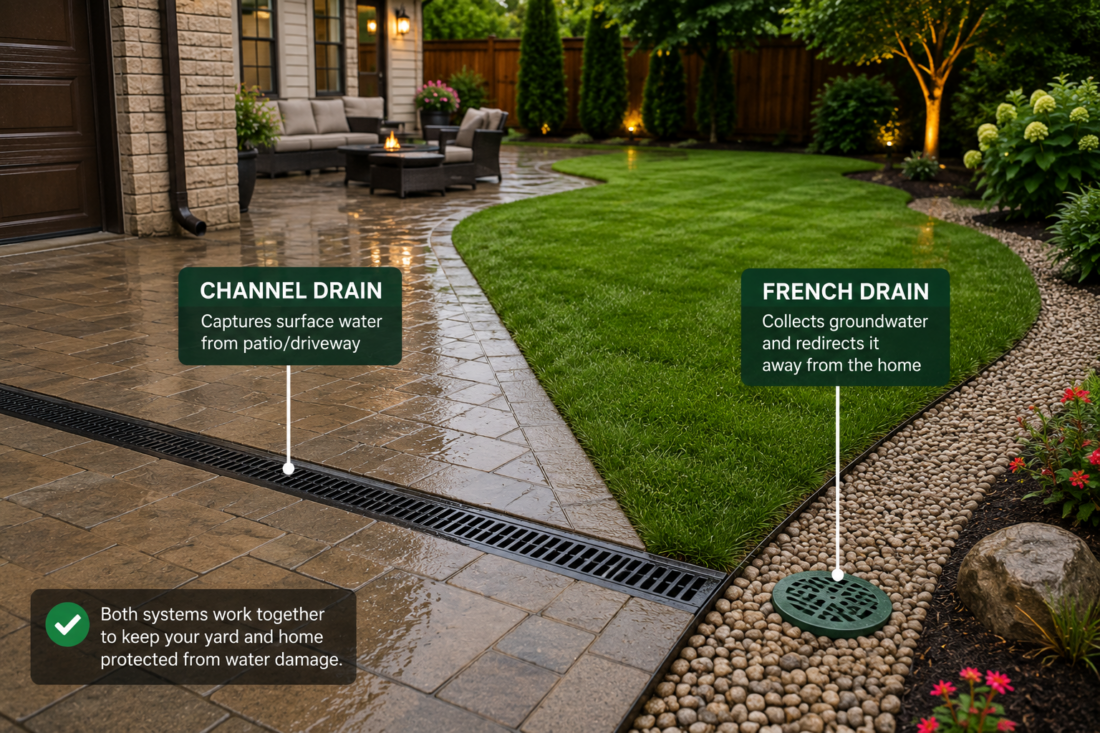
Many DFW homeowners achieve optimal drainage by installing both systems. For example, a channel drain around a patio intercepts surface water, while a French drain system manages groundwater and subsurface moisture. This combination approach is particularly effective on larger properties or those with complex drainage issues.
Installation and Maintenance Tips for DFW Homeowners
Proper installation and maintenance are critical to drainage system longevity in the North Texas climate.
Channel Drain Maintenance Schedule
For DFW homeowners, we recommend a seasonal maintenance approach:
- Spring (March-April): Clean after pollen season; inspect for debris
- Summer (June-August): Check monthly for algae growth (common in Texas heat)
- Fall (October): Clean before oak and pecan leaf drop
- Winter (January-February): Inspect for sediment accumulation
French Drain Care in North Texas
- Inspect the system annually for proper water flow
- Check catch basin/outlet area for blockages
- Have professionally cleaned every 3-5 years to manage clay accumulation
- Monitor landscape for signs of saturation despite the drain
- Ensure proper slope and grading around the system
DFW-Specific Issues
Clay Accumulation: The heavy clay soil in North Texas can gradually restrict drainage pipe capacity. Professional cleaning removes this buildup.
Algae Growth: Texas heat and moisture create ideal conditions for algae in channel drains. Regular cleaning prevents this organic growth from blocking water flow.
Soil Settlement: DFW's clay expansion and contraction can affect drainage slope over time. Professional assessment ensures proper grading is maintained.
DIY vs Professional Installation
While some homeowners install basic channel drains themselves, professional installation is strongly recommended for several reasons:
- Proper slope calculation (1/4 inch per 10 feet minimum for DFW clay soils)
- Correct depth and compaction to prevent settling
- Proper outlet connection to prevent damage to neighboring properties
- Compliance with DFW local drainage codes and HOA requirements
- Knowledge of subsurface conditions and utilities
How to Choose the Right Drainage System for Your Property
Making the right decision requires honest assessment of your property's unique conditions.
Assessment Questions for DFW Homeowners
Ask yourself these questions:
- Where exactly is water pooling on your property? (Surface or underground?)
- How long does water stand after rain? (Hours vs. days?)
- Have you had basement or foundation water issues?
- What's your budget for both installation and long-term maintenance?
- How important is landscape aesthetics to your property's curb appeal?
- Do you have HOA restrictions on visible drainage features?
Consulting with DFW Drainage Specialists
The best decisions come from professional assessment. A qualified drainage expert can:
- Evaluate your property's specific soil conditions
- Identify both surface and subsurface drainage problems
- Recommend the most cost-effective solution
- Provide multiple options with pros and cons explained
- Ensure proper installation that protects your entire property
At Ryno Lawn Care, we offer comprehensive property assessments to identify drainage issues and recommend tailored solutions for DFW homes. Our team understands North Texas soil conditions and can design systems that work with your landscape, not against it.
Improve Your Landscape with Ryno Lawn Care
Proper drainage is just one part of creating a beautiful, functional outdoor space. Ryno Lawn Care offers professional landscaping services designed to enhance your property's appearance while improving its long-term health and usability. Whether you're updating landscape beds, installing new sod, refreshing mulch, or planning a complete landscape makeover, our experienced team can help bring your vision to life. Contact Ryno Lawn Care today for a free quote and let us create an outdoor space you'll enjoy for years to come.
Frequently Asked Questions
Is a French drain better than a channel drain?
Neither is universally better. A French drain is designed for underground water, while a channel drain manages water flowing across hard surfaces. The best choice depends on the drainage problem you're trying to solve.
Can you install a French drain next to a foundation?
Yes. French drains are commonly installed near foundations to redirect excess groundwater away from the home and reduce moisture-related issues.
Where should a channel drain be installed?
Channel drains are ideal for locations where water collects on paved surfaces, including driveways, garage entrances, patios, walkways, and pool decks.
How long do French drains last?
A professionally installed French drain can last 20 years or more, depending on soil conditions, materials, and maintenance.
Do channel drains clog easily?
They can become clogged with leaves, mulch, or sediment if not cleaned periodically. Routine maintenance helps keep them functioning properly.
Can I install both a French drain and a channel drain?
Yes. Many drainage systems combine both to manage groundwater below the surface and runoff from paved areas.
Will a drainage system help protect my foundation?
Yes. Redirecting excess water away from your home's foundation may reduce the risk of moisture intrusion, soil movement, and foundation damage.
How do I know which drainage system I need?
A professional landscape drainage evaluation can identify the source of the problem and recommend the most effective solution for your property.

Michelle Valdivia
I am a content manager with several years of experience creating and managing website content across a variety of industries. Since 2021, I have specialized in developing clear, engaging, and informative content for service-based businesses. With a background in education, I bring a strong focus on clarity and communication to my work. I also enjoy learning about landscaping and lawn care and translating that knowledge into helpful resources for homeowners.