
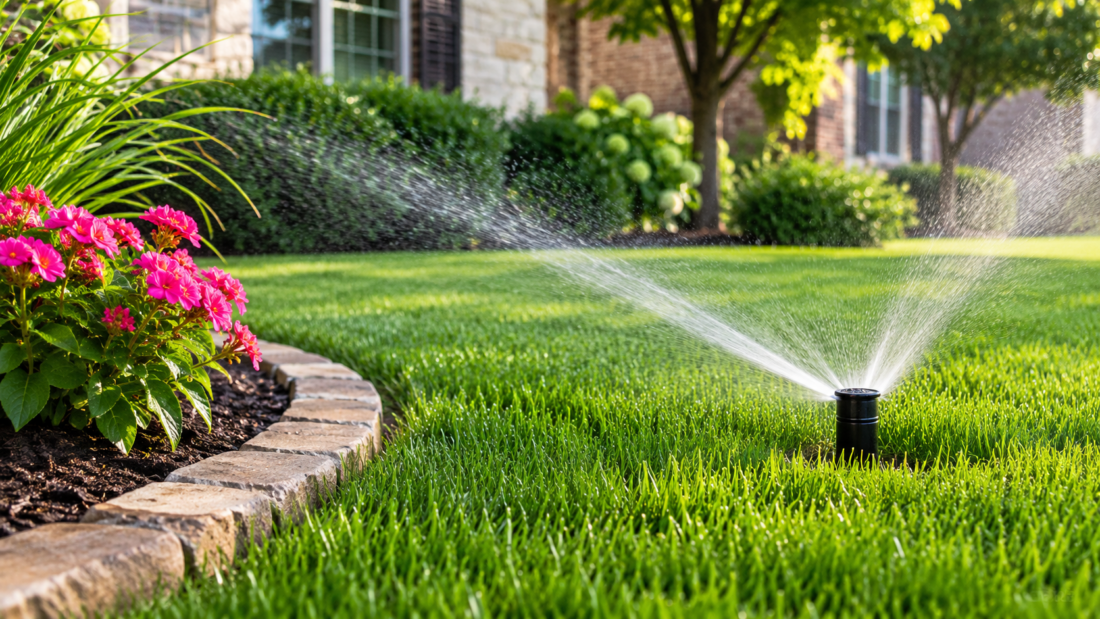
Keeping your lawn green and healthy during a hot North Texas summer can be challenging, especially when drought conditions and water restrictions become a concern. You might feel tempted to water your grass every day to keep it looking its best, but more water doesn't necessarily mean a healthier lawn.
Understanding how often to water your lawn can help you maintain healthy grass while conserving water. With the right watering schedule and a few simple adjustments, you can encourage deeper root growth, reduce water waste, and help your lawn withstand the Texas heat.
The lawn care experts at Ryno Lawn Care, LLC share these practical watering tips to help North Texas homeowners get the most out of every drop.
1. Don't Start Watering Too Early in the Spring
As temperatures begin to rise in spring, it can be tempting to turn on your sprinkler system before your lawn really needs it. However, watering too early or too frequently can encourage shallow root development.
Instead, pay attention to your grass and soil conditions. Established warm-season grasses commonly grown in North Texas, such as Bermuda and St. Augustine, can tolerate periods of reduced watering once established. Allowing the soil to dry slightly between watering sessions encourages roots to grow deeper in search of moisture.
Watch for signs that your lawn needs water, including:
-
Grass blades beginning to fold or curl.
-
A bluish-gray appearance instead of the usual green.
-
Footprints that remain visible after walking across the lawn.
-
Grass that does not spring back after being stepped on.
These signs can help you determine when your lawn needs additional moisture rather than relying on a fixed watering schedule.

2. Water Your Lawn at the Right Time of Day
Knowing when to water is just as important as knowing how often to water your lawn.
Early morning is generally the best time to water your lawn. Watering before the heat of the day allows moisture to soak into the soil before temperatures rise and evaporation increases.
Morning watering also gives grass blades time to dry during the day. Grass that remains wet for extended periods can be more susceptible to certain fungal diseases.
Avoid watering during the hottest part of the afternoon whenever possible. A significant amount of water may evaporate before it has a chance to reach the root zone.
Late-night watering is generally less desirable because grass can remain wet for several hours. If you must water in the evening because of scheduling or local watering restrictions, try to do so early enough that the grass has an opportunity to dry.
3. Water Deeply Instead of Watering Every Day
One of the most common lawn watering mistakes is running sprinklers for a few minutes every day. Frequent, shallow watering may encourage grass roots to remain close to the soil surface, making your lawn more vulnerable to heat and drought.
In many situations, deeper, less frequent watering is more beneficial. The goal is to provide enough moisture to reach the root zone rather than simply wetting the grass blades and upper layer of soil.
Established lawns generally need approximately 1 inch of water per week from rainfall and irrigation combined, although actual needs vary depending on grass type, soil, temperature, and weather conditions.
During particularly hot and dry periods, your lawn may need additional moisture. During cooler or rainy periods, you may need to reduce or skip irrigation.
You can use a rain gauge to monitor rainfall and adjust your sprinkler schedule accordingly.
Related Reading: Does Hydretain Work?
4. Make Sure Your Sprinkler System Covers Your Lawn Evenly
An automatic sprinkler system can make lawn watering more convenient, but it is important to make sure every section of your yard receives adequate coverage.
Poor sprinkler coverage can leave some areas too dry while others receive more water than necessary. This can contribute to brown patches, runoff, and wasted water.
Check your sprinkler system for:
-
Clogged or damaged sprinkler heads.
-
Heads that are pointed in the wrong direction.
-
Uneven spray patterns.
-
Areas receiving too much or too little water.
-
Water spraying onto sidewalks, driveways, and streets.
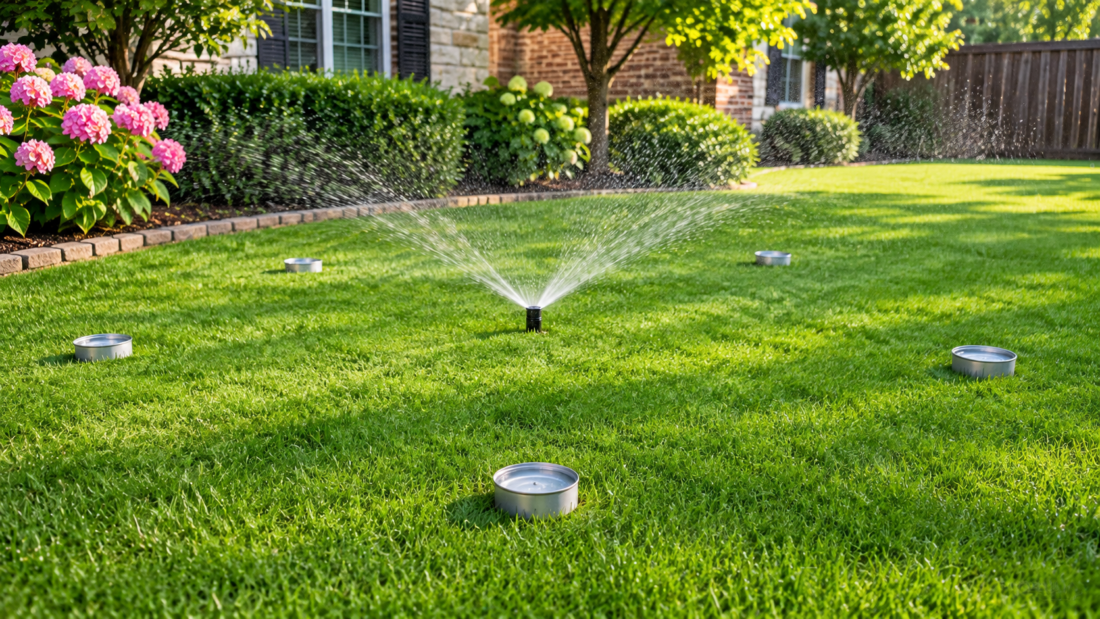
You can perform a simple sprinkler coverage test by placing several small, straight-sided containers throughout your yard. Run your sprinkler system for a set amount of time and compare how much water collects in each container.
This will help you identify uneven coverage and estimate how long your system needs to run to deliver the desired amount of water.
Our professional lawn irrigation services help North Texas homeowners maintain efficient watering and healthier lawns. Contact Ryno Lawn Care, LLC at 214-728-8894 or go to our irrigation service page to learn more.
5. Check How Deeply Water Is Penetrating the Soil
Just because your lawn looks wet on the surface doesn't mean the water is reaching the roots.
After watering, check the soil to see how deeply the moisture has penetrated. A long screwdriver or similar narrow tool can help you determine whether the soil is adequately moist.
Push it into the ground in several areas of your lawn. If it moves easily through the soil and becomes more difficult to push as you reach dry ground, you can get a general idea of how deeply the water has penetrated.
The goal is to provide moisture throughout the active root zone without creating saturated conditions.
If the soil is still dry a few inches below the surface, you may need to adjust your sprinkler run time. If water begins pooling or running off before it can soak in, consider shorter watering cycles with breaks in between. This approach, sometimes called cycle-and-soak watering, gives the soil more time to absorb moisture.
6. Adjust Your Watering Schedule During North Texas Droughts
North Texas homeowners are familiar with hot summers, unpredictable rainfall, and periodic drought conditions. Depending on where you live, your city or water provider may also implement seasonal watering schedules or drought-related restrictions.
Always check your local watering guidelines before adjusting your irrigation system. Restrictions may specify which days and times you can water your lawn.
You can also make your watering routine more efficient by:
-
Using a rain gauge to account for natural rainfall.
-
Checking your sprinkler system regularly for leaks.
-
Adjusting your irrigation controller as the weather changes.
-
Avoiding irrigation when rain is expected.
-
Using cycle-and-soak watering on compacted or sloped areas.
-
Watering only the areas that need additional moisture.
Remember that conserving water doesn't mean neglecting your lawn. It means making thoughtful decisions about when and how much to water.
7. Avoid Overwatering Your Lawn During Summer
Although North Texas summers can be extremely hot, watering more frequently than necessary can create problems of its own.
Overwatering can contribute to shallow root growth, nutrient leaching, runoff, and conditions that encourage certain lawn diseases. Excess moisture can also make it more difficult to identify whether your grass is struggling because of drought, poor drainage, or another underlying issue.
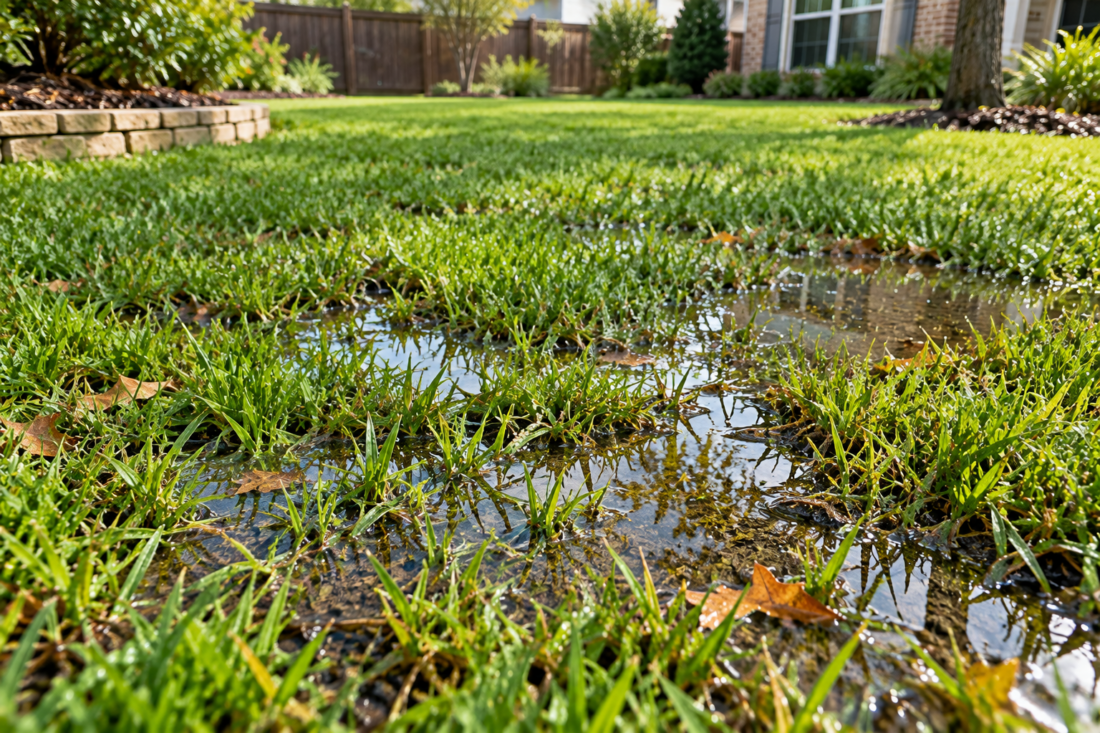
Pay attention to how your lawn responds to irrigation. If you notice standing water, persistently soggy soil, or areas of yellowing grass, investigate the cause before adding more water.
A healthy watering schedule should provide enough moisture to support grass growth without keeping the soil constantly saturated.
Related Reading: The Hazards of Overwatering Your Lawn in Excessive Summer Heat
Keep Your North Texas Lawn Healthy With Help From Ryno Lawn Care
Knowing how often to water your lawn is an important part of maintaining healthy grass, particularly during the hot and dry months in North Texas. Watering in the early morning, providing deeper irrigation, monitoring rainfall, and maintaining your sprinkler system can all help you conserve water while supporting stronger grass.
Of course, watering is only one part of maintaining a healthy lawn. Proper mowing, fertilization, weed control, and seasonal lawn maintenance also play important roles in keeping your grass looking its best.
At Ryno Lawn Care, LLC, we help homeowners throughout the Dallas-Fort Worth area maintain healthier, greener lawns with professional lawn care services. Whether your yard needs fertilization, weed control, or ongoing maintenance, our team can help you develop a lawn care plan that fits your property's needs.
Call 214-728-8894 or request a free consultation to learn more about our lawn care services.
Let Ryno Lawn Care help you get the most out of your lawn while making smart use of your water.

T. Stafford
Writing about gardening, lawn care, etc. to share what I've learned with others. I've lived in Texas my whole life, so I'm more familiar with this region's native plants.
Comments (1)
I like to water almost every day even if it is just for a short period. When is the best time of day to water? I have heard that full sun is bad and I have also heard otherwise, which is it? I water in the evening since the dew in the morning counts for something.