Fort Worth Weed Control and Lawn Fertilization
A healthy, weed-free lawn doesn't happen by accident. Whether it's crabgrass, clover, dallisgrass, or stubborn broadleaf weeds, our treatment programs are built for Fort Worth's heat, clay, and year-round weed pressure.
Licensed & insured · Now serving Fort Worth · Free quotes
Why Fort Worth homeowners choose Ryno Lawn Care
Local lawn care expertise
We know the area's climate, soil conditions, and common lawn problems, and build treatment around them.
Customized treatment plans
Every lawn is different, so the program follows your property's needs rather than a fixed template.
Professional-grade products
Selected to control the weeds you actually have without unnecessary stress on your grass.
Reliable schedules, honest advice
Treatments arrive on schedule, and we'll tell you plainly what your lawn needs.
Professional weed control for Fort Worth lawns
Weeds don't just make a lawn look bad — they compete with your grass for water, nutrients, and sunlight. Left untreated, they spread quickly and can weaken even healthy turf.
Our programs target common North Texas weeds while protecting the grass you want to keep. Many of these weeds start developing long before they're visible, which is why preventative treatment matters. Fort Worth homeowners most often run into:
- Crabgrass and dallisgrass
- Clover and dandelions
- Henbit and chickweed
- Nutsedge and spurge
- Rescuegrass
- Annual bluegrass (Poa annua)
Pre-emergent and post-emergent treatment
Pre-emergent applications stop weed seeds from germinating before they can get established. Timed properly, they cut down weed pressure for the rest of the growing season. Ours target crabgrass, grassburs, foxtail, annual bluegrass, and other seasonal grassy weeds.
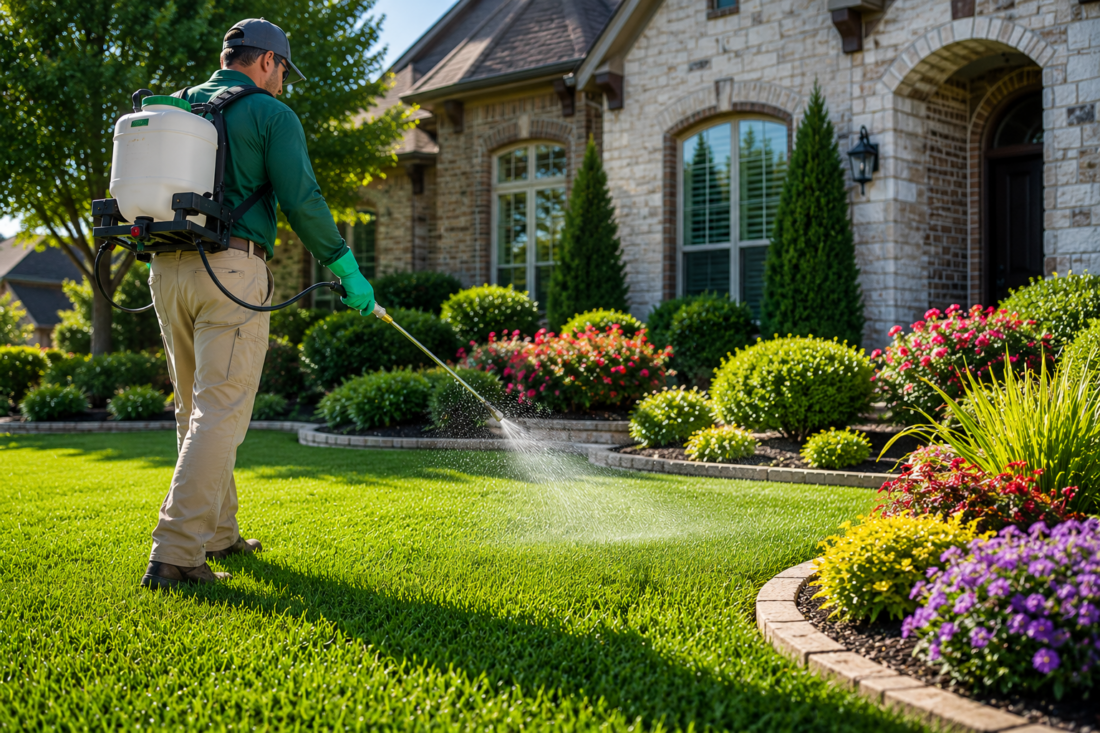
For weeds that are already up, post-emergent treatment removes the unwanted growth while preserving healthy turf. Our technicians identify the specific weeds in your lawn and choose a treatment that controls them without stressing the grass.
Lawn fertilization designed for North Texas conditions
Fertilizer supplies what grass needs to grow deeper roots, hold its color, recover from stress, and resist weeds on its own. Many Fort Worth lawns run short on nutrients because of clay soils, heavy rainfall events, and seasonal stress. A properly fed lawn may see:
- Thicker turf and richer green color
- Stronger roots and better drought tolerance
- Better weed resistance
- Faster recovery from stress
- More curb appeal
Why weeds keep returning
When weeds keep coming back despite repeated treatments, the product usually isn't the problem — the condition of the lawn is. Healthy grass crowds weeds out naturally, which means less herbicide over time. The usual underlying causes:
- Thin turf — sparse grass leaves open ground where weeds settle in.
- Compacted soil — heavy clay restricts root growth and nutrient uptake.
- Improper watering — both too much and too little weaken turf.
- Nutrient deficiencies — underfed grass can't compete with invasive weeds.
Fertilization through the Fort Worth year
North Texas lawns do best on a seasonal approach, with each part of the year aimed at something different. Our programs run six, eight, or ten treatments a year — the pricing page lists what each includes.
- Early spring — green-up and root development
- Late spring — growth and weed prevention
- Summer — stress tolerance and recovery
- Early fall — root strengthening
- Late fall — winter preparation
Proudly serving Fort Worth
Fort Worth keeps growing, from historic neighborhoods like Fairmount and Ryan Place and the streets near the Stockyards to master-planned communities in Walsh and Chisholm Trail Ranch, North Fort Worth, Benbrook, and Keller. It's a city known as much for the Kimbell Art Museum, the Modern, the Amon Carter, and the Fort Worth Zoo as for its neighborhoods — and its warm climate grows a great lawn with the right care, while giving weeds ideal conditions too.
Grass types we treat in Fort Worth
Bermuda
Popular throughout Fort Worth for its heat tolerance and durability.
Zoysia
Dense, attractive turf that responds to proper feeding and seasonal weed control.
St. Augustine
Suited to moderate shade, and needs its own treatment approach.
Our lawn treatment process
Lawn evaluation
We assess turf type, existing weed pressure, soil conditions, sun exposure, drainage, and overall lawn health.
Customized treatment plan
Pre-emergent and post-emergent weed control, seasonal fertilization, and soil recommendations, based on what we found.
Ongoing monitoring
Our technicians keep an eye on your lawn through the year and adjust as conditions change.
Up to 75% Off Your First Treatment
New weed control and fertilization clients get 75% off the first treatment on our 10 Treatment Program, or 50% off the first treatment on our 8 Treatment Program.
More for your Fort Worth yard
Fort Worth Lawn Treatment & Sod
The two services we run in Fort Worth, the soil and weather behind them, and how to get a quote.
Learn moreSod Installation
Bermuda, Zoysia, or St. Augustine laid on cleared, graded ground — for weed-choked, bare, drought-worn, or construction-damaged yards.
Learn moreWatering restrictions in Fort Worth
How you water decides whether a treatment program holds. Fort Worth Water moves between conservation stages through the year, so check the current stage and we'll build the plan around what's actually allowed.
Outdoor watering rules in Tarrant County change with the drought stage your supplier is in, so we don't republish the schedule here — it would go stale. Check the city for the rules in force right now, and we'll build your service around them.
Common questions
How often should my Fort Worth lawn be fertilized?
Several times through the year, to support growth and seasonal recovery. Our programs run six, eight, or ten treatments a year; the pricing page lists what each one includes.
When does pre-emergent go down?
Before seasonal weed seeds germinate — usually early spring and again in fall. Once a weed is up, a post-emergent treatment is needed instead.
Will weed control hurt my Bermuda or St. Augustine?
Applied properly by trained technicians, the treatment targets the weeds and protects healthy turf. We identify your grass type first, because St. Augustine needs a different approach than Bermuda or Zoysia.
How long before I see a difference?
Many lawns show improvement within several weeks, though full results depend on the lawn's condition, the weather, and treatment timing.
Can fertilizing actually cut down on weeds?
Yes. Dense, healthy grass competes with weeds and makes it much harder for them to establish.
Ready to get started in Fort Worth? Get your free quote today
No runaround — just a reliable local crew and results you can see.