
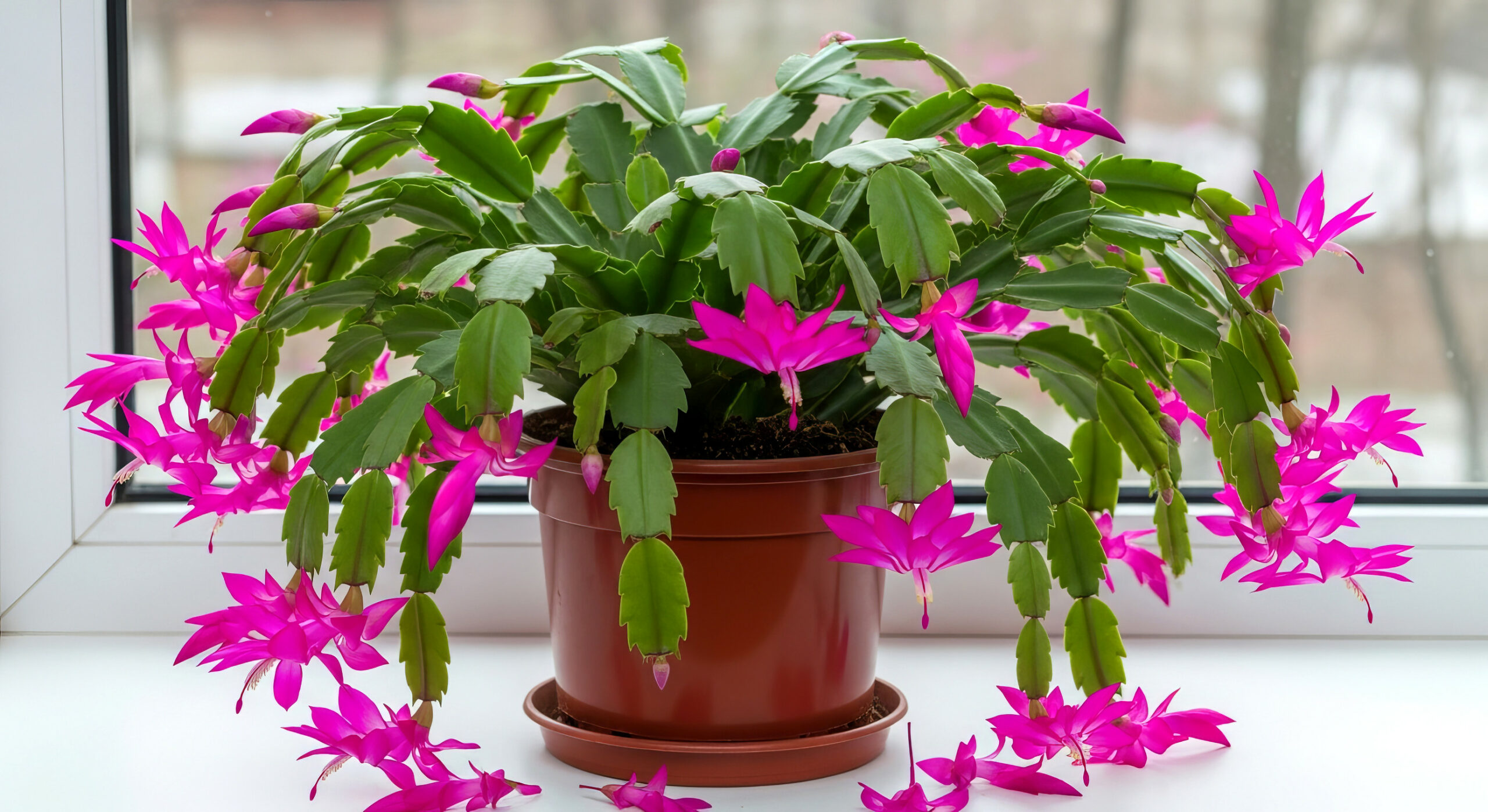
Short answer: a Christmas cactus can live 30–50 years—or even longer when cared for properly.
Long answer? I’ve personally seen Christmas cacti passed down through families, blooming faithfully every winter decades after they were first planted. In fact, one of the healthiest plants I ever cared for belonged to a neighbor who received it as a wedding gift in the early 1980s—and it’s still alive today.
That kind of longevity surprises people, especially those who assume houseplants are short-term commitments. But Christmas cacti are different.
Let’s break down how long they really live, why some thrive for generations, and what will shorten their lifespan.
The Average Lifespan of a Christmas Cactus
When grown indoors under normal conditions, most Christmas cacti live:
- 30–50 years with consistent care
- 60+ years in ideal conditions
- Decades longer when propagated and maintained correctly
Unlike many seasonal plants, Christmas cacti aren’t annuals or disposable holiday décor. They’re long-lived tropical succulents native to Brazilian rainforests—not deserts—so their care needs are often misunderstood.
Why Christmas Cacti Live So Long (Compared to Other Houseplants)
Here’s what I’ve learned after caring for multiple Christmas cacti over the years—some thriving, some not:
1. They Don’t Grow Fast (Which Is a Good Thing)
Fast-growing plants burn out faster. Christmas cacti grow slowly, conserving energy and focusing on root and segment health rather than constant expansion.
2. They Recover Well From Mistakes
I’ve accidentally underwatered one for weeks and overwatered another during a humid summer. Both bounced back. Their segmented stems store moisture, giving them resilience many houseplants lack.
3. They Respond to Seasonal Signals
Unlike finicky tropical plants, Christmas cacti want routine:
- Shorter daylight hours
- Cooler nighttime temperatures
- Predictable watering cycles
When they get those cues, they settle into a rhythm that supports long-term survival.
Real-World Mistakes That Shorten a Christmas Cactus’ Life
I’ve seen Christmas cacti die young for just a few repeat reasons—and most are preventable.
❌ Overwatering (The #1 Killer)
Despite being called a cactus, this plant hates soggy soil. I once lost a young plant in under a year because I watered it “on schedule” instead of checking the soil first.
Fix:
Only water when the top 1–2 inches of soil are dry.
❌ Poor Drainage
A decorative pot with no drainage holes looks nice—but it’s often a death sentence.
Fix:
Use a pot with drainage and a light, well-aerated soil mix.
❌ Constant Relocation
Moving the plant around during bud formation causes stress and dropped blooms.
Fix:
Once buds form, don’t move it until flowering ends.
How to Make a Christmas Cactus Live as Long as Possible (Step-by-Step)
Here’s the care routine that’s worked best for me over the years:
✅ Light
- Bright, indirect light
- Morning sun is fine; harsh afternoon sun is not
✅ Water
- Water thoroughly, then let excess drain
- Reduce watering slightly after blooming
✅ Temperature
- Ideal range: 60–70°F
- Cooler nights (55–60°F) encourage blooming
✅ Repotting
- Every 3–4 years, not annually
- Christmas cacti prefer being slightly root-bound
✅ Pruning
- Light pruning after blooming encourages fuller growth
- I remove 1–2 segments per branch—never more
Can a Christmas Cactus Outlive You?
Honestly? Yes.
I’ve personally propagated cuttings from older plants and watched them grow into full, healthy cacti within a few years. One cutting I received from a 40-year-old plant is now thriving on its own—and technically carries the genetics of a plant older than I am.
That’s one of the most fascinating things about Christmas cacti:
Even if the original plant eventually declines, its offspring can live on indefinitely.
Explain It Like I’m 5: Why Christmas Cacti Live So Long
Think of a Christmas cactus like a very patient, low-maintenance pet.
- It doesn’t need daily attention
- It likes routine
- It doesn’t like sudden changes
- And if you treat it gently, it sticks around for decades
Can Christmas Cacti Stay Outdoors in North Texas?
Yes, but only temporarily. In North Texas, Christmas cacti can live outdoors seasonally, not year-round.
Best Time to Put a Christmas Cactus Outside in North Texas
Based on typical DFW weather patterns:
- Move outdoors: Mid-April to early May, once overnight temps stay above 55°F
- Bring indoors: Late September to early October, before nights drop below 50°F
Even one cold snap in October can cause permanent damage.
Best Outdoor Location (What Actually Works Here)
From experience in North Texas heat:
- Covered patio, porch, or under a tree canopy
- Morning light only (east-facing is ideal)
- No direct afternoon sun (Texas sun will scorch leaves fast)
If it gets hot enough that you wouldn’t want to sit there at 3 pm, your cactus shouldn’t either.
Watering Adjustments Outdoors
North Texas storms change everything:
- Water only when the top 1–2 inches of soil are dry
- After heavy rain, skip watering completely
- Always use a pot with excellent drainage
Root rot is far more common than underwatering here.
What Happens If It Gets Too Cold?
Signs of cold stress include:
- Limp or translucent segments
- Purple or reddish discoloration
- Sudden segment drop
If you see these, bring it inside immediately.
Will Outdoor Time Help It Bloom?
Yes—outdoor shade + natural temperature swings often lead to:
- Stronger growth
- More reliable winter blooms
Just don’t push your luck past early fall.
North Texas Bottom Line
Treat outdoor time like a spring and summer vacation, not a permanent move.
In North Texas, mid-April through September is the safe window.
🌵 Christmas Cactus Outdoor Care Chart (North Texas)
| Factor | North Texas Recommendation | Why It Matters |
|---|---|---|
| Safe Outdoor Months | Mid-April through September | Nights stay warm enough to prevent cold damage |
| Minimum Night Temperature | 55°F or higher | Below this, segments can soften or drop |
| Maximum Heat Tolerance | Shade required above 90°F | Direct Texas sun scorches leaves quickly |
| Best Outdoor Location | Covered patio, porch, or under trees | Filters harsh sunlight and heat |
| Sun Exposure | Bright, indirect light or morning sun only | Prevents sunburn and dehydration |
| Watering Frequency | When top 1–2 inches of soil are dry | Prevents root rot from summer rains |
| Rain Exposure | Avoid prolonged soaking | Excess moisture causes fungal issues |
| Pot Requirement | Drainage holes required | Standing water kills roots fast |
| When to Bring Indoors | Late Sept–early Oct | Early cold fronts can be sudden |
| Benefit of Outdoor Time | Stronger growth & better blooms | Natural light and temp shifts trigger flowering |
FAQs about Christmas Cacti
How long do Christmas cacti live indoors?
Typically 30–50 years, often longer with proper care.
Do Christmas cacti die after blooming?
No—blooming is seasonal, not the end of the plant’s life.
Can I revive an old Christmas cactus?
Yes. Many older plants rebound with better drainage, reduced watering, and brighter indirect light.
Is a Christmas cactus hard to keep alive?
Not at all—once you stop treating it like a desert cactus.
The Honest Pros & Cons of Owning a Christmas Cactus
Pros
- Extremely long lifespan
- Predictable yearly blooms
- Easy to propagate
- Low maintenance once established
Cons
- Sensitive to overwatering
- Bud drop if moved too much
- Takes patience—growth is slow
Final Thoughts
So, if you’re looking for a plant that truly stands the test of time, the Christmas cactus is one of the best options you can grow. With minimal effort and a little understanding of its natural rhythm, you’re not just growing a plant—you’re starting something that could last generations.
And honestly? Few plants can say that.

Michelle Valdivia
Michelle brings expertise in educational communication to lawn care content creation. She holds degrees in Human Development and Family Studies and Education. Over four years, she has created professional web content for landscaping and lawn care businesses, collaborating with experienced lawn care teams to ensure each blog post is rooted in real-world expertise.