
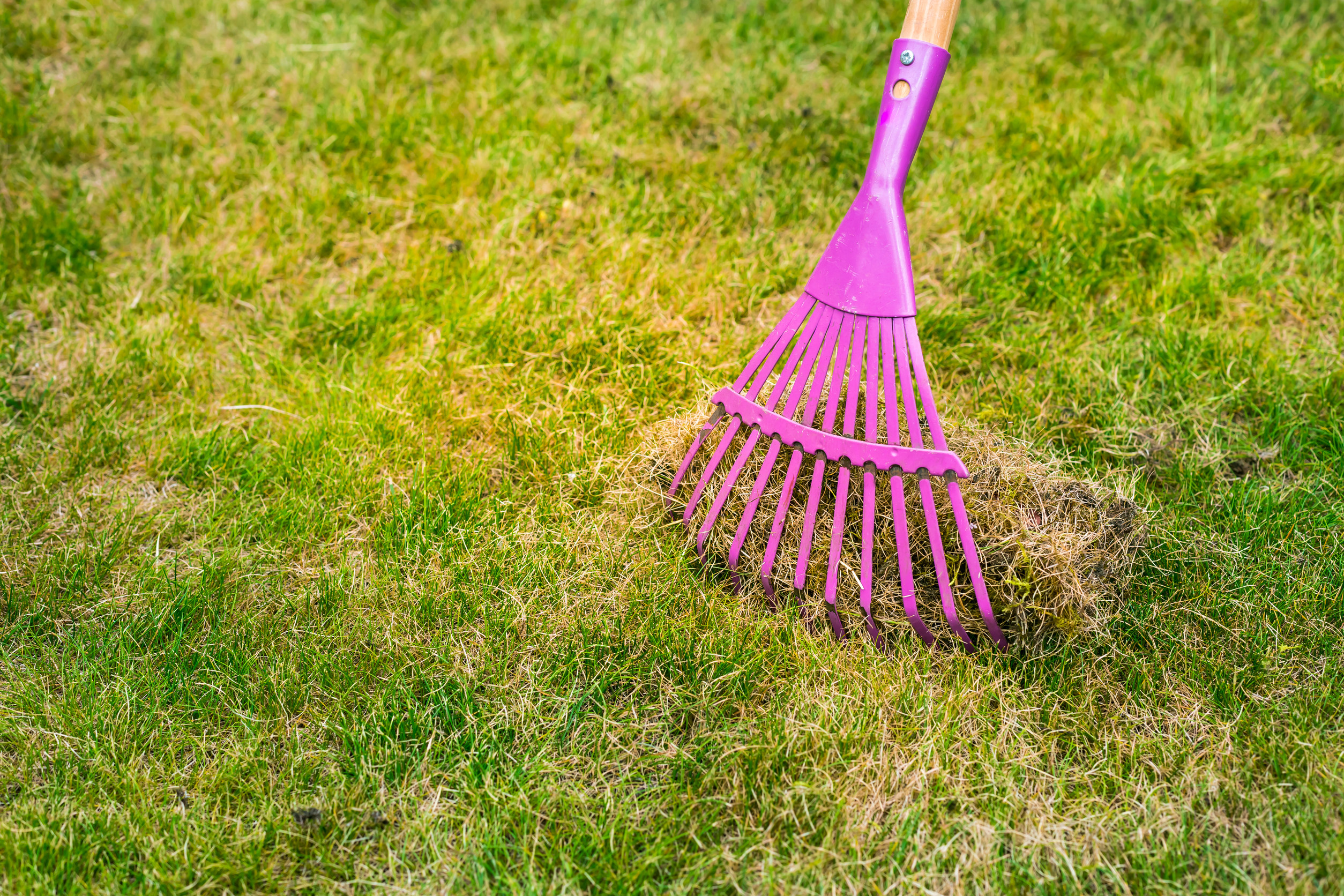
A healthy lawn in North Texas takes more than mowing and watering—dethatching is a key step many homeowners overlook. If your grass looks dull or water runs off instead of soaking in, thatch buildup may be the problem.
Understanding when and how often to dethatch can make the difference between a struggling lawn and a thriving outdoor space that enhances your North Texas property's curb appeal.
What Is Lawn Dethatching and Why Does It Matter?
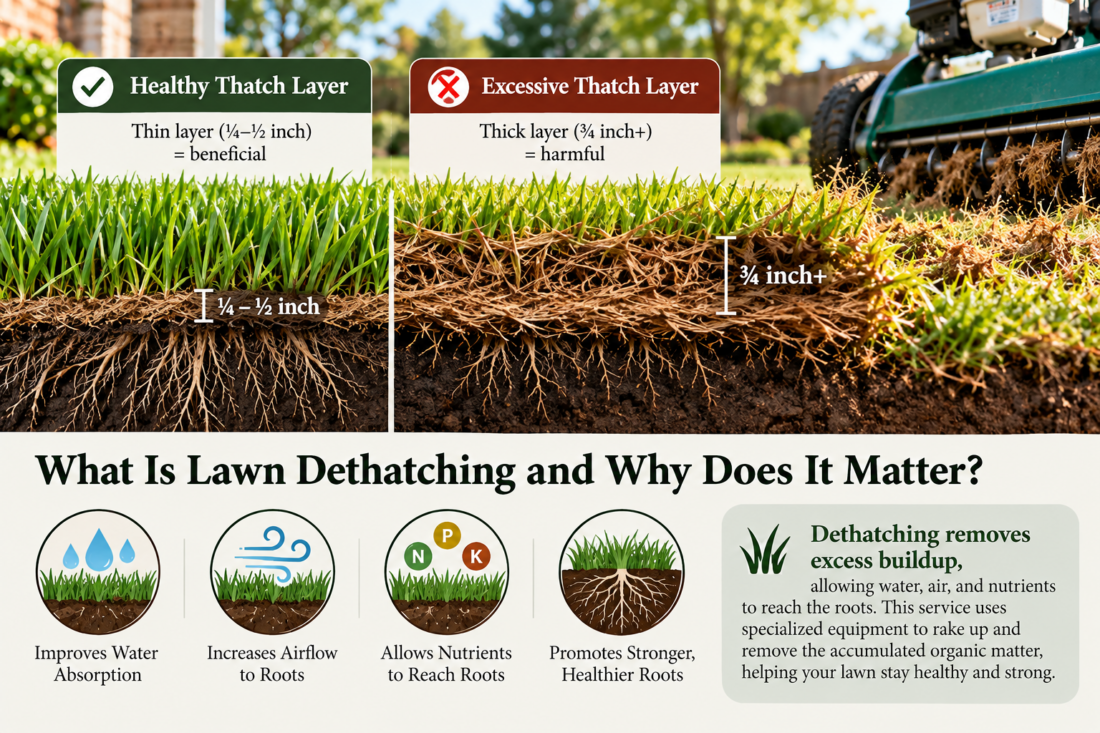
Thatch is a layer of dead grass and organic material that builds up between your grass and soil.
- ✅ Thin layer (¼–½ inch) = beneficial
- ❌ Thick layer (¾ inch+) = harmful
Dethatching removes excess buildup, allowing water, air, and nutrients to reach the roots. This service involves using specialized equipment to rake up and remove the accumulated organic matter, allowing your grass roots better access to water, nutrients, and oxygen.
When thatch builds up beyond ¾ inch thick, it creates a barrier that prevents essential resources from reaching your grass roots. This can lead to shallow root systems, increased pest problems, disease issues, and overall lawn decline.
Many homeowners mistakenly believe that all thatch is harmful or that frequent dethatching is always beneficial. However, completely removing thatch can actually harm your lawn by eliminating beneficial microorganisms and exposing roots to temperature extremes – something particularly important to consider during Texas summers.
How Often Should You Dethatch Your DFW Lawn?
| Lawn Type | Frequency | Best Time |
|---|---|---|
| Bermuda | Every 1–2 years | Late spring |
| St. Augustine | Every 2–3 years | Late spring |
| Zoysia | Every 2–3 years | Late spring |
| Buffalo / Native | Every 3–4 years | As needed |
👉 Most DFW lawns: every 2–3 years
For most North Texas lawns, dethatching every 2-3 years is sufficient to maintain optimal thatch levels. However, this timeline can vary significantly based on several factors specific to our region.
The frequency of dethatching largely depends on your grass type, soil conditions, maintenance practices, and local climate factors. In the DFW area, our clay soil tends to compact easily, which can accelerate thatch buildup by reducing natural decomposition. Additionally, our hot, humid summers create ideal conditions for rapid grass growth, potentially leading to faster thatch accumulation.
Generally, established lawns that receive proper fertilization and regular maintenance may only need dethatching every 3-4 years. However, over-fertilized lawns or those with poor drainage might require attention every 1-2 years.
The optimal timing for dethatching in North Texas is during late spring to early summer, typically between April and June.
This timing allows warm-season grasses to recover quickly from the stress of dethatching before the intense heat of July and August arrives. Avoid dethatching during peak summer heat or during drought conditions when your lawn is already stressed.

Signs Your Lawn Needs Dethatching
Watch for these common signs:
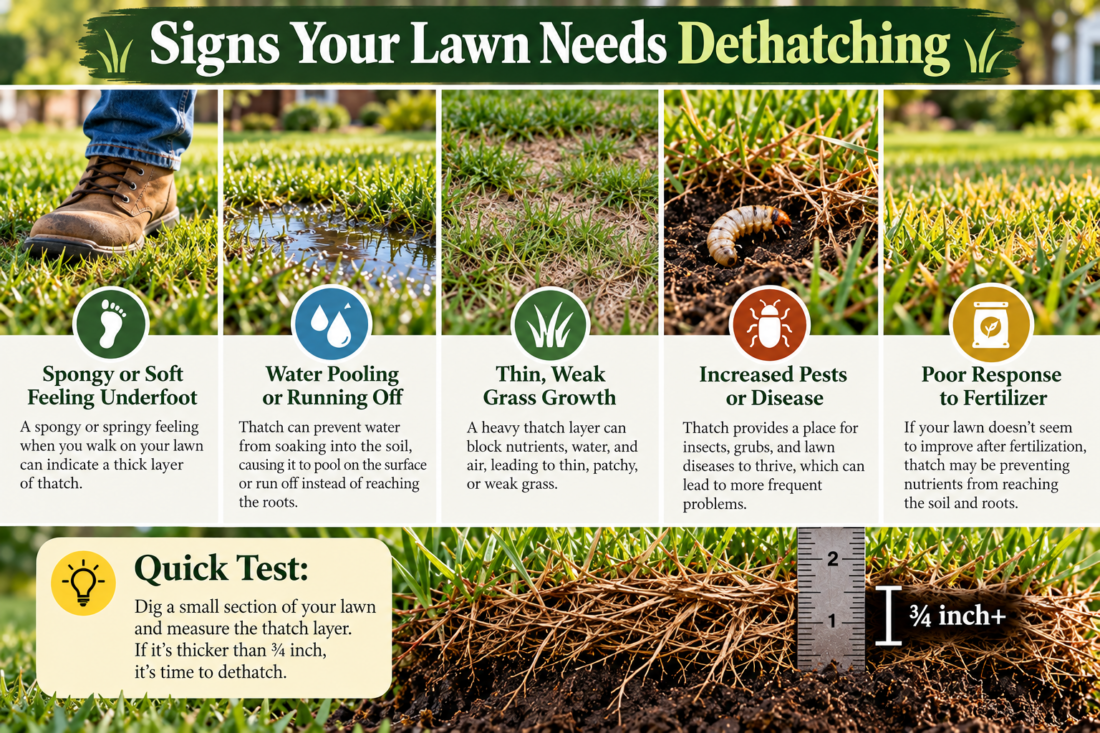
- Spongy or soft feeling underfoot
- Water pooling or running off (Find out how to deal with drainage issues in the garden)
- Thin, weak grass growth
- Increased pests or disease
- Poor response to fertilizer (Read some basic facts about lawn fertilization from University of Minnesota Extension)
💡 Quick test:
Dig a small section—if thatch is thicker than ¾ inch, it’s time.
Best Practices for Dethatching in the Dallas-Fort Worth Area
The ideal window for dethatching warm-season grasses in DFW is typically mid-April through early June, when grass is actively growing but before extreme summer heat arrives.
Pre-dethatching preparation includes mowing your lawn shorter than usual (about 1-2 inches) and ensuring adequate soil moisture without waterlogged conditions.
Post-dethatching care is equally important – immediate watering, light fertilization, and possibly overseeding can help your lawn recover quickly.
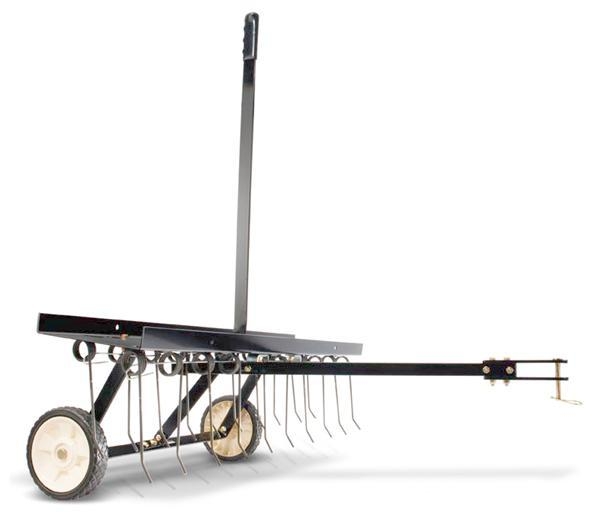
For DFW homeowners considering DIY dethatching, power rakes and dethatching machines are available for rent. However, these tools require proper technique to avoid damaging your lawn. Over-aggressive dethatching can scalp grass and create bare spots that become weed magnets in our competitive growing environment.
Final Thoughts
Dethatching is essential for keeping your lawn healthy in North Texas. When done at the right time and frequency, it improves root growth, water absorption, and overall lawn appearance.
The best way to keep your lawn healthy is with consistent, professional care. At Ryno Lawn Care, our customized lawn care programs focus on proper fertilization and weed control, soil health—helping prevent excessive thatch buildup in the first place.
Frequently Asked Questions
Can I dethatch my lawn too often?
Yes, over-dethatching can seriously damage your lawn by removing beneficial microorganisms and exposing roots to temperature extremes. Stick to the 2-3 year schedule for most Texas lawns, and always assess thatch thickness before dethatching.
What's the difference between dethatching and aerating?
Dethatching removes organic buildup above the soil, while aeration creates holes in the soil to improve air and water penetration. Both services complement each other perfectly for DFW lawns dealing with clay soil and thatch issues. Many homeowners benefit from combining both services, with aeration typically performed more frequently (annually) than dethatching.
Should I fertilize after dethatching my DFW lawn?
Light fertilization after dethatching can help your lawn recover, especially during the active growing season. However, avoid heavy nitrogen applications immediately after dethatching, as this can stress already-disturbed grass. A balanced, slow-release fertilizer applied 1-2 weeks after dethatching works well for most North Texas lawns.
Can I dethatch during Texas summer heat?
Dethatching during peak summer heat (July-August) is not recommended for DFW lawns. The combination of mechanical stress and extreme temperatures can seriously damage or kill grass. Plan dethatching for late spring or early summer when temperatures are moderate and grass is actively growing. If summer dethatching becomes necessary, work during cooler morning hours and provide extra irrigation afterward.

Michelle Valdivia
Michelle brings expertise in educational communication to lawn care content creation. She holds degrees in Human Development and Family Studies and Education. Over four years, she has created professional web content for landscaping and lawn care businesses, collaborating with experienced lawn care teams to ensure each blog post is rooted in real-world expertise.