
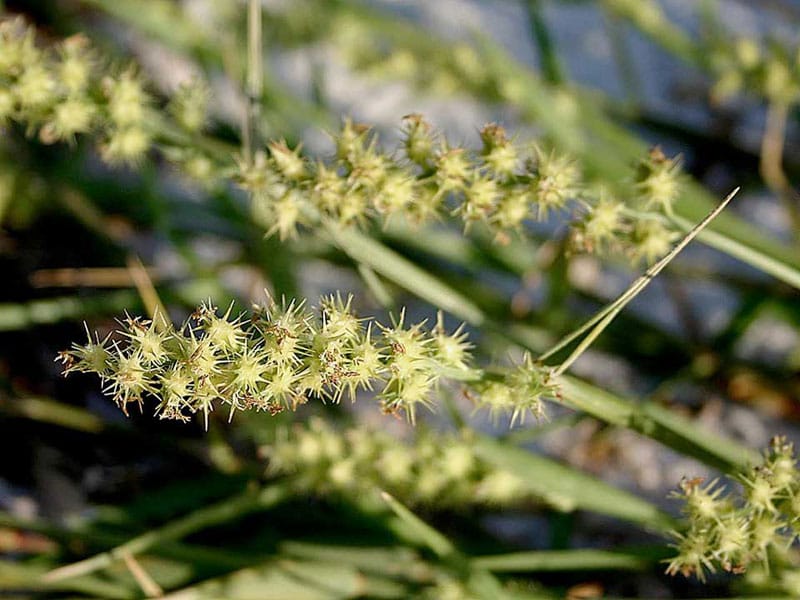
What Are Burs and Why Do They Matter?
Are burrs taking over your lawn? Find out how to get rid of grassburs. The quickest way to eliminate existing grassburs is by applying a targeted post-emergent herbicide.
Grassburs (also called sandburs or sticker burrs) are prickly warm-season weeds that thrive in Texas heat and sandy soils. Their sharp seeds stick to skin, clothes, and pets, making your lawn painful to walk through and difficult to fully enjoy. They are prominently found in Bermuda and St. Augustine lawns.
At Ryno Lawn Care, we’ve treated thousands of Texas lawns battling these stubborn weeds. Today, we want to share the proven method we use to get rid of grass burrs.
How to Get Rid of Grassburs With Post-Emergent Herbicides (Step-by-Step)
1. Identify Active Grassburs
- Look for clumps of grassy weeds producing sharp, spikey seed heads (“stickers”).
- Grassburs often appear in thin, dry, or stressed areas of Bermuda or St. Augustine lawns.
- Grassburs have narrow, light green blades that resemble common warm-season grasses like Bermuda or St. Augustine. The blades grow in clumps and are often interspersed among your lawn, making detection tricky until the seed heads develop.
2. Choose the Right Post-Emergent Herbicide
Use a selective herbicide labeled for sandbur/grassbur control in your turf type.
Common options include:
- Quinclorac
- Pendimethalin blends
- Celsius® WG (for warm-season lawns)
- Pastora® (Bermuda only)
Always confirm the label is safe for your grass type.
3. Spot-Treat First
- Apply the herbicide directly to visible grassbur patches, soaking the leaf blades thoroughly.
- Spot treatment reduces collateral damage and helps you see how your lawn responds.
4. Treat the Entire Lawn (If Infestation Is Widespread)
- For large or spreading outbreaks, complete a uniform broadcast treatment according to label rates.
- Grassburs often hide before producing burrs, so whole-lawn coverage can prevent missed pockets.
5. Re-Apply as Directed
- Most post-emergents require a second application about 2–4 weeks later.
- Reapplication ensures you kill new growth and any plants that survived the first treatment.
6. Water Lightly After Treatment (If Label Allows)
- Some herbicides benefit from a light watering to activate them—others should not be watered in.
- Follow your product label carefully for best results.
7. Mow Frequently to Reduce Seed Spread
- Bag the clippings if burs are already present. This is one of the most important steps because each bur contains multiple seeds that will root again left behind.
- Do not let the weed mature long enough to drop more seeds.
8. Repair and Strengthen Bare Spots
Grassburs love thin, stressed turf. After weeds die:
- Add soil or compost to low spots
- Overseed or resod thin areas.
- Deep-water your lawn weekly
- Maintain proper fertilization
A healthier lawn makes grassburs far less likely to return.
9. Follow Up With Pre-Emergents
Post-emergents kill today’s burrs—pre-emergents stop next year’s.
Apply pre-emergent in:
- Early spring
- Late spring
- Early fall
This is critical for long-term control.
10. Try an Organic Herbicide Like Orange Oil
If you’re looking for a more natural approach, Orange Oil is sometimes recommended as an organic weed killer. Apply it between May and July for the best results. Keep in mind that organic herbicides may not be as strong as synthetic ones, so you may need multiple applications. Avoid using MSMA, as it’s not eco-friendly and is harmful to pets and children.
Grassburs are stubborn. Stick with a consistent plan, and you’ll see results!
🌱 Grassbur Life Cycle (Cenchrus spp.)
Understanding the life cycle of grassburs is the key to eliminating them. Grassburs are warm-season annual grassy weeds, meaning they complete their entire life cycle in one growing season—but leave behind seeds that return the following year.
Germination (Spring – Early Summer)
- Seeds begin sprouting once soil temperatures reach 60–70°F.
- Young plants look like thin, grassy blades and blend in with Bermuda and St. Augustine lawns, making early detection difficult.
- This is the first window for pre-emergent herbicides, before burs ever form.
Vegetative Growth (Early–Mid Summer)
- The plant develops deeper roots and spreads outward, competing with turfgrass.
- It remains soft and green during this stage.
- Post-emergent herbicides are most effective now, before seed heads harden.
Seed Head Formation (Late Summer – Early Fall)
- Grassburs produce their signature spiky seed clusters (the painful burs).
- Once burrs mature, they easily attach to shoes, pets, and equipment—spreading quickly.
- Mowing without bagging at this stage spreads burs everywhere.
Dormancy & Re-Seeding (Fall)
- The plant dies with colder temperatures, but the seeds remain viable in soil for years.
- Each plant can produce dozens of burs, each containing multiple seeds.
Why They Spread So Easily
- Soil Disturbance: Tilling or digging exposes buried seeds and creates ideal germination sites.
- Mowing Practices: Mowers scatter seeds and cut stems, encouraging new growth.
- Pet/Foot Traffic: Burrs cling to fur and clothing, hitchhiking to new areas.
- Drought Stress: Grassburs thrive in thin, weakened lawns where competition is reduced.
Why Pre-Emergent Is Critical
Pre-emergent herbicides create a barrier that stops grassbur seeds from sprouting, offering crucial control before they become visible.
Key Application Details for North Texas
- Best Months: Apply mid-February to early March, before soil temperatures consistently hit the trigger.
- Soil Temperature Trigger: Apply when soil at 2″ depth reaches 65°F for 3-5 consecutive days.
- Best Products: Prodiamine (longest control), Dimension (offers early post-emergent control).
- Application Rates: Follow label instructions precisely; rates vary by product and desired duration.
- Watering In: Lightly water (0.5″) after application to activate the barrier without washing it away.
- How Long It Lasts: Typically provides 2-4 months of control, depending on product and environmental breakdown.
Post Emergent Herbicides:
Why Post Emergent Matters: Post-emergent herbicides are critical for killing established grassburs that pre-emergent treatments miss. Applying them early (at the 2-4 vegetative growth stage) with liquid formulas ensures maximum absorption, preventing seed spread and breaking the weed’s lifecycle.
Recommended Post-emergent Herbicides:
Grassburs (sandburs) are best treated early when young and actively growing. As they mature, control becomes tougher. Avoid restricted arsenic-based herbicides like MSMA/DSMA—illegal for residential use in Texas—and opt for these proven, legal alternatives:
Recommended Post-Emergent Herbicides
1. 2,4-D (e.g., Southern Ag Lawn Weed Killer) Why it Works: It is a selective herbicide made to target specific weeds. (Safe for Bermuda, Tall Fescue, and Kentucky Bluegrass).
Note: Combine 2,4-D with quinclorac or dicamba for better results. Avoid application on St. Augustine lawns unless explicitly labeled as safe.
2. Quinclorac (e.g., Drive XLR8, Onetime) Why It Works: Targets grassy weeds like sandburs without harming most warm-season turf (safe for Bermuda, Zoysia).
Note: Use a surfactant for better adhesion. Avoid application on St. Augustine unless explicitly stated on the label.
3. Sulfentrazone (e.g., Dismiss NXT) Why It Works: Fast-acting on young grassburs and compatible with most lawns. Pairs well with prodiamine (pre-emergent) for season-long control.
4. Fenoxaprop-P-ethyl (e.g., Acclaim Extra) Why It Works: Effective on grassy weeds in Bermuda and Zoysia lawns. Apply to young burs and repeat as needed.
5. Mesotrione (e.g., Tenacity) Why It Works: Selective herbicide safe for St. Augustine, Bermuda, and Zoysia. Works best when combined with a surfactant.
Application Tips
Timing: Treat grassburs at the 2-4 vegetative stage for maximum efficacy.
Liquid vs. Granular: Liquid herbicides (sprayable) provide better coverage and absorption than granular options.
Avoid St. Augustine Damage: Always check labels—some herbicides (e.g., Quinclorac) can stress St.
Pre-emergent Herbicides:
Why Pre-Emergent Matters: Pre-emergent herbicides create a barrier in the soil to prevent grassbur seeds from germinating. Timing is critical—apply before soil temperatures consistently hit 55–60°F (typically late winter/early spring in Texas).
Recommended Pre-Emergent Herbicides
Prodiamine (e.g., Barricade, Stonewall) Why It Works: Blocks cell division in germinating seeds, stopping grassy weeds like sandburs before they emerge. Long-lasting (3–6 months).
Note: Safe for St. Augustine, Bermuda, Zoysia, and Centipede lawns. Avoid using on newly seeded turf.
Dithiopyr (e.g., Dimension) Why It Works: Unique “early post-emergent” action kills young weeds already sprouted (up to 1–2 vegetative stage). Ideal for unpredictable Texas springs.
Note: Safe for most warm-season grasses. Avoid applying during drought stress.
Pendimethalin (e.g., Pendulum, Scotts Halts) Why It Works: Forms a protective layer to inhibit root growth of germinating seeds. Effective against grassy and broadleaf weeds.
Note: Not recommended for use on St. Augustine grass—opt for prodiamine or dithiopyr instead.
Oxadiazon (e.g., Ronstar) Why It Works: Works through both pre- and early post-emergent activity. Low water solubility reduces leaching in rainy seasons.
Note: Primarily labeled for commercial use or golf courses; check local availability.
Application Tips
- Timing: Apply in late February to early March in North Texas, before soil warms to 55°F. Reapply in fall for annual weeds.
- Water Activation: Water lightly (¼ inch) after application to activate the herbicide barrier.
- Split Applications: For extended control, apply half the dose in early spring and half in late spring.
- Equipment: Use a rotary spreader for granular products or a sprayer for liquid formulations (ensure even coverage).

Why Combine Pre- + Post-Emergent?
Pre-emergents alone won’t eliminate existing grassburs. Pair them with post-emergent herbicides (e.g., quinclorac) for full-season control.
Pro Tips for Texas Lawns
- Soil Testing: Adjust pH to 6.0–7.0 for optimal herbicide efficacy.
- Mowing: Keep grass at 3+ inches to shade soil and reduce weed seed germination.
- Professional Help: Companies like Ryno Lawn Care tailor pre-emergent schedules to local soil and climate, ensuring compliance and results.
Grassbur Treatment Timing Chart
For Texas Homeowners
| Season | What’s Happening in the Grassbur Life Cycle | What You Should Do | Recommended Products (Homeowner-Friendly) |
|---|---|---|---|
| Late Winter (Feb–Early March) | Seeds are dormant but getting ready to germinate. | Apply a pre-emergent to prevent new grassburs from sprouting. | Prodiamine (Barricade), Dithiopyr (Dimension) |
| Early Spring (March–April) | Seeds begin germinating as temperatures rise. | Second round of pre-emergent for strong prevention. | Prodiamine or Dithiopyr |
| Late Spring (May–June) | Young grassbur plants become visible. | Spot-treat young grassburs with a post-emergent. | 2,4-D blends, Quinclorac (safe for Bermuda), Celsius WG |
| Summer (July–August) | Burs mature and produce painful seed heads. | Post-emergent applications + mow and bag clippings to reduce seed spread. | 2,4-D blends, Celsius WG |
| Fall (Sept–Oct) | Plants begin to decline; seeds drop into the soil. | Remove burs by hand or mow & bag; begin prepping for winter pre-emergent. | — |
| Late Fall (Nov) | Grassburs fully dormant. | Fall pre-emergent application to prevent next year’s seed germination. | Prodiamine |
Common Mistakes to Avoid
❌ Not watering properly after applying herbicides
This is the number one reason people fail to control grassburs. Post-emergent products must be watered in exactly as directed—too little water keeps the herbicide from activating, and too much can dilute it. Follow the label closely for the best results.
❌ Skipping pre-emergents
Pre-emergents are a critical part of grassbur control. Missing a season sets you back a full year.
❌ Waiting until burs appear before treating
By the time burs form, the plant has already reproduced. Start treating when the plants are young.
❌ Mowing too low
Scalping your lawn stresses the turf and gives grassburs more space and sunlight to grow. Keep Bermuda around 1.5–2″ and St. Augustine around 3–4″.
❌ Not bagging clippings when burs are present
Bagging prevents thousands of seeds from spreading across your lawn for next season.
❌ Skipping follow-up treatments
Grassburs rarely disappear with one application. Missing follow-up sprays allows surviving plants to regrow and reseed your lawn.
❌ Ignoring soil conditions
Grassburs thrive in dry, compacted, sandy soils. Without improving the soil (watering deeply, topdressing, or adding organic matter), they will return year after year.
Wrapping Up
In summary, now you know how to get rid of grassburs in your lawn! Keeping your lawn watered properly will go a long way to eliminating stickers. For North Texas lawns, we have created this guide to help keep a good watering schedule – click here for a Lawn Watering Guide.
Even if you control and rid your lawn of all current grassbur plants, new plants will emerge next spring from the seeds that are currently in the soil. Eliminating the grassburs in your lawn will take some time. Helping your grass stay healthy is easy with our Complete Lawn Care Schedule.
When a professional is needed in North Texas for lawn maintenance services, remember Ryno Lawn Care is here to assist you.

T. Stafford
Writing about gardening, lawn care, etc. to share what I've learned with others. I've lived in Texas my whole life, so I'm more familiar with this region's native plants.
Comments (2)
Thank you so much for all helpful ideas! I will be trying them on my yard 😉
FYI – I don’t know about any other states but, MSMA is not supposed to be sold to retail customers/homeowners in Texas any more