

A brown or dull lawn doesn’t always mean failure—it usually means your grass is stressed, not dead. Whether the cause is heat, drought, poor soil, or improper care, learning how to make a lawn green again starts with identifying the problem and fixing it the right way, not throwing random products at it.
The good news? Most lawns can recover with a few strategic changes and consistent care.
Step 1: Identify Why Your Lawn Isn’t Green
Grass turns brown or pale for several common reasons:
- Lack of water or uneven irrigation
- Nutrient deficiencies in lawn
- Compacted or poor-quality soil
- Dormancy from heat or cold
- Disease and pests
- Excessive thatch
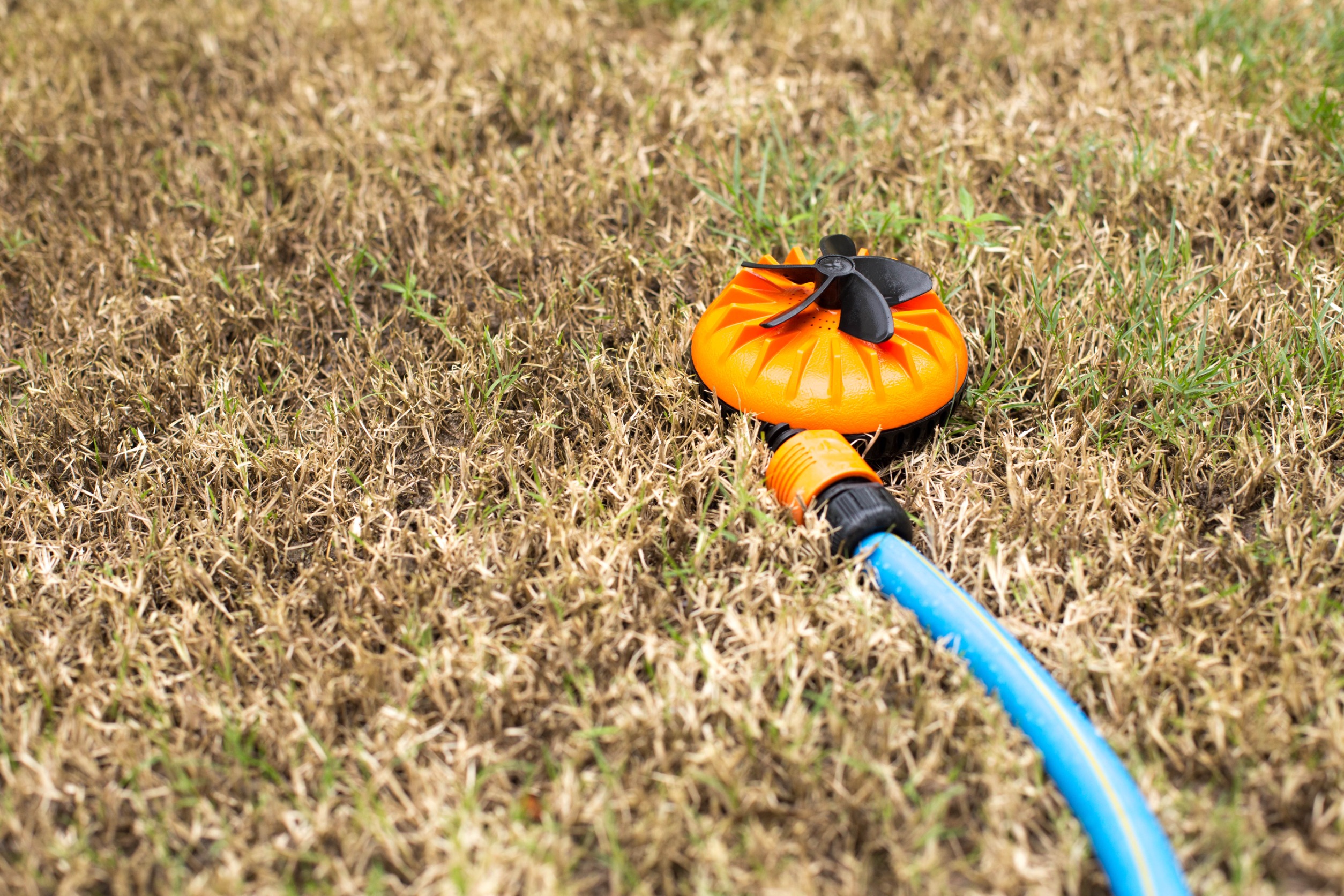
Before taking action, check whether your grass is dormant or actually damaged. Dormant grass will often green back up on its own once conditions improve.
Step 2: Water Correctly (Not More)
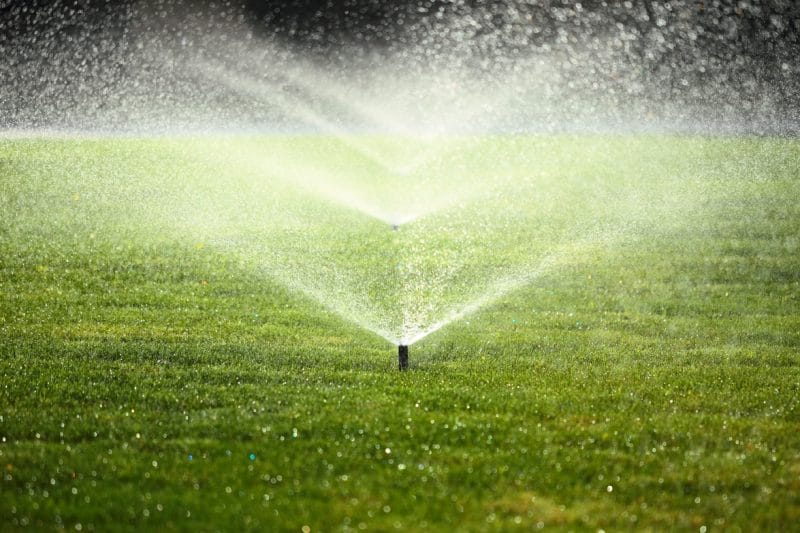
One of the biggest mistakes homeowners make is watering too often but not deeply.
What works best:
- Water 1–1.5 inches per week (including rainfall)
- Water early in the morning to reduce evaporation
- Ensure even coverage across the lawn
Deep, infrequent watering encourages deeper roots, which helps grass stay greener longer during stress. Read our 2026 Lawn Watering Guide.
Step 3: Feed Your Lawn at the Right Time
Fertilizer can restore color—but only when used properly.
- Apply fertilizer during active growth, not dormancy
- Choose a nitrogen-forward fertilizer for green-up
- Avoid over-fertilizing, which can burn grass
If your lawn greens up unevenly, a soil test can reveal nutrient imbalances that fertilizer alone won’t fix. Read our weed and feed schedule for a detailed lawn care schedule.
Step 4: Improve Soil Health
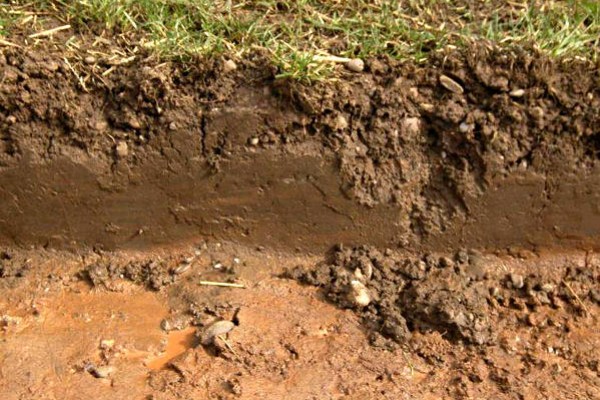
Green grass starts below the surface. Poor soil limits your lawn’s ability to absorb water and nutrients.
Ways to improve soil:
-
Aerate compacted areas
-
Topdress with compost
-
Reduce heavy foot traffic
Healthy soil allows roots to breathe, absorb nutrients, and grow stronger.
Step 5: Mow for Color, Not Just Height
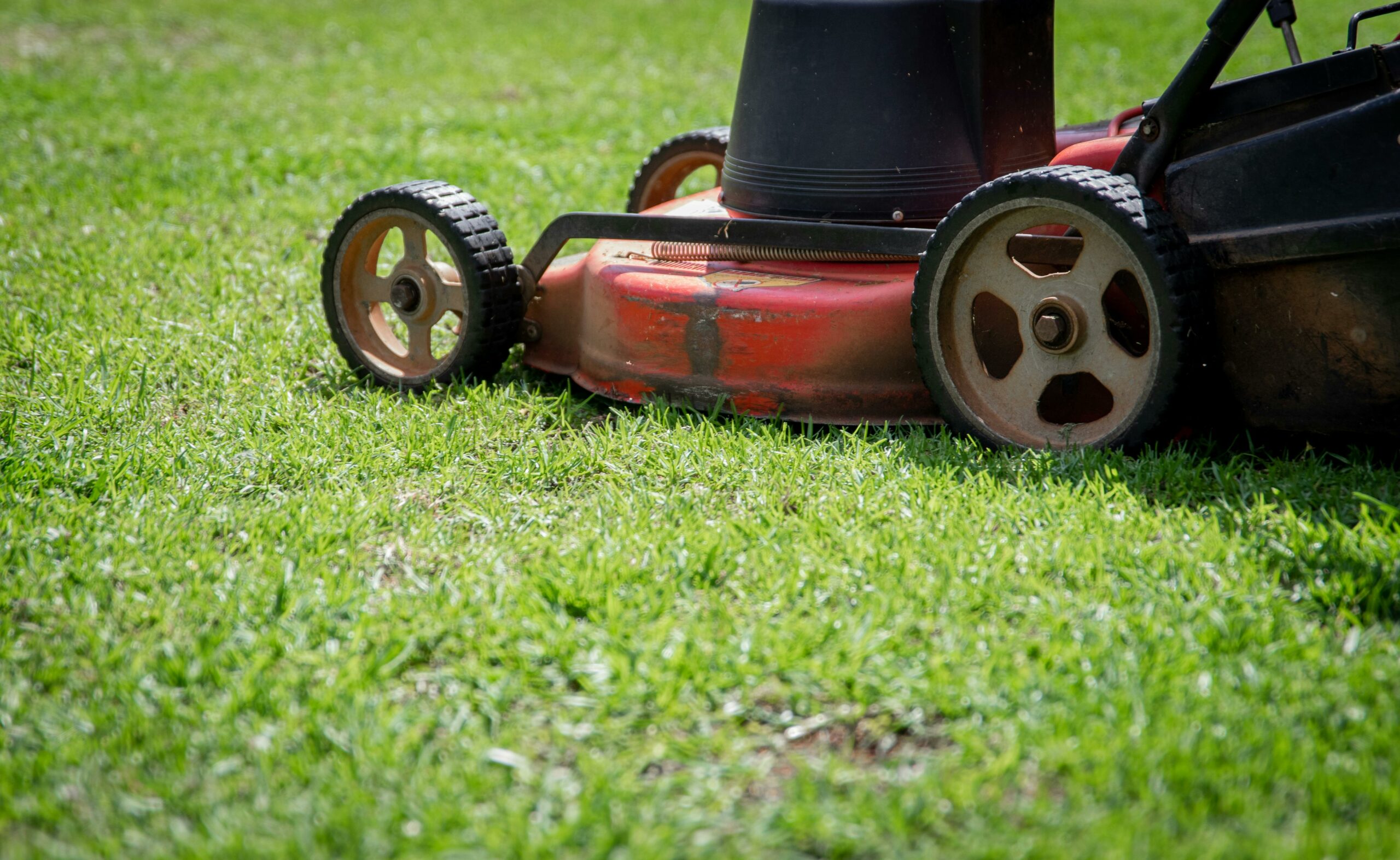
Mowing habits have a direct impact on lawn color.
-
Keep blades sharp to avoid tearing grass
-
Never remove more than one-third of the blade height
-
Mow slightly higher during hot weather
Taller grass shades soil, reduces evaporation, and appears greener overall.
Step 6: Control Weeds and Pests Early
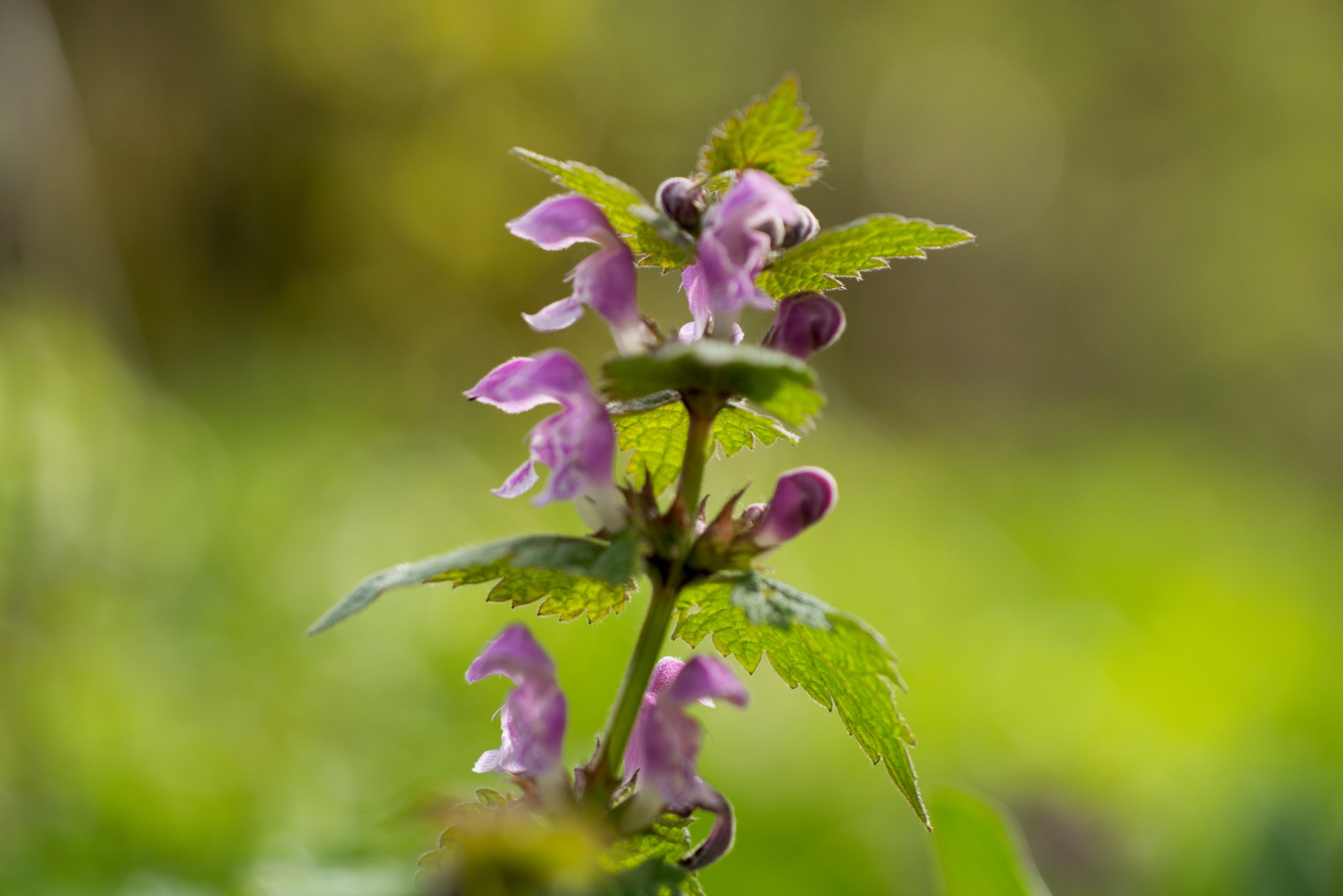
Weeds compete with grass for nutrients and water, while pests damage roots and blades.
-
Spot-treat weeds instead of blanket applications
-
Watch for thinning patches or chewed blades
-
Address problems early before widespread damage occurs
A healthy lawn naturally resists weeds better than a stressed one.
Lawn Greening Solutions at a Glance
| Problem | What You’ll See | Best Fix | How Long Until Green |
|---|---|---|---|
| Drought stress | Gray-green or brown blades | Deep watering | 1–2 weeks |
| Nutrient deficiency | Pale or yellow lawn | Proper fertilization | 7–14 days |
| Compacted soil | Thin, patchy grass | Core aeration | 2–4 weeks |
| Dormancy | Uniform brown lawn | Patience + water | Seasonal |
| Disease or pests | Irregular brown patches | Targeted treatment | Varies |
How Long Does It Take for Grass to Turn Green Again?
In many cases, lawns begin to show improvement within 7–14 days once the underlying issue is corrected. Full recovery may take several weeks depending on weather, grass type, and severity of stress.
Common Mistakes That Prevent Green-Up
❌ Overwatering every day
❌ Fertilizing dormant grass
❌ Mowing too short
❌ Ignoring soil health
❌ Expecting instant results
Lawn recovery is a process, not a one-day fix.
Final Thoughts
If you’re wondering how to make a lawn green again, the answer isn’t a single product—it’s a combination of proper watering, smart fertilization, healthy soil, and good mowing habits. When these elements work together, your lawn can recover faster and stay greener longer.
If your lawn isn’t responding despite your efforts, a professional evaluation can identify hidden issues and create a tailored recovery plan.
FAQs: How to Make Your Lawn Green Again
1: Why is my lawn turning brown or yellow in the first place?
There are many common culprits. The most frequent causes are improper watering (too much or too little), soil compaction, nutrient deficiencies (especially nitrogen), pest damage like grubs, fungal diseases, or simply improper mowing. Our blog post helps you diagnose the specific issue in your yard.
2: How much and how often should I really be watering my lawn?
The “golden rule” is deep, infrequent watering. Most lawns need about 1 to 1.5 inches of water per week, including rainfall. It’s better to water heavily 2-3 times per week, early in the morning, than to water a little every day. This encourages deep root growth, which makes your lawn more drought-resistant and green.
3: What’s the best fertilizer to use for a green lawn, and when should I apply it?
For quick greening, a fertilizer high in nitrogen (the first number on the bag, like 24-0-6) is key. However, timing and soil health are crucial. We recommend a soil test first to identify deficiencies. Generally, the best times to fertilize cool-season grasses are early fall and spring, while warm-season grasses benefit most from late spring through summer feedings.
4: Will just adding more fertilizer fix my lawn?
Not necessarily, and it can even cause harm. Over-fertilizing can “burn” your lawn, pollute waterways, and promote rapid, weak growth that’s susceptible to disease. The blog post explains how fertilizing must be combined with proper core aeration (to relieve compaction), correct mowing height, and smart watering.
5: My grass is thin and weedy. Will making it greener also make it thicker?
Yes, proper care promotes thickening, but you may also need overseeding. This is the process of sowing new grass seed directly into your existing lawn to fill in bare spots, improve density, and introduce more resilient grass varieties. The best times for overseeding are early fall for cool-season grasses and late spring for warm-season grasses.
6: How short should I mow my lawn to encourage green growth?
Mow higher! This is one of the easiest fixes. Cutting your grass too short (“scalping”) stresses it, exposes soil to weeds, and leads to a brownish look. For most grass types, keeping blades at 3-4 inches tall shades the soil, promotes deeper roots, and naturally crowds out weeds, resulting in a lusher, greener appearance.
7: What’s the first step I should take if I want a greener lawn?
Start with a soil test. This inexpensive test (often done through your local county extension office) will tell you your soil’s pH and nutrient levels. If your soil is too acidic or alkaline, grass simply can’t absorb nutrients, making fertilization useless. Correcting the pH with lime or sulfur is often the fundamental first step to real green-up.

Michelle Valdivia
Michelle brings expertise in educational communication to lawn care content creation. She holds degrees in Human Development and Family Studies and Education. Over four years, she has created professional web content for landscaping and lawn care businesses, collaborating with experienced lawn care teams to ensure each blog post is rooted in real-world expertise.