
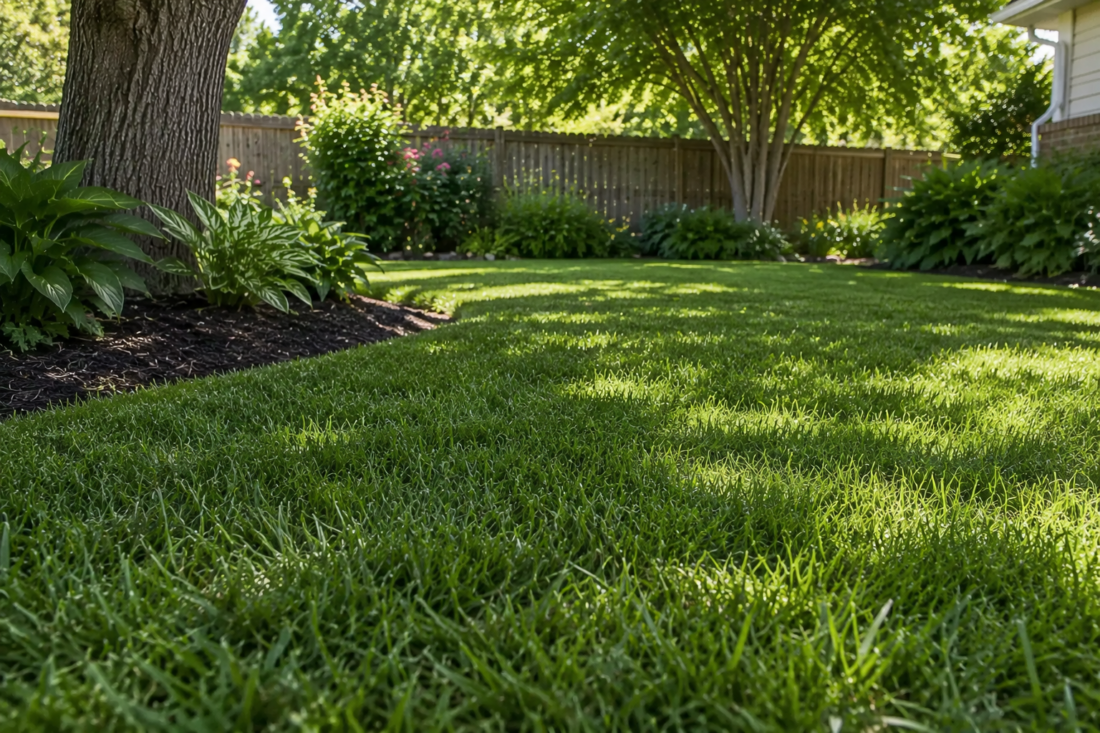
If you're a Dallas-Fort Worth homeowner with a beautiful St. Augustine lawn, you've probably wondered whether your grass can thrive in the shaded areas of your yard. Between the mature live oaks, cottonwoods, and cedar trees that dot North Texas properties, shade management is a real concern for many DFW residents.
The short answer: Yes, St. Augustine grass is moderately shade-tolerant—but there's much more to understand about how to keep it healthy when light is limited. In this comprehensive guide, we'll explore exactly what "shade-tolerant" means for St. Augustine, how much shade is too much, and what steps you can take to maintain a lush lawn even in partially shaded areas.
Understanding St. Augustine Grass and Its Light Requirements
St. Augustine grass is one of the most popular warm-season grasses in the DFW area, and for good reason. It's heat-tolerant, establishes quickly, and adapts well to North Texas' humid summers and unpredictable springs. However, understanding its light requirements is essential for long-term lawn health.
Ideal Light Conditions: St. Augustine grass performs best with 4-6 hours of direct sunlight per day. This is significantly more shade-tolerant than Bermuda grass, which needs 6-8 hours of direct sun, but less demanding than some ornamental shade plants.
Here's where the terminology matters: shade-tolerant doesn't mean shade-loving. St. Augustine can survive and grow in partial shade, but it won't thrive the way it does in full sun. Think of it as adaptable rather than preferential to shade. In the DFW climate, where summer temperatures regularly exceed 95°F, some afternoon shade can actually be beneficial—but your grass still needs adequate light to photosynthesize and develop strong root systems.
The difference between shade-tolerant and shade-loving grasses is crucial for DFW homeowners. Shade-tolerant grasses like St. Augustine can handle 50-75% shade capacity, meaning dappled light or morning/afternoon sun exposure. Shade-loving groundcovers, on the other hand, are designed for areas that receive less than 3 hours of direct sunlight daily. If your shaded area falls into that category, St. Augustine may not be your best choice.
How Much Shade Can St. Augustine Actually Handle?
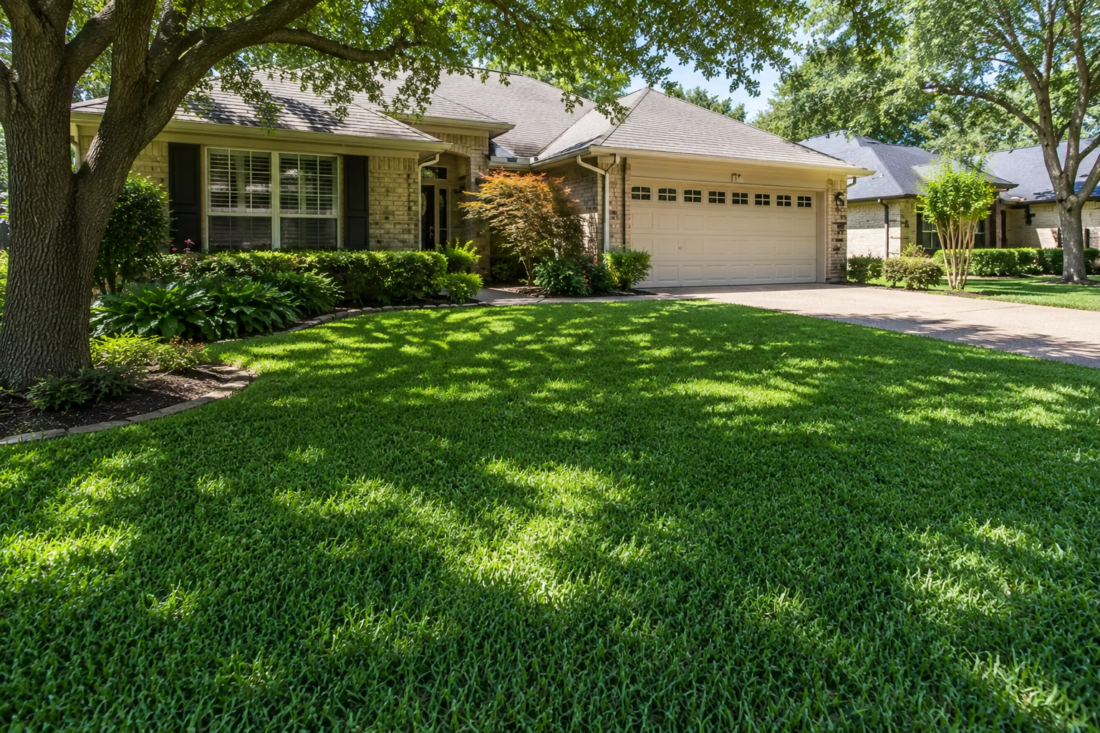
In the DFW region, St. Augustine grass can tolerate approximately 50-75% shade, which translates to about 2-3 hours of direct sunlight daily or dappled, filtered light throughout the day. However, this tolerance threshold varies based on several factors specific to North Texas.
The Shade Tolerance Comparison
| Grass Type | Sunlight Required | Shade Tolerance | Best for DFW |
|---|---|---|---|
| St. Augustine | 4-6 hours | Moderate (50-75%) | Mixed sun/shade yards |
| Bermuda | 6-8 hours | Low (25-50%) | Full-sun lawns |
| Zoysia | 3-4 hours | High (60-75%) | Moderate shade, drought areas |
| Buffalo | 3-4 hours | High (60-75%) | Shade and low-maintenance |
When St. Augustine starts to struggle in excessive shade, you'll notice it long before your lawn completely dies. The grass will thin out, lose its vibrant green color, and become more susceptible to disease—a critical issue in the humid DFW climate.
DFW-Specific Factors That Affect Shade Performance:
- Humidity: The Dallas-Fort Worth area's afternoon humidity (often 40-70%) combined with shade creates ideal conditions for fungal diseases like brown patch and dollar spot. Shaded areas dry more slowly, allowing fungi to establish.
- Clay Soil Drainage: North Texas' heavy clay soil drains poorly, especially in shaded areas where evaporation is reduced. This creates waterlogging that weakens St. Augustine roots.
- Tree Competition: The native live oaks, cottonwoods, and cedar trees common to DFW properties not only block light but also compete for water and nutrients, stressing your St. Augustine grass further.
- Summer Heat: Paradoxically, DFW's extreme summer heat means that shaded areas under tree canopies can actually benefit St. Augustine by reducing heat stress, as long as light levels remain adequate.
Signs Your St. Augustine Is Struggling in Too Much Shade
Recognizing early warning signs of shade stress can help you intervene before your lawn deteriorates significantly. Here's what to watch for:
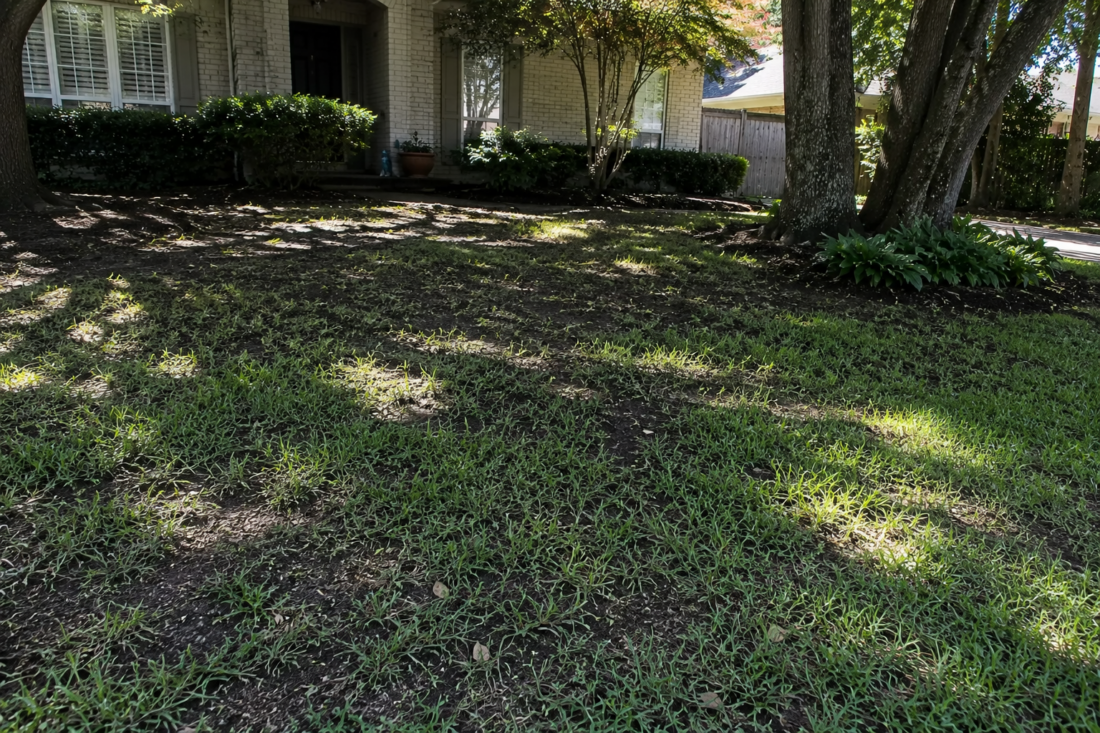
- Thinning and Bare Patches: If your St. Augustine is visibly thinner in shaded areas compared to sunny zones, your grass isn't receiving enough light for healthy growth. Bare patches often develop first around tree drip lines.
- Increased Disease Susceptibility: Shaded lawns in DFW are particularly vulnerable to fungal issues. Look for circular brown or tan patches (dollar spot) or large irregular patches of dead grass (brown patch), especially in late spring and fall.
- Weak Root Development: Grass that struggles in shade develops shallow root systems, making it drought-stressed even when soil moisture is adequate. This becomes critical during DFW's hot, dry summers.
- Poor Color and Slow Growth: Shade-stressed St. Augustine appears pale or yellowish-green and grows noticeably slower than grass in sunny areas. You may also notice wider spacing between shoots. Read our article to find out more about why St. Augustine grass turns yellow.
- Increased Weed Pressure: As St. Augustine weakens in shade, invasive weeds like sedge and shade-tolerant broadleafs quickly fill voids, compromising your lawn's appearance and health.
Tips for Growing St. Augustine in Shady Areas
If you're committed to maintaining St. Augustine in shaded portions of your DFW yard, these proven strategies can help maximize success:
1. Prune Trees Strategically to Increase Dappled Light
One of the most effective approaches is selective tree pruning. Work with an arborist to remove lower branches and thin the canopy of mature trees like live oaks and cottonwoods. This allows dappled, filtered light to reach your grass while maintaining the aesthetic and cooling benefits of tree coverage. In DFW's intense summer heat, this balance is ideal.
2. Choose Shade-Tolerant St. Augustine Varieties
Not all St. Augustine cultivars are created equal. Varieties like 'Raleigh,' 'Bitter Blue,' and 'Classic' offer improved shade tolerance compared to older selections. When establishing a new lawn or overseeding, specifically request these shade-improved varieties from your sod supplier.
3. Adjust Watering and Fertilization Schedules
Shaded areas in DFW require different management than sunny zones:
- Water less frequently: Shaded grass dries more slowly due to reduced evaporation. Overwatering creates the humid conditions fungal diseases love. Water only when soil moisture is depleted 2-3 inches deep.
- Reduce nitrogen fertilizer: Excessive nitrogen promotes weak, disease-prone growth in shade. Apply half your normal fertilizer rate in shaded areas.
- Apply fungicide preventatively: Given DFW's disease pressure, consider pre-emptive fungicide applications in shaded areas during susceptible seasons (late April-May and September-October).
4. Improve Soil Quality in Shaded Spots
DFW's clay-heavy soils drain poorly, especially under tree canopies. Test your soil and amend with compost or aged bark mulch to improve structure and drainage. This is one of the most impactful changes you can make for shade-stressed St. Augustine.
5. Prioritize Aeration and Drainage
North Texas' dense clay soil compacts easily, suffocating roots and trapping moisture—a deadly combination in shade. Regular aeration in fall (September-October) helps alleviate compaction and improves water movement. Consider French drains or rain gardens in persistently wet shaded areas.
Read our full guide, Expert Tips for St. Augustine Grass.
Best Grass Alternatives if Your Yard Is Too Shady
If your shaded areas receive less than 2-3 hours of direct sunlight daily, or if you're battling repeated St. Augustine failures, it may be time to consider alternatives. For DFW homeowners, several shade-tolerant options exist:
- Zoysia Grass: Significantly more shade-tolerant than St. Augustine (up to 75% shade) and equally heat-tolerant. Zoysia thrives in DFW's climate and is an excellent St. Augustine replacement for mixed sun/shade yards.
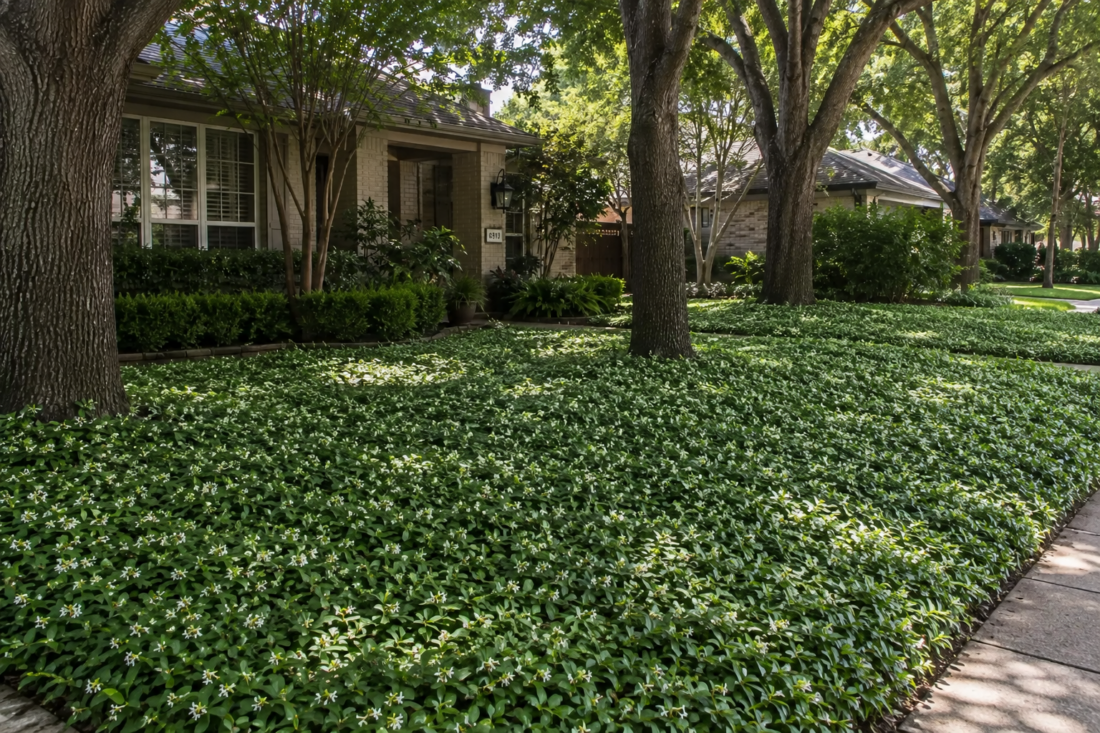
- Shade-Tolerant Groundcovers: For heavily shaded areas, consider replacing grass entirely with shade groundcovers like Asian jasmine, liriope, or pachysandra native to the region.
Cost and Timeline Considerations: Replacing an established St. Augustine lawn with Zoysia sod costs $0.50-$2.00 per square foot installed, but the investment pays dividends in reduced maintenance and disease pressure. The process takes 2-4 weeks for complete establishment. Contact Ryno Lawn Care for a free sod assessment to determine if grass replacement is right for your property.
Maintaining Healthy St. Augustine in Mixed Light Conditions
If you're maintaining St. Augustine across both sunny and shaded areas, consistency with some adjustments is key:
Mowing Height Adjustments
Increase mowing height in shaded areas from the standard 2.5-3 inches to 3-3.5 inches. Taller grass blades capture more available light and develop deeper root systems. Always use sharp blades to prevent disease transmission between light zones.
Seasonal Care Differences
Summer (June-August): In DFW's intense heat, shaded St. Augustine may actually thrive better than full-sun lawns. Focus on disease prevention with proper fungicide timing. Reduce irrigation frequency compared to sunny areas.
Winter (November-February): St. Augustine goes dormant in North Texas winters. Shaded areas take longer to green up in spring and may struggle with cold damage if weakened by previous shade stress. Overseed with cool-season ryegrass if desired for winter color.
Pest and Disease Management in Shade
The humid, low-light environment that shade creates is a breeding ground for fungal diseases common to DFW:
- Dollar Spot: Circular patches with tan centers and dark borders. Appears in spring and fall.
- Brown Patch: Large irregular patches (up to several feet) of dead or dying grass. Worst in warm, humid conditions (May-June and September-October).
- Gray Leaf Spot: Small tan lesions on individual leaves. More common in St. Augustine than other Texas grasses.
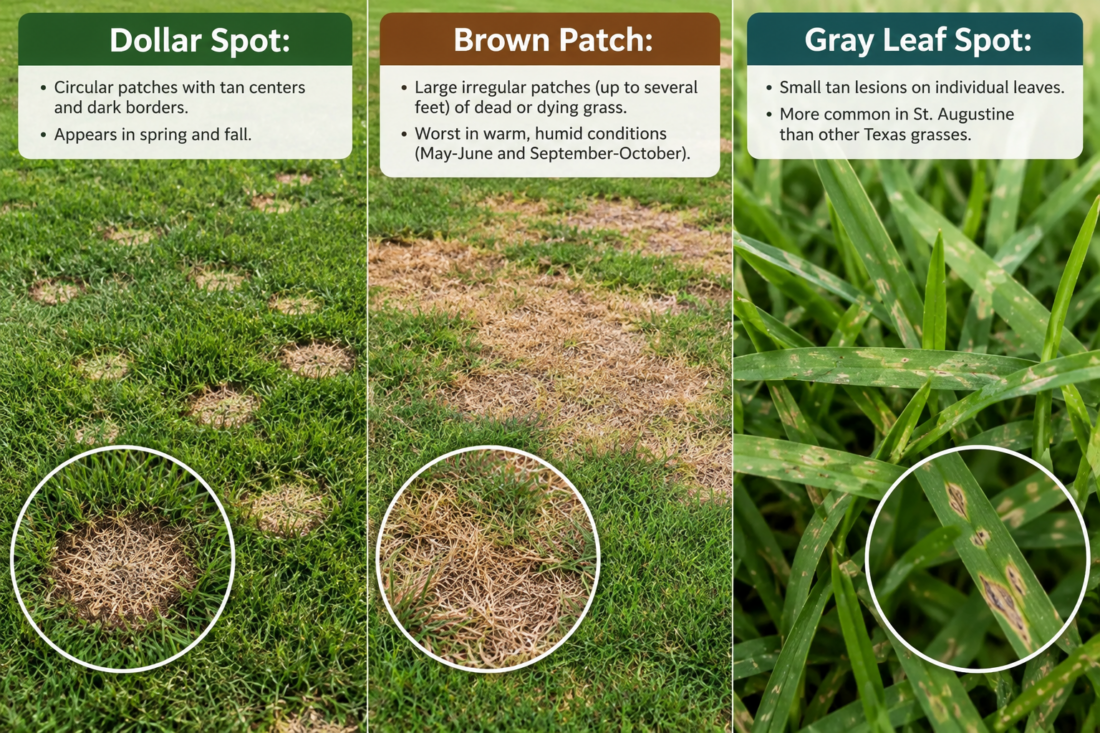
Prevention is more cost-effective than treatment. Improve air circulation by pruning trees, reduce irrigation frequency in shaded areas, and apply preventative fungicides at the first sign of disease activity.
Regular Monitoring Practices
Walk your yard weekly, paying special attention to shaded zones. Look for:
- Changes in color or density
- Signs of disease (patches, discoloration, unusual growth patterns)
- Moisture levels (shaded soil should feel drier than you'd expect)
- Weeds or moss encroachment (indicators of pH imbalance or poor drainage)
Frequently Asked Questions About St. Augustine and Shade
Can St. Augustine grass grow in full shade?
No, St. Augustine cannot reliably grow in full shade (less than 2-3 hours of direct sunlight). While it's more shade-tolerant than Bermuda, it still requires moderate light levels to photosynthesize and maintain vigor. In full shade, you'll experience significant thinning, disease pressure, and eventual failure. Consider alternative grasses like Zoysia or Buffalo, or shade-tolerant groundcovers.
What's the difference between St. Augustine and Zoysia for shade?
Zoysia is significantly more shade-tolerant than St. Augustine, thriving in conditions with 60-75% shade coverage versus St. Augustine's 50-75% maximum. Both are warm-season grasses suited to DFW's climate, but Zoysia is the better choice for yards with extensive shade.

Michelle Valdivia
Michelle brings expertise in educational communication to lawn care content creation. She holds degrees in Human Development and Family Studies and Education. Over four years, she has created professional web content for landscaping and lawn care businesses, collaborating with experienced lawn care teams to ensure each blog post is rooted in real-world expertise.