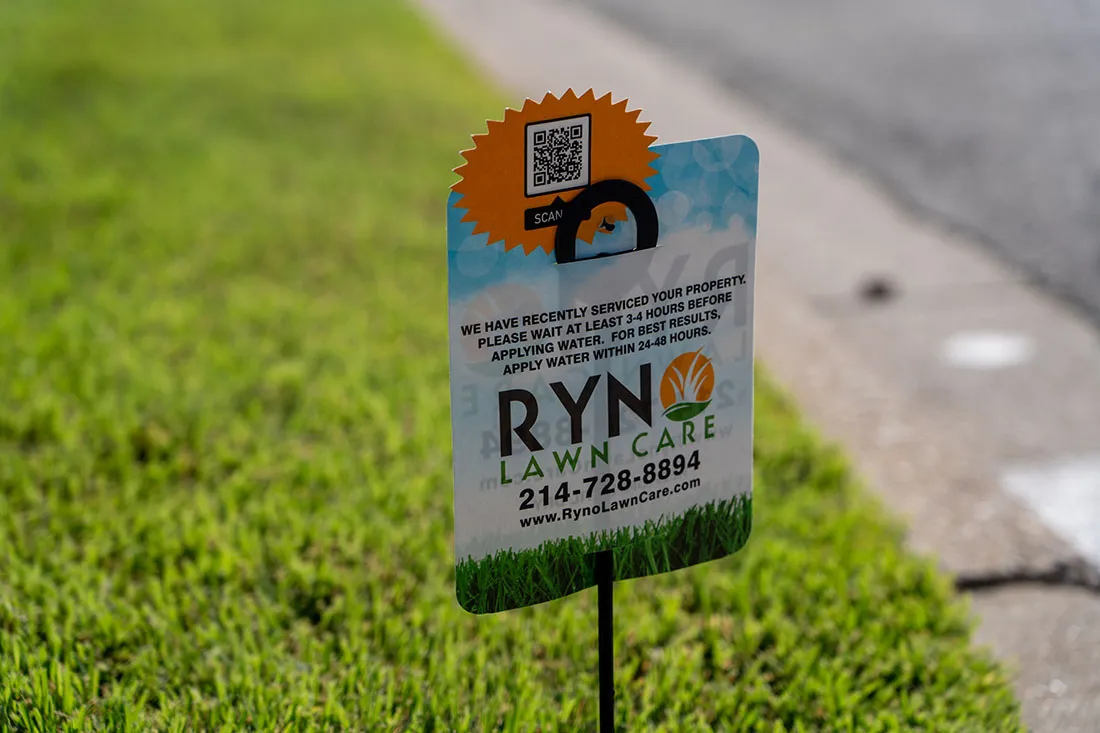

Flower Mound Weed Control & Fertilization
Custom herbicide and feeding programs built around your grass type and North Texas's seasons — so weeds don't stand a chance and your Flower Mound lawn stays thick and green.
Licensed & insured · Serving Flower Mound since 2009 · Free quotes
Why Flower Mound homeowners trust us with it
A plan built for your lawn
We assess your soil, grass type, and weed pressure in person, then tailor a treatment plan — no one-size-fits-all spraying.
Right herbicide, right timing
Pre- and post-emergent applications timed to the season so weeds are stopped before they take hold.
Balanced fertilization
Feeding scheduled to your grass so it grows thick enough to crowd weeds out on its own.
Up to 75% Off Your First Treatment
New clients get 75% off the first treatment on our 10 Treatment Program, or 50% off on the 8 Treatment Program.
What your treatment plan includes
Pre-emergent
Stops crabgrass and seasonal weeds before they germinate.
Post-emergent
Targets the broadleaf and grassy weeds already in your lawn.
Fertilization
Season-appropriate feeding for thick, deep-green growth.
Spot treatment
Follow-up visits for problem areas between applications.
Simple from quote to finished lawn
Free lawn assessment
We walk your property and identify your grass type, soil, and weed problems.
Custom treatment plan
You get a clear schedule of applications tuned to your lawn and the season.
Scheduled applications
We apply the right products at the right times — no guesswork on your end.
Season-long adjustments
We track how your lawn responds through the year and adapt the plan as weather and weed pressure change.
Up to 75% Off Your First Treatment
New weed control and fertilization clients get 75% off the first treatment on our 10 Treatment Program, or 50% off the first treatment on our 8 Treatment Program.
More for your Flower Mound yard
Lawn Care
Weekly mowing, edging, and cleanup on a schedule you can count on.
Learn moreSod Installation
Fresh Bermuda, Zoysia, or St. Augustine sod, professionally graded and laid for an instant, healthy lawn.
Learn moreLandscaping
Custom design, beds, stone, and plantings that make your Flower Mound home the best-looking on the block.
Learn moreSprinkler Repair
Licensed irrigation specialists for broken heads, leaks, valves, spring re-starts, and backflow testing.
Learn moreWhy Flower Mound lawns need a local approach
Flower Mound's heavy clay compacts easily and drains slowly, so thin or stressed turf gives crabgrass, clover, and dallisgrass exactly the opening they need. Timing matters more here than product choice, and a generic national schedule misses both windows.
- Pre-emergent for spring crabgrass goes down early-to-mid February, before seeds germinate.
- Poa annua is a September application — treating it in spring is already too late.
- Our blend pairs balanced nutrients with soil conditioners that loosen compacted clay over time, which is what lets roots recover.
Watering restrictions in Flower Mound
Outdoor watering rules in Denton County change with the drought stage your supplier is in, so we don't republish the schedule here — it would go stale. Check the city for the rules in force right now, and we'll build your service around them.
Common questions
How often will you treat my lawn?
Most Flower Mound lawns do best on a recurring seasonal schedule — typically several applications a year timed to grass type and weather.
Are the treatments safe for kids and pets?
Yes. We use professional-grade products applied by licensed technicians, and we'll let you know how long to stay off the lawn after each visit.
How soon will I see results?
Most homeowners notice weeds dying back within a couple of weeks and steady thickening over the following applications.
Ready to get started in Flower Mound? Get your free quote today
No contracts, no runaround — just a reliable local crew and results you can see.