
A newly installed lawn can completely transform the appearance of your property, but mowing it too soon can damage grass before it has had time to establish. Whether your new lawn was created with sod or seed, knowing when to mow a new lawn for the first time is an important part of developing healthy, resilient turf.
For new sod, the first mowing often happens once the sod has rooted firmly into the soil and reached the appropriate height. A seeded lawn generally requires considerably more time before it is ready for mowing.
So, how do you know when your new lawn is ready?
When Can You Mow a New Lawn?
The best time to mow a new lawn isn't determined by the calendar alone. You should mow once the grass has reached an appropriate height and the roots are established well enough to withstand mowing.
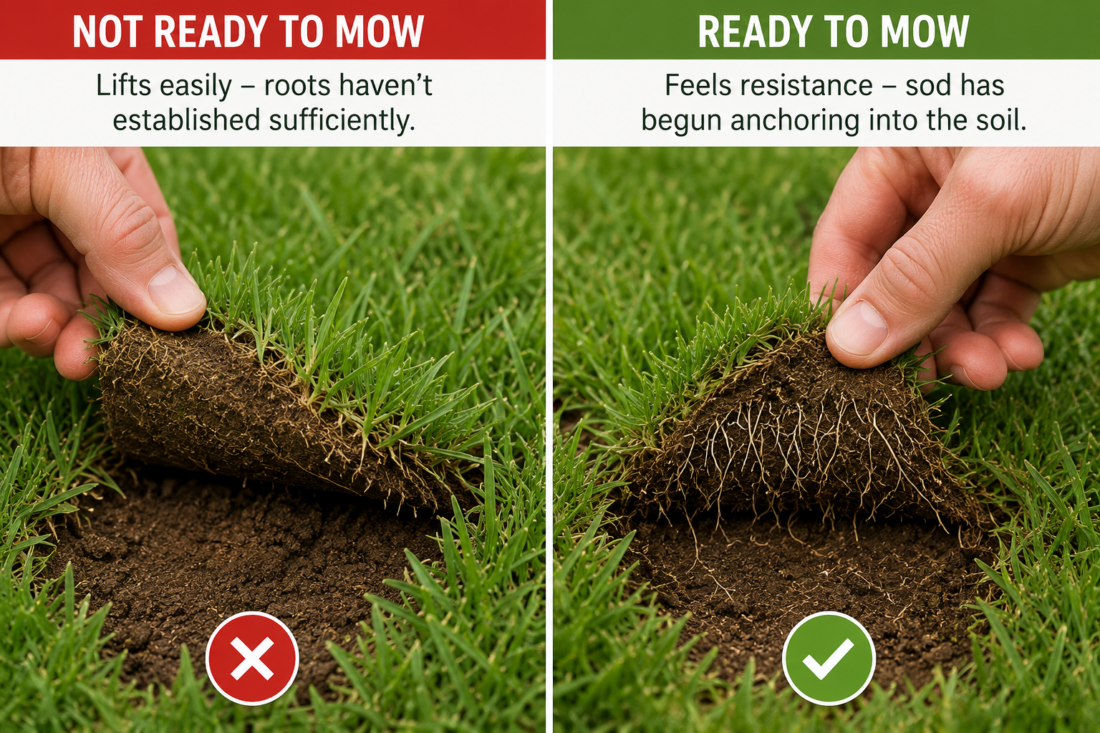
For sod, gently tug on a corner of the turf before mowing. If it lifts easily, the roots haven't established sufficiently. If you feel resistance, the sod has begun anchoring into the soil.
Here is a general comparison:
| New Lawn Type | When to Consider First Mowing | What to Check First |
|---|---|---|
| New sod | Often around 10–14 days after installation | Sod is firmly rooted and doesn't lift easily |
| Seeded lawn | Usually several weeks or longer | Grass is established and has reached mowing height |
| New Bermuda lawn | Once established and at the appropriate height | Roots are secure and soil is firm |
| New St. Augustine sod | Once rooted and tall enough to mow | Sod doesn't shift or pull up |
| New Zoysia sod | Once firmly rooted | Turf is anchored and actively growing |
These are general guidelines. Weather, grass variety, soil conditions, watering, and the time of year can all affect establishment.
Why You Shouldn't Mow New Sod Too Soon
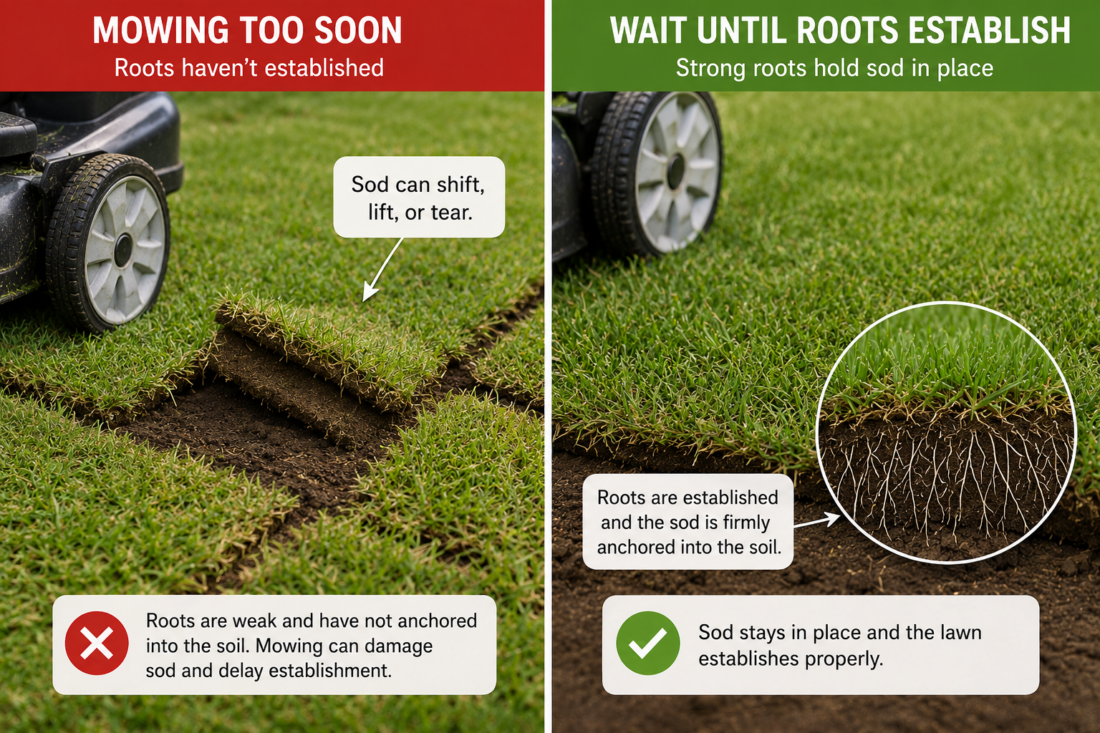
Freshly installed sod needs time to grow roots into the soil beneath it. Running a mower across the lawn before those roots have established can cause individual pieces to move, lift, or tear.
Mowing wet new sod can also create ruts and compact the soil.
Rather than simply counting the number of days since sod installation, check the lawn itself. If pieces still pull away from the soil easily, wait before mowing.
How Tall Should New Grass Be Before Mowing?
The correct mowing height depends on the type of grass, so the old advice that every new lawn should be maintained at 3 inches isn't accurate for all North Texas lawns.
Bermuda, Zoysia, and St. Augustine have different recommended mowing ranges.
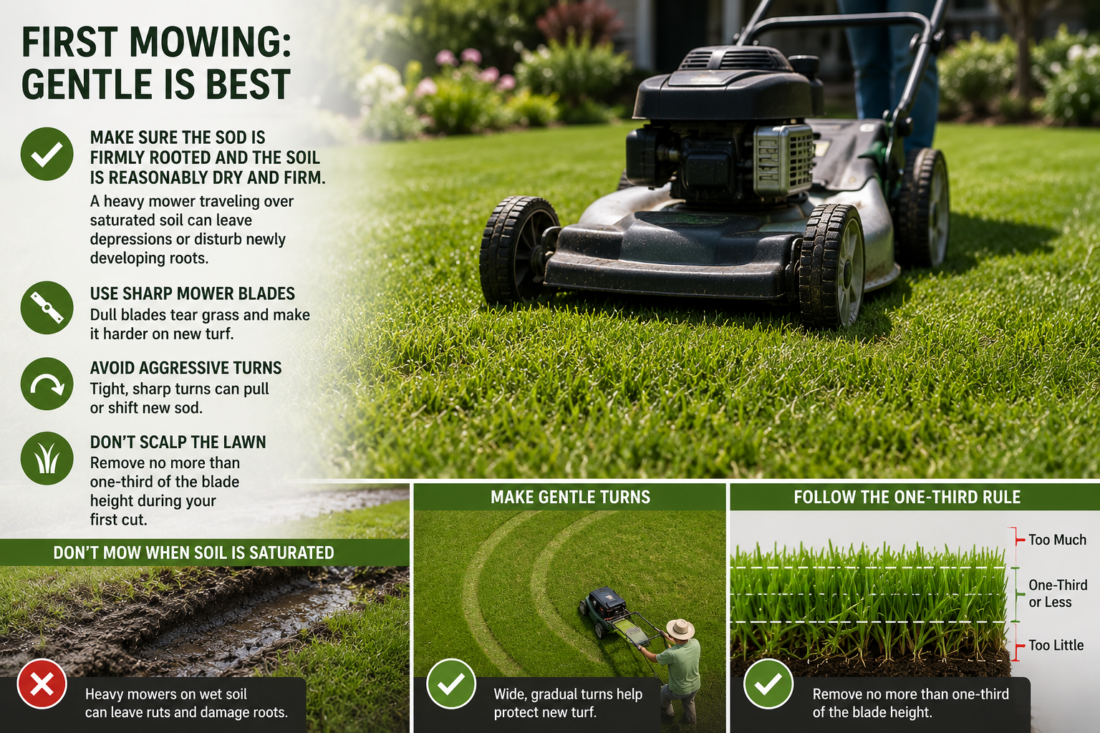
Regardless of grass type, follow the one-third rule: never remove more than approximately one-third of the grass blade during a single mowing.
Removing too much at once can stress the grass, which is particularly undesirable when the lawn is still establishing.
How to Mow New Sod for the First Time
Your first mowing should be gentle.
Make sure the sod is firmly rooted and the soil is reasonably dry and firm. A heavy mower traveling over saturated soil can leave depressions or disturb newly developing roots. Read about the best gas and electric lawn mowers.
Use sharp mower blades and avoid making unnecessarily aggressive turns that could pull or shift the turf.
Most importantly, don't scalp the lawn. Remove no more than one-third of the blade height during that first cut.
Does New Sod Need to Be Watered Before Mowing?
New sod needs consistent moisture during establishment, but you don't want to mow it while the soil is saturated.
As the sod develops roots, watering frequency can gradually decrease. Before the first mowing, allow the surface to become firm enough to support the mower without leaving deep tracks.
Don't allow the sod to become severely dry just to make mowing easier.
When to Mow a Newly Seeded Lawn
A lawn grown from seed usually takes longer to reach its first mowing than sod.
Instead of mowing according to a fixed timeline, wait until the new grass is established and has grown beyond its desired mowing height. The exact timing varies considerably depending on grass species, weather, planting season, moisture, and germination conditions.
Young seedlings can be easily damaged, so avoid mowing prematurely.
What Happens If You Mow a New Lawn Too Soon?
Mowing prematurely can interfere with establishment. With sod, the mower may shift or pull up pieces that haven't rooted properly. With seedlings, traffic and mowing can damage young plants before they develop sufficient strength.
Waiting until the lawn is genuinely ready gives the root system more time to develop and makes that first mowing less stressful.
New Lawn First-Mowing Checklist
Before starting the mower, ask:
Is the grass tall enough to mow? Are the roots established? Does the sod resist lifting? Is the ground firm enough for the mower? Are the mower blades sharp? Can I cut the lawn without removing more than one-third of the blade?
If the answer is yes, your new lawn is likely ready for its first cut.
Frequently Asked Questions
How soon can you mow new sod?
New sod may be ready for its first mowing in roughly 10–14 days, but rooting and grass height matter more than a specific number of days. Don't mow if the sod still lifts easily.
How do I know if sod has rooted?
Gently lift a corner of the sod. Resistance indicates that roots are beginning to anchor into the underlying soil.
What happens if I mow sod before it roots?
The mower can shift, lift, or tear pieces of sod, potentially interfering with establishment and creating uneven areas.
Should I stop watering new sod before mowing?
Don't stop watering altogether. Instead, time your watering so the lawn isn't saturated when you mow. The soil should be firm enough to support the mower.
How much grass should I cut during the first mowing?
Follow the one-third rule and remove no more than approximately one-third of the grass blade in one mowing.
Is the first mowing different for Bermuda, Zoysia, and St. Augustine?
Yes. Appropriate mowing heights vary by grass species and cultivar, so mowing should be based on the particular grass installed rather than a universal height.
Professional Lawn Care After Sod Installation
The first few weeks after installing a lawn can have a major impact on how successfully it establishes. Proper watering, mowing, and ongoing maintenance help new turf develop the root system it needs to handle North Texas growing conditions.
Ryno Lawn Care, LLC provides professional lawn care services to help North Texas homeowners maintain healthier, better-looking lawns after installation. From your lawn's first cuts to ongoing seasonal maintenance, the right care can help protect your investment and keep new turf looking its best.

Blog Admin
Hello, hope you enjoy these blog posts and get some useful lawn care tips from reading the info. Let me know if you have any questions or comments below.