
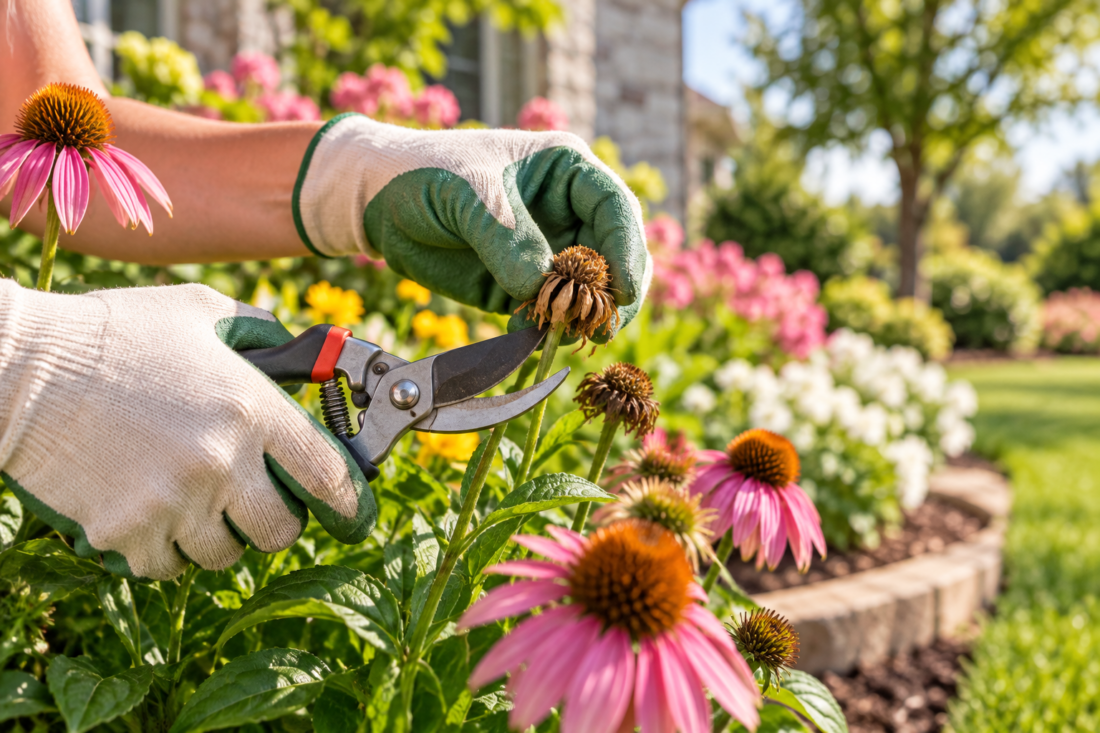
The blooming season is here, which means it's time to get out your pruning shears. One of the simplest habits that can make a big difference in your garden's appearance and, for many plants, the number of blooms is deadheading.
If you're wondering how to deadhead flowers, the process is relatively simple. By removing faded blooms before they develop seeds, you can help many annuals and perennials continue flowering throughout the growing season. Deadheading also keeps flower beds looking cleaner and more maintained.
However, not every plant responds to deadheading in exactly the same way. Some plants will produce additional flowers, while others, such as azaleas, are deadheaded primarily to improve their appearance.
What Is Deadheading?
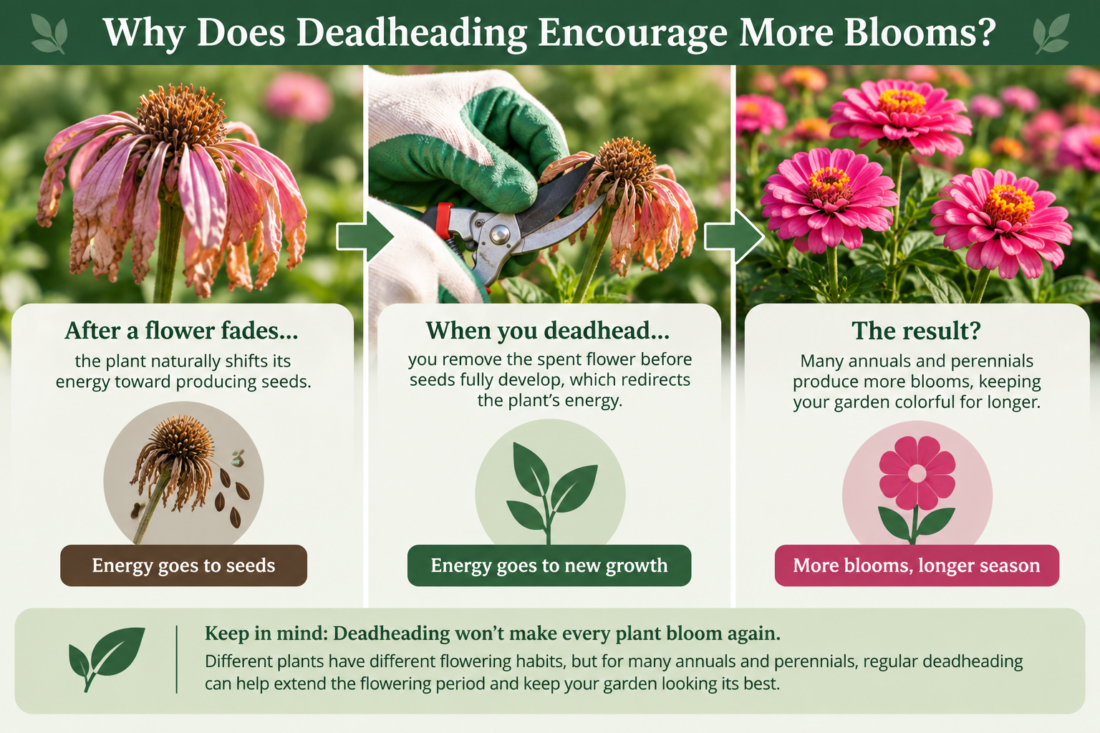
Deadheading is the practice of removing spent or fading flowers from a plant. Instead of allowing the plant to put energy into producing seeds, removing the faded blooms encourages many flowering plants to redirect their energy toward new growth and additional flowers.
Deadheading is particularly useful for:
-
Annual flowers
-
Perennial flowers
-
Some flowering shrubs
-
Container plants
Not every plant needs to be deadheaded, though. Some flowers naturally drop their blooms or produce attractive seed heads that you may want to leave in place.
For example, plants such as coneflowers can provide food for birds after flowering, so leaving some spent flowers may actually benefit wildlife.

Why Does Deadheading Encourage More Blooms?
Once a flower has finished blooming, many plants begin shifting their energy toward seed production. If the spent flower remains on the plant, the plant may continue putting resources into developing seeds.
Removing the flower before seeds fully develop can encourage the plant to produce additional flowers instead.
This doesn't mean deadheading will make every plant bloom again. Different plants have different flowering habits and growth cycles.
For many annuals and perennials, however, regular deadheading can help extend the flowering period and keep the garden looking colorful for longer.
How to Deadhead Flowers
The exact technique depends on the type of plant, but the basic process is easy.
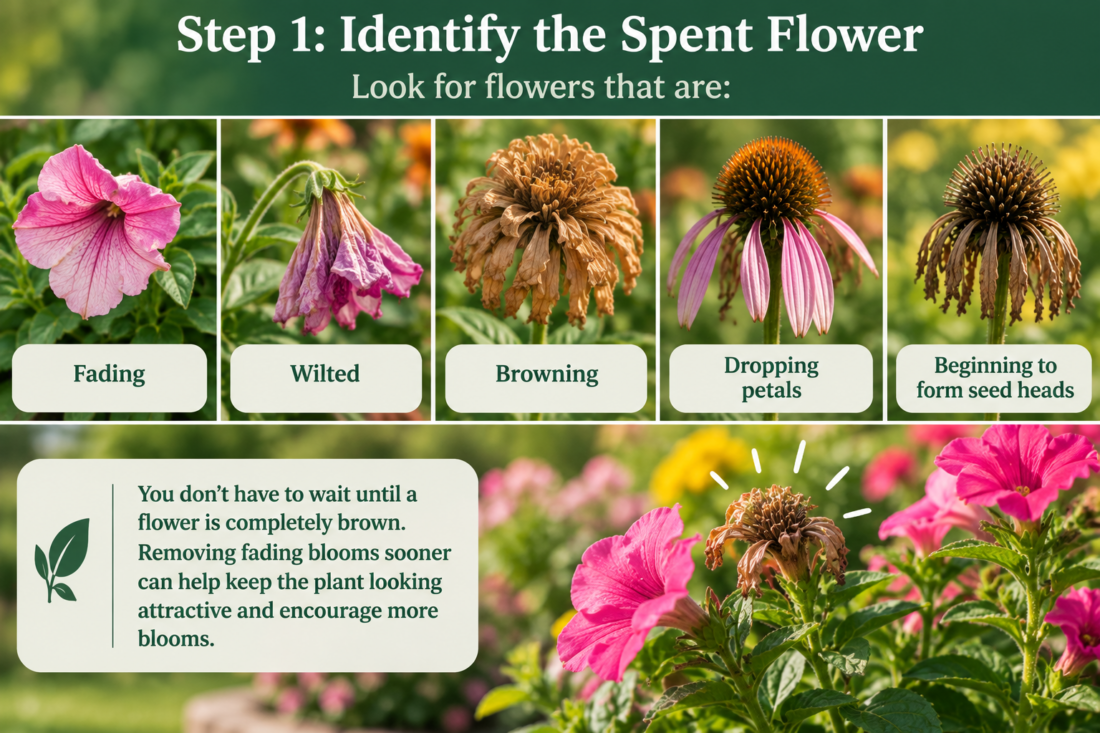
Step 1: Identify the Spent Flower
Look for flowers that are:
-
Fading
-
Wilted
-
Browning
-
Dropping petals
-
Beginning to form seed heads
You don't necessarily need to wait until a flower is completely brown. Removing fading blooms sooner can help keep the plant looking attractive.
Step 2: Follow the Flower Stem
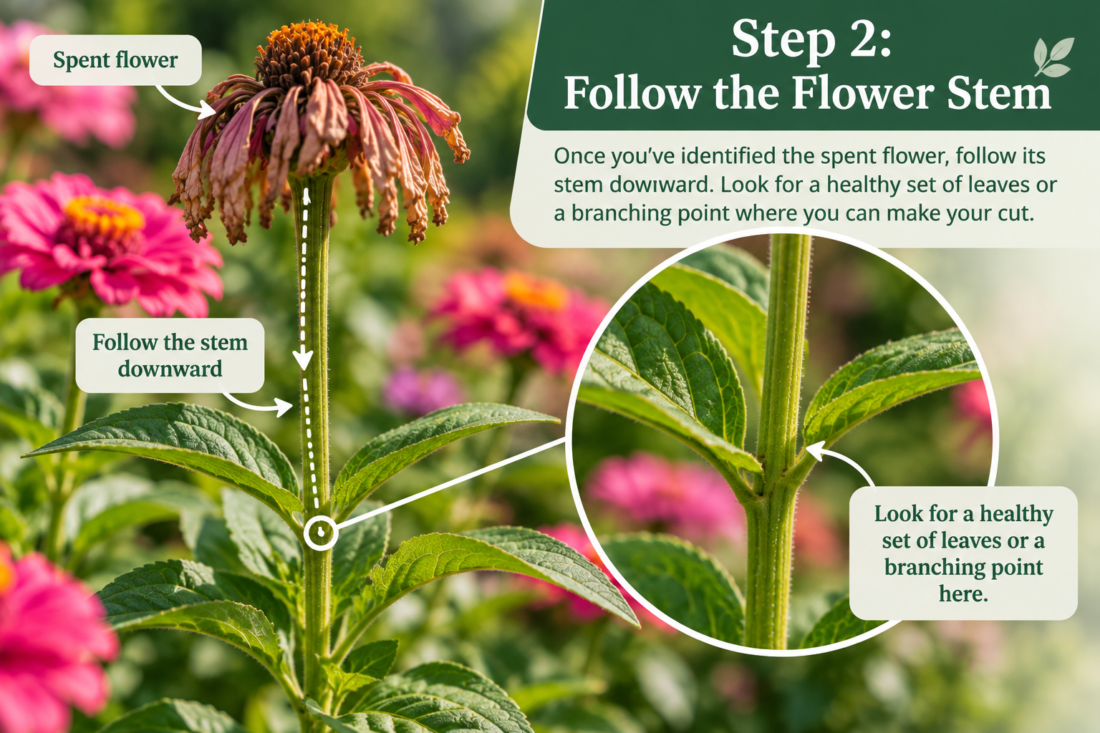
Once you've identified the spent flower, follow its stem downward.
Look for a healthy set of leaves or a branching point where you can make your cut.
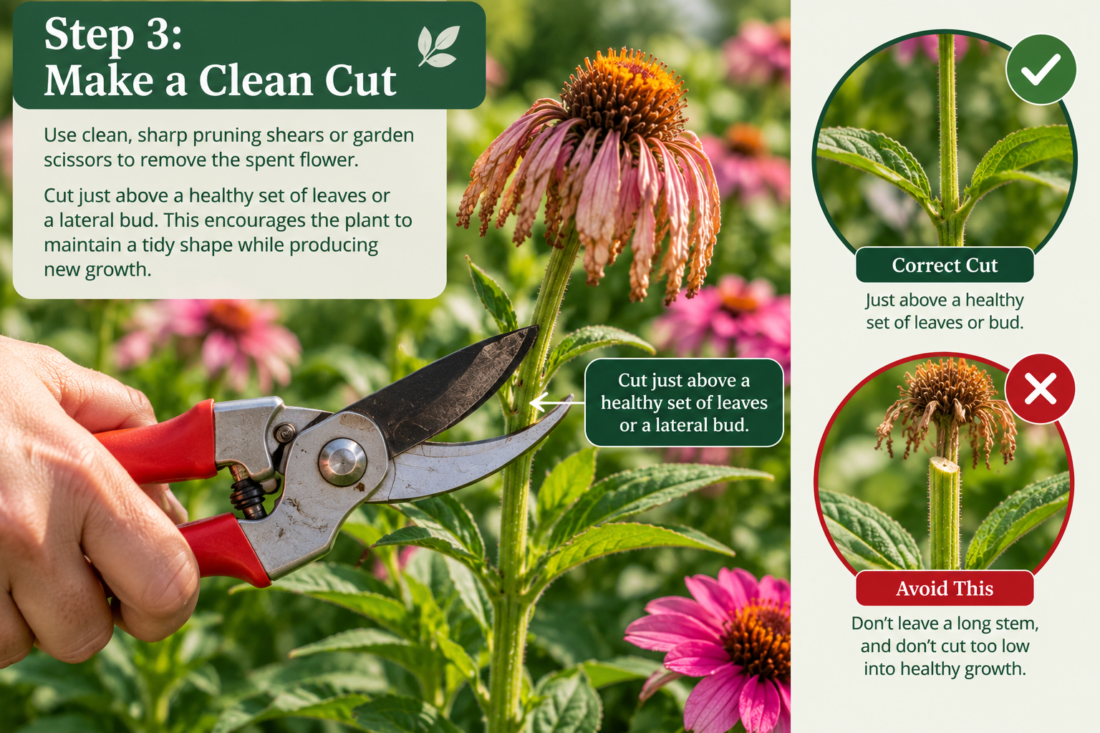
Step 3: Make a Clean Cut
Use clean, sharp pruning shears or garden scissors to remove the spent flower.
For many plants, you can cut just above a healthy set of leaves or a lateral bud. This encourages the plant to maintain a tidy shape while producing new growth.
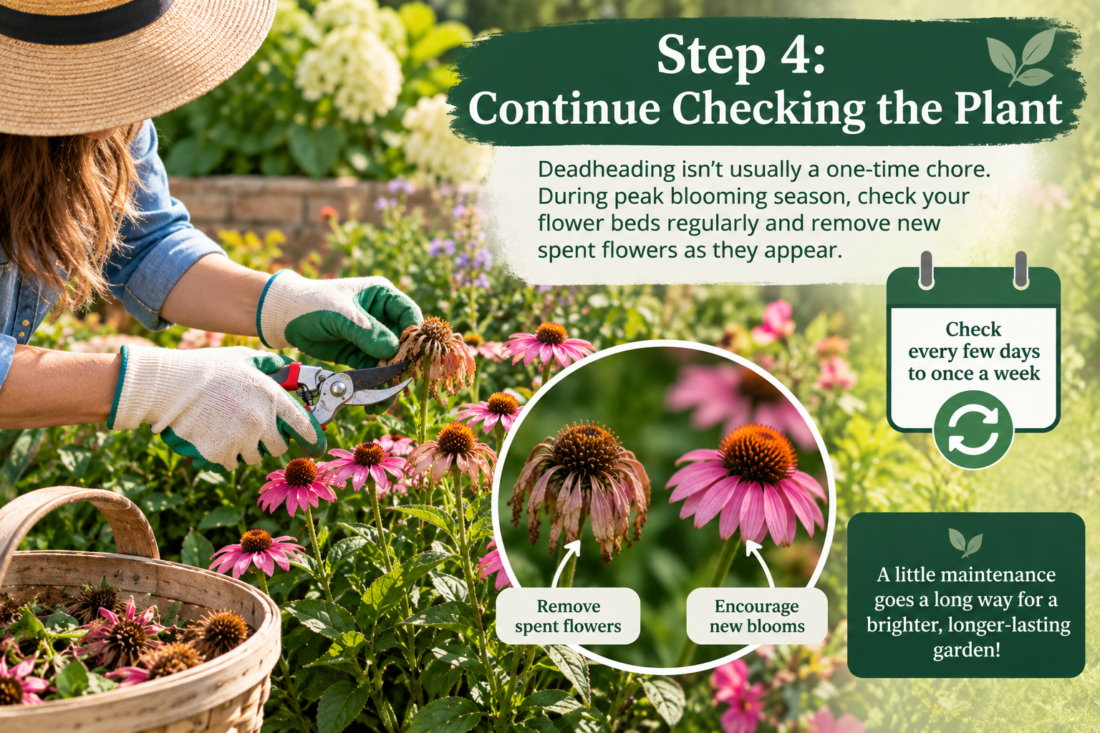
Step 4: Continue Checking the Plant
Deadheading isn't usually a one-time chore. During peak blooming season, check your flower beds regularly and remove new spent flowers as they appear.
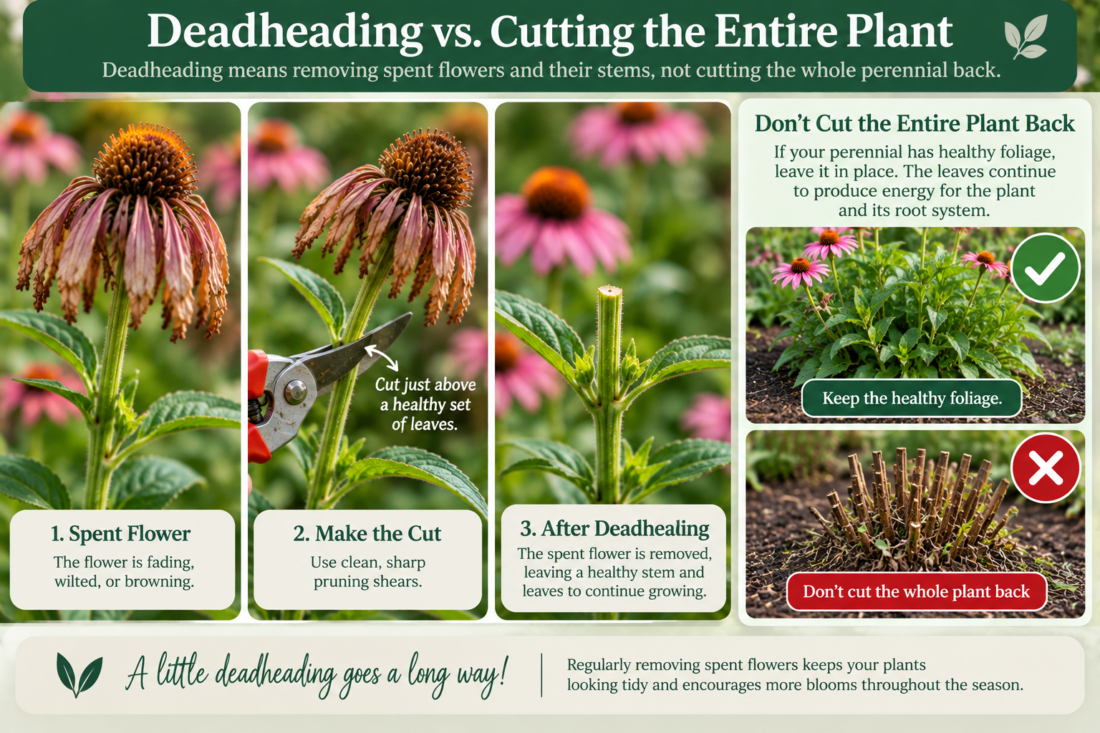
Should You Cut Back the Entire Plant?
No. Deadheading generally means removing spent flowers and their stems, not cutting the entire perennial back.
If a perennial has healthy foliage, leave the foliage in place unless the plant requires additional pruning for another reason. The leaves continue to produce energy for the plant and its root system.
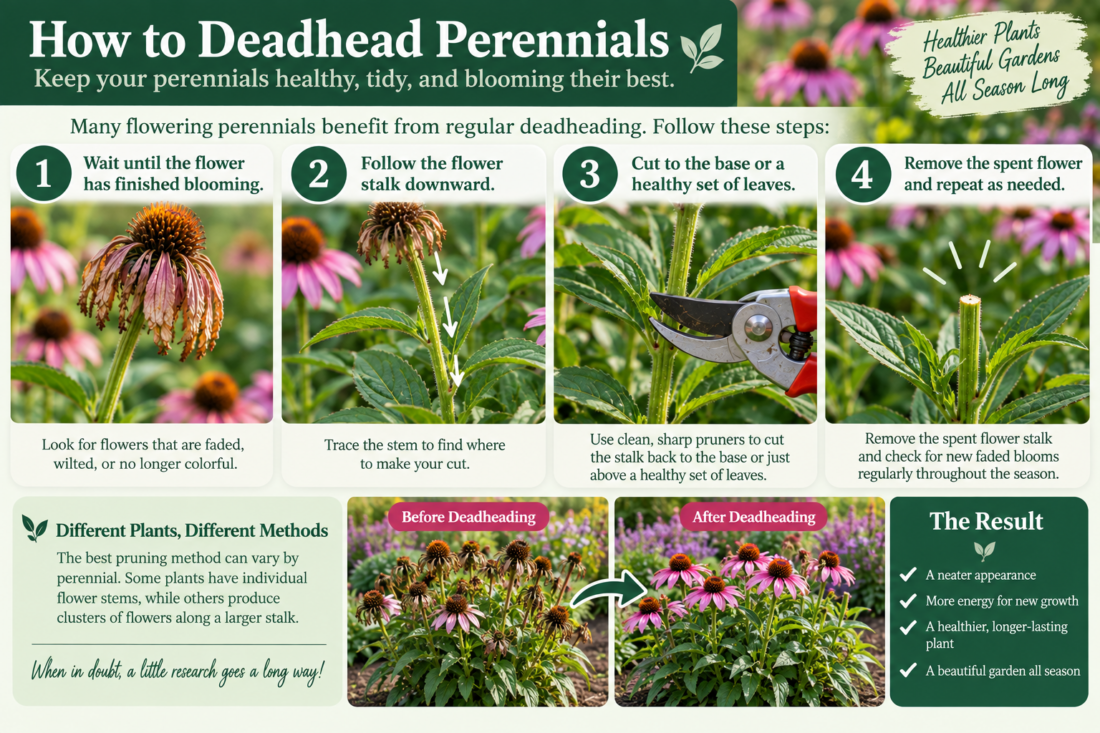
How to Deadhead Perennials
Many flowering perennials benefit from regular deadheading.
To deadhead a perennial:
- Wait until the individual flower has finished blooming.
- Follow the flower stalk downward.
- Cut the flower stalk back to the base or to a healthy set of leaves.
- Remove the spent flower and repeat as needed.
Removing the entire spent flower stalk can make the plant look significantly neater.
Keep in mind that the specific pruning method can vary by perennial. Some plants produce flowers on individual stems, while others produce clusters of flowers along a larger stalk.
Learn More: Top Shade Perennial Plants for Texas
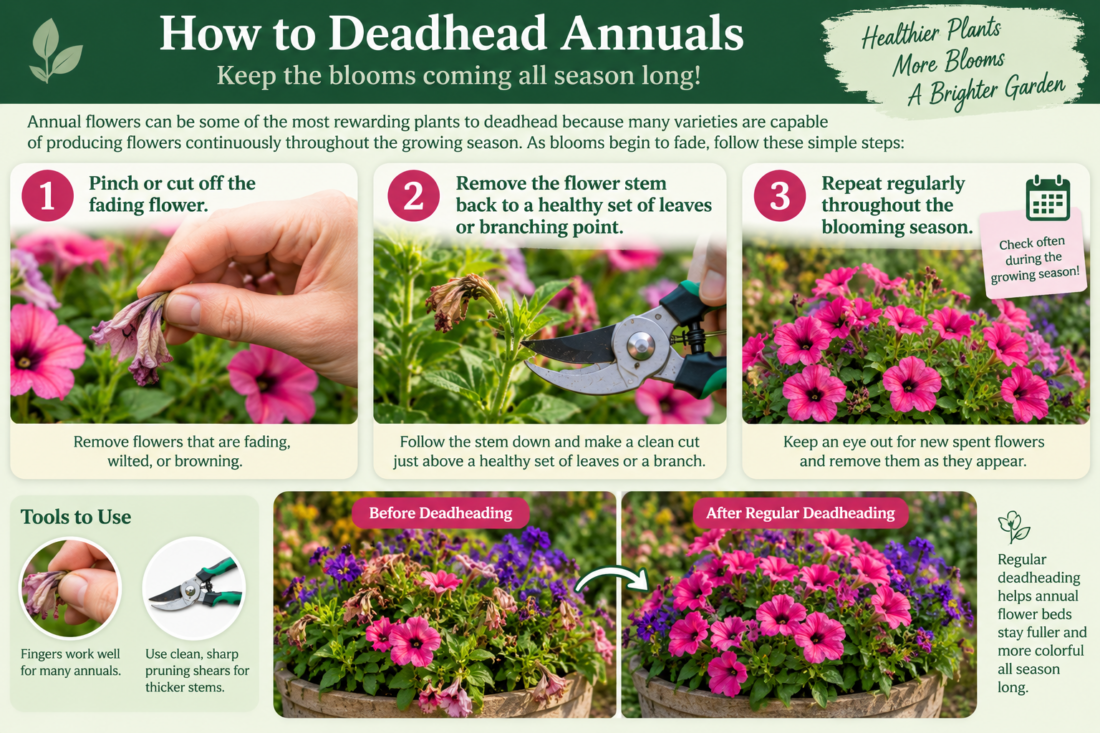
How to Deadhead Annuals
Annual flowers can be some of the most rewarding plants to deadhead because many varieties are capable of producing flowers continuously throughout the growing season.
As blooms begin to fade:
-
Pinch or cut off the fading flower.
-
Remove the flower stem back to a healthy set of leaves or branching point.
-
Repeat regularly throughout the blooming season.
Some annuals can simply be pinched with your fingers, while plants with thicker stems may be easier to handle with pruning shears.
Regular deadheading can help annual flower beds maintain a fuller, more colorful appearance.
Learn More: Full Sun Annuals that Bloom all Summer
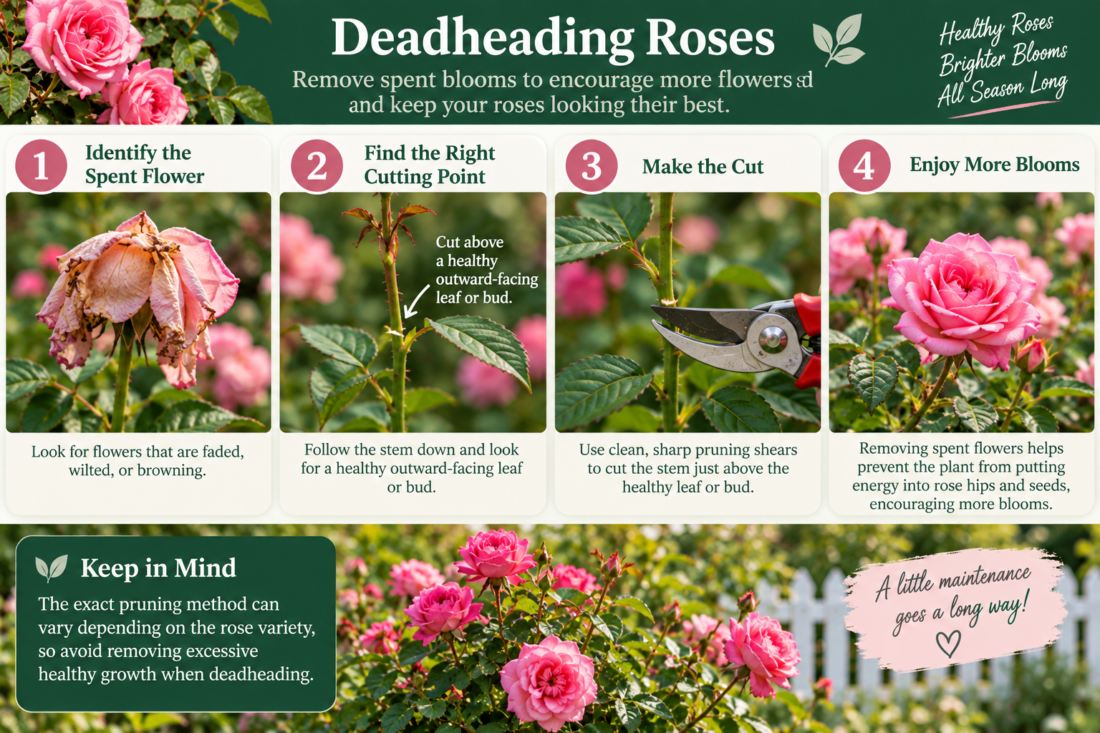
Deadheading Roses
Roses are another popular plant that can benefit from removing spent flowers.
When a rose finishes blooming, remove the faded flower before the plant puts significant energy into developing rose hips and seeds.
For many roses, the spent flower can be removed by cutting the stem above a healthy outward-facing leaf or bud.
The exact pruning method can vary depending on the rose variety, so avoid removing excessive healthy growth when deadheading.
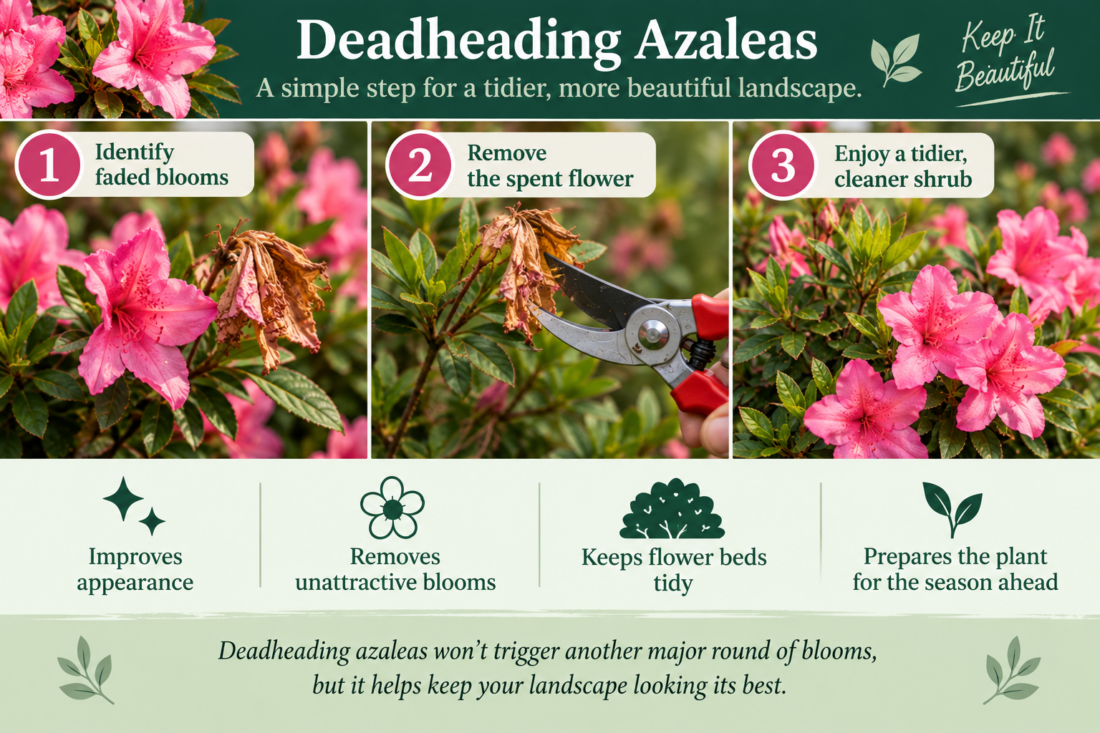
Deadheading Azaleas and Spring-Blooming Shrubs
Azaleas and other spring-blooming shrubs are a little different.
Deadheading azaleas generally won't trigger another major round of flowers during the same season. These shrubs typically bloom during a specific period in spring rather than repeatedly throughout the growing season.
So why deadhead them?
The primary benefit is appearance.
Removing faded azalea flowers can:
-
Improve the appearance of the shrub
-
Remove unattractive brown flowers
-
Keep flower beds looking tidy
-
Prepare the plant for the remainder of the growing season
Deadheading spring-blooming shrubs is therefore more about landscape appearance and maintenance than encouraging additional blooms.
Learn More: North Texas Guide to Spring Garden Preparation
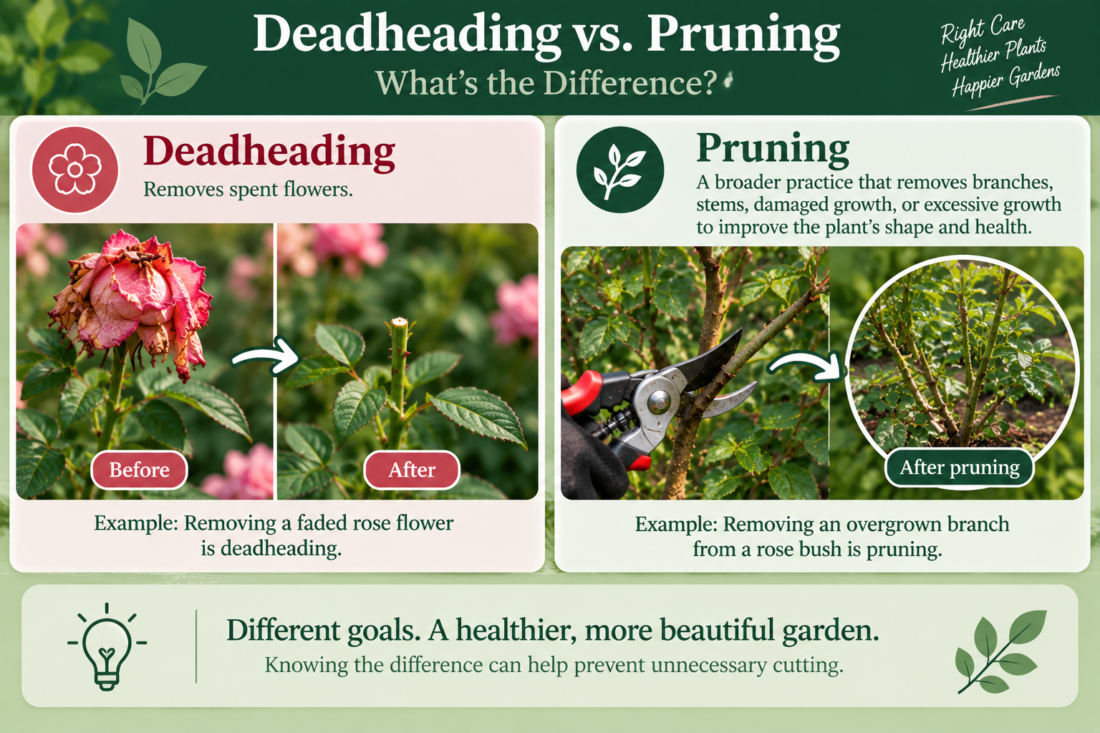
Deadheading vs. Pruning: What's the Difference?
Deadheading and pruning are related, but they aren't the same thing.
Deadheading specifically involves removing spent flowers.
Pruning is a broader practice that can involve removing branches, stems, damaged growth, diseased portions of a plant, or excessive growth to influence the plant's shape and health.
For example, removing a faded rose is deadheading. Removing an entire overgrown branch from a rose bush is pruning.
Knowing the difference can help prevent unnecessary cutting.
When and How Often Should You Deadhead?
There's no single deadheading schedule that works for every plant.
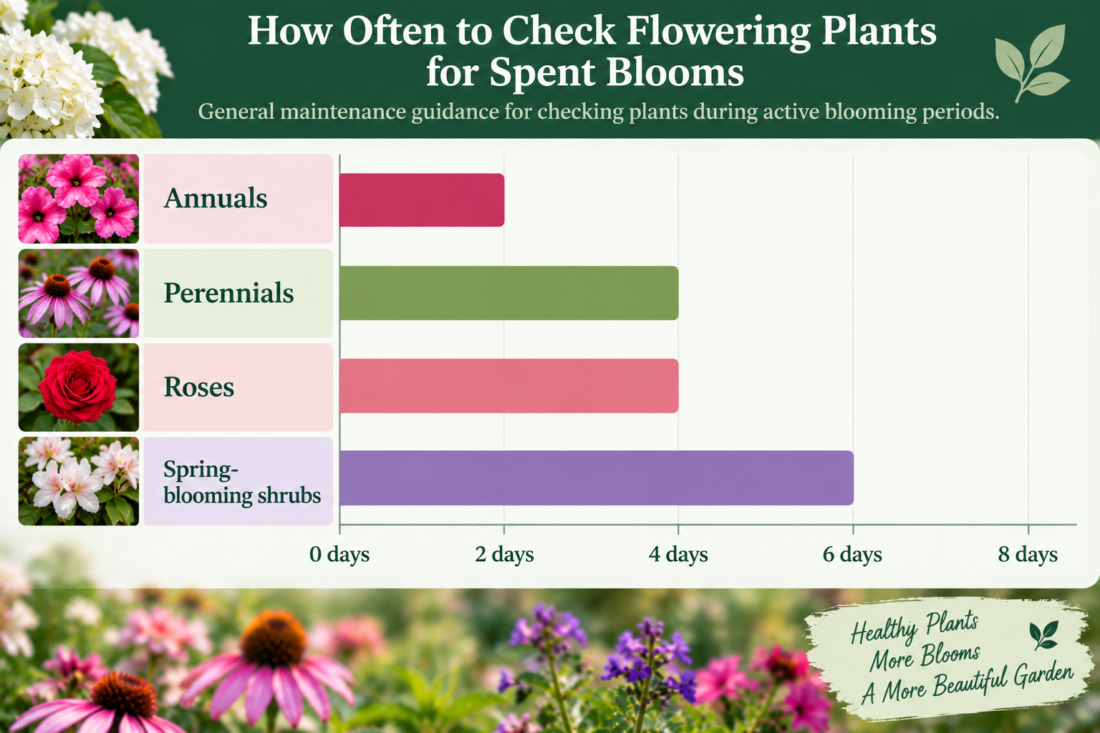
During the active blooming season, check your flowers every few days to once a week. Plants that are blooming heavily may need attention more frequently.
The chart above is a general maintenance guide, rather than a strict schedule. During periods of heavy blooming, you may want to check your plants more often.
Use Clean, Sharp Tools
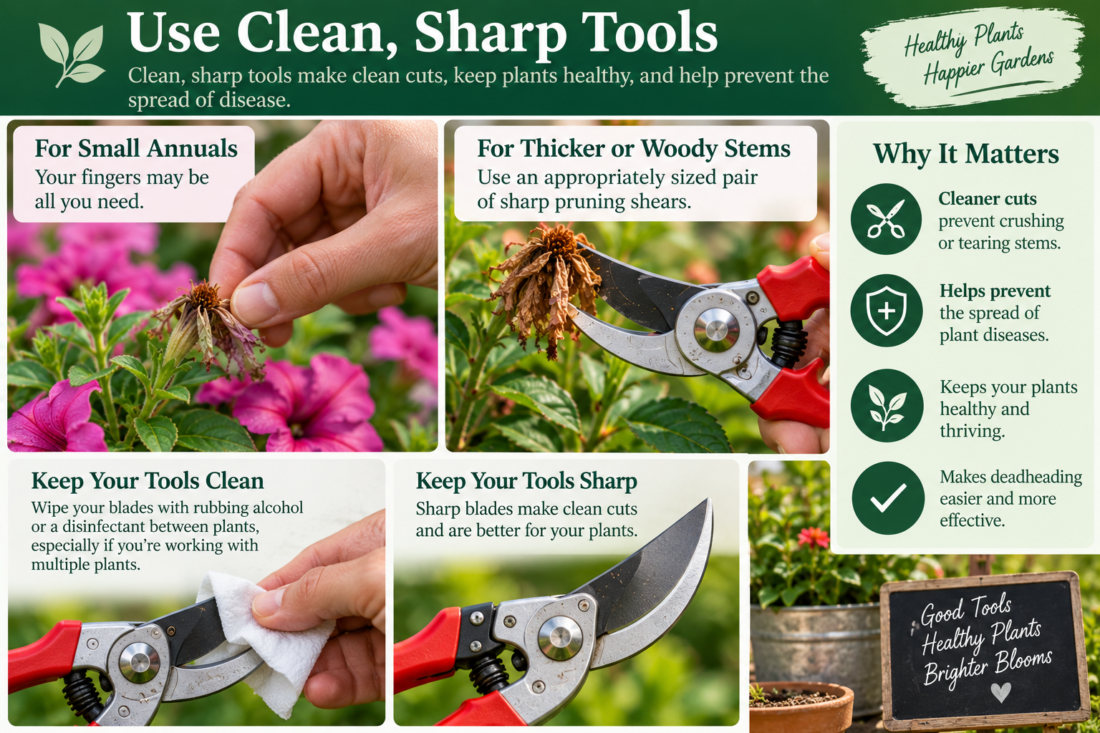
If you're using pruning shears to deadhead flowers, make sure your tools are clean and sharp.
Clean cuts are preferable to crushing or tearing plant stems. Keeping your tools clean can also help reduce the possibility of spreading plant diseases between plants.
For small annuals with soft stems, your fingers may be all you need.
For plants with woody or thicker stems, use an appropriately sized pair of sharp pruning shears.
Common Deadheading Mistakes
Deadheading is simple, but there are a few mistakes gardeners should avoid.
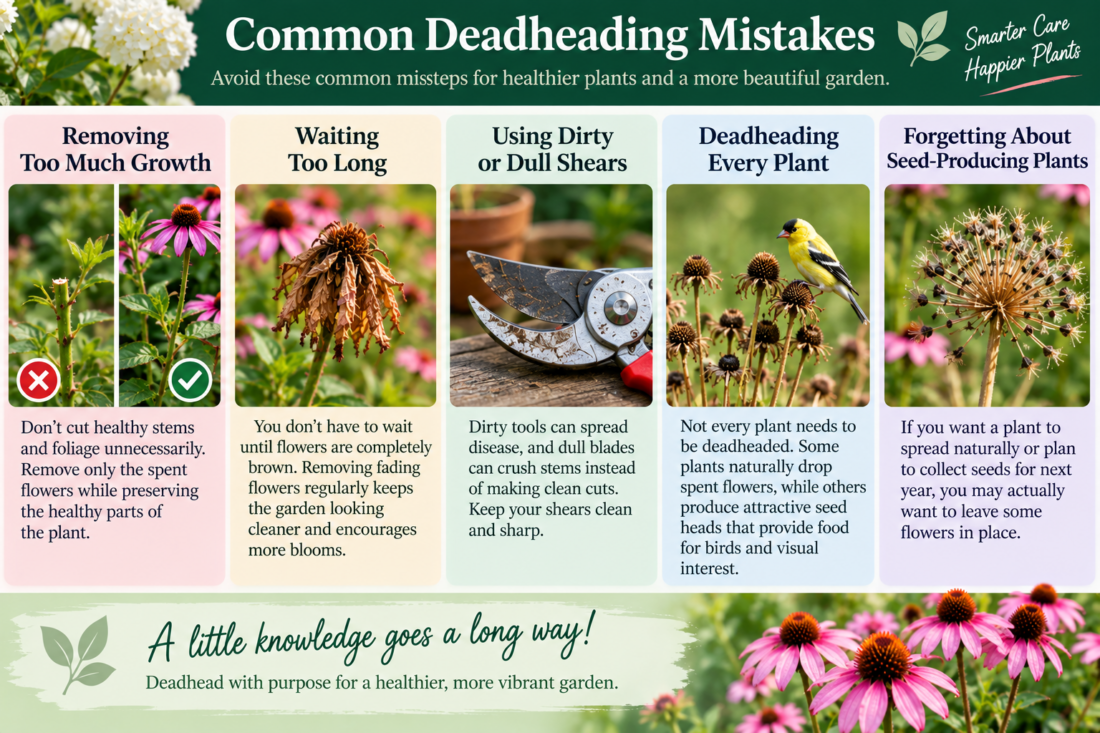
Removing Too Much Growth
Don't cut healthy stems and foliage unnecessarily. The goal is to remove spent flowers while preserving the healthy portions of the plant.
Waiting Too Long
You don't necessarily need to wait until flowers are completely brown. Removing fading flowers regularly can keep the garden looking cleaner.
Using Dirty or Dull Shears
Dirty tools can potentially spread disease, while dull blades can crush stems rather than making clean cuts.
Deadheading Every Plant
Not every plant needs to be deadheaded. Some plants naturally drop spent flowers, while others produce attractive seed heads that provide food for birds and visual interest in the garden.
Forgetting About Seed-Producing Plants
If you're trying to encourage a plant to spread naturally or want to collect seeds for next year, you may actually want to leave some flowers in place.
Should You Deadhead in North Texas?
North Texas gardeners have a long growing season, which makes regular flower maintenance especially useful. Many annuals and perennials can continue producing flowers for extended periods when temperatures and growing conditions are favorable.
However, North Texas heat can put additional stress on plants during the summer. Deadheading should be part of a larger landscape maintenance routine that includes appropriate watering, mulching, soil care, and seasonal pruning.
When temperatures become extremely hot, make sure you're not confusing normal heat stress with a need for additional pruning.
What Should You Do With Spent Flowers?
After deadheading, you can generally add healthy plant material to a compost pile.
However, avoid composting flowers or foliage that show obvious signs of disease or significant pest problems. Diseased plant material is better disposed of according to local recommendations rather than added to home compost.
Does Deadheading Make Flowers Bloom More?
For many annuals and perennials, yes, deadheading can encourage additional blooms by preventing the plant from focusing as much energy on seed production.
However, the results depend on the plant.
Some plants naturally flower only once during a particular season. Deadheading these plants won't necessarily produce another round of flowers.
The biggest benefits of deadheading are therefore:
-
Encouraging additional blooms on reblooming plants
-
Extending the flowering season for some plants
-
Improving the appearance of flower beds
-
Preventing unwanted seed production
-
Keeping plants looking tidy
When Should You Stop Deadheading?
As the growing season comes to an end, you may want to stop deadheading certain plants and allow their seed heads to develop.
Leaving seed heads can provide food for birds and add winter interest to the landscape.
For example, some gardeners intentionally leave plants such as coneflowers standing through fall and winter rather than removing every spent flower.
Your approach can depend on whether your priority is maximum blooms, a tidy landscape, wildlife habitat, or winter interest.
Get Your Garden Ready for Spring
Deadheading is one of the easiest ways to keep your flower beds looking fresh throughout the growing season, but it's only one part of maintaining a beautiful landscape.
Spring is also an excellent time to evaluate your flower beds, prune appropriately, refresh mulch, address weeds, improve soil, and plan new landscaping projects.
Whether you're maintaining an existing garden or considering a complete landscape redesign, thoughtful planning can make routine maintenance easier throughout the year.
Learn More: Landscaping Ideas: Start Spring Off with a New Look for Your Home
Ready to give your landscape a fresh look for spring? Contact Ryno Lawn Care today for a free quote on landscape design and installation.
Frequently Asked Questions About Deadheading Flowers
What does deadheading mean in gardening?
Deadheading means removing flowers after they have faded or finished blooming. For many annuals and perennials, this can encourage additional blooms and keep plants looking tidy.
How do you deadhead flowers correctly?
Identify the faded flower, follow its stem down to a healthy set of leaves or branching point, and make a clean cut with sharp pruning shears. The exact location of the cut depends on the plant.
Does deadheading encourage more flowers?
Deadheading can encourage additional blooms in many annuals and perennials because it prevents the plant from putting as much energy into seed production. However, it won't cause every plant to rebloom.
How often should I deadhead flowers?
During active blooming, check your plants every few days to once a week. Heavily flowering plants may require more frequent deadheading.
Should I deadhead azaleas?
You can deadhead azaleas to remove faded flowers and improve their appearance. However, deadheading azaleas generally won't cause them to produce another major flush of flowers that same season.
Can I deadhead flowers with my fingers?
Yes. Many annuals and soft-stemmed flowers can be deadheaded by simply pinching off faded blooms. Use pruning shears for plants with thicker or woody stems.
Should I remove all the flowers from a plant?
No. You generally only need to remove faded flowers. Healthy flowers should remain on the plant, and some spent flowers can be left behind if you want the plant to produce seeds or provide food for birds.
What is the difference between deadheading and pruning?
Deadheading specifically means removing spent flowers. Pruning is a broader type of plant maintenance that can involve removing branches, stems, damaged growth, or excessive growth to improve plant health, shape, or appearance.
When should I stop deadheading?
You can stop deadheading toward the end of the growing season if you want plants to produce seeds or provide food and habitat for wildlife. Some gardeners also leave seed heads in place for winter interest.

T. Stafford
Writing about gardening, lawn care, etc. to share what I've learned with others. I've lived in Texas my whole life, so I'm more familiar with this region's native plants.