
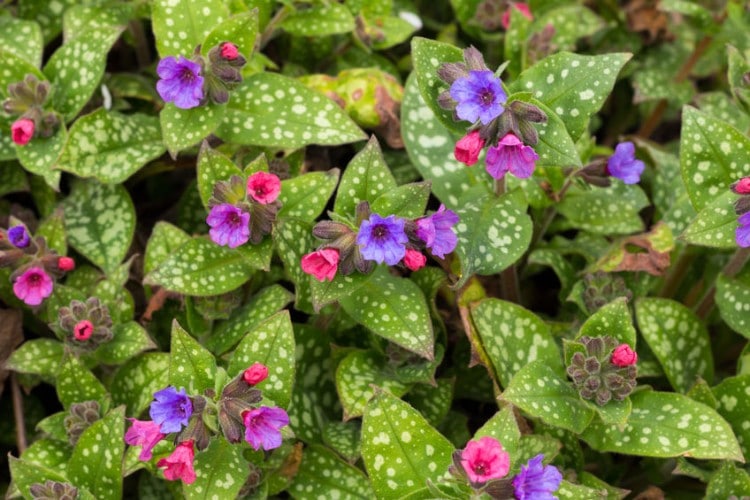
Plants come in a variety of shapes, sizes, and colors, and they easily brighten up any space. If you want to accent a shaded area in your yard, or bring a burst of life to your home or office, perennial shade plants are your best bet because they can thrive in minimal sunlight.
What is a Perennial Plant?
Perennial plants are a type of flowering plant that live for more than two growing seasons. Unlike annual plants that complete their life cycle in a single growing season, perennial plants persist for several years, producing flowers and fruits year after year.
If you’re interested in annuals, read one of our other articles titled, “Full Sun Annuals That Bloom All Summer.”
Perennial plants grow in both summer and spring, and tend to go dormant during winter and autumn. They are an excellent choice for gardeners who want to create low-maintenance gardens that offer color and interest year after year.
Many different types of perennial plants exist, from sun-loving perennials like salvia and coneflowers to shade-tolerant perennials like hostas and astilbes.
One of our services is flower bed clean-up. Contact us today for details.
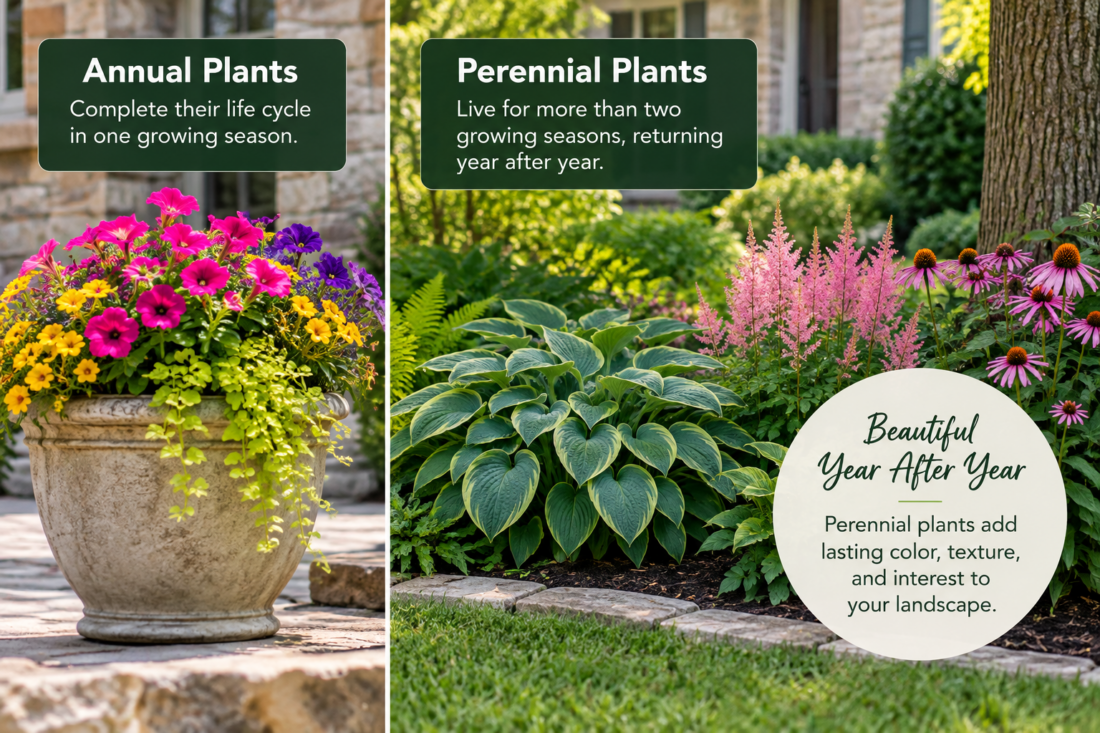
Shade-Loving Perennials
With easy care and plenty of options to choose from, perennials are among the most popular plant types. Here are some great options to liven up a shady nook in your home or yard:
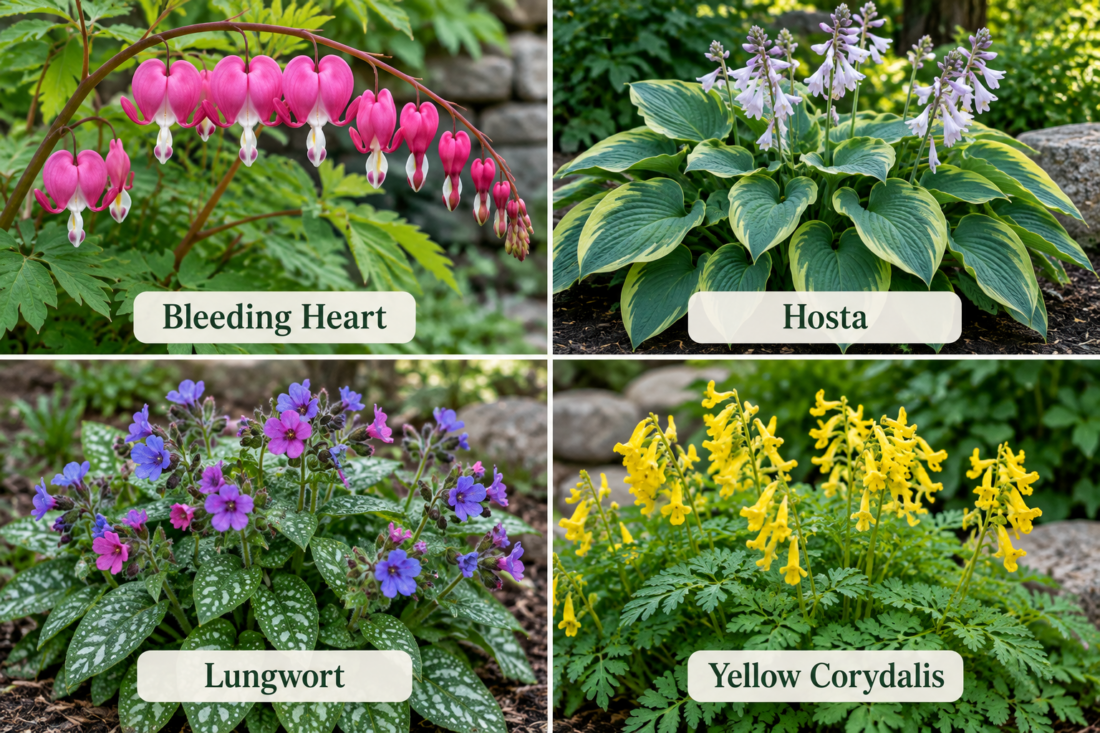
- Bleeding Heart– It has a pink and white heart-shaped flower with bending stems that grow up to 4 feet high.
- Hosta– An eye-catching and easy-to-grow plant, its fragrant flowers come in many shades such as blue, green, chartreuse, gold and white.
- Lungwort– This plant grows about 1 foot high with lush foliage, and can be planted in any season.
- Yellow Corydalis– This type of flower also reaches about a foot in height, and it’s yellow blooms last quite a long time.
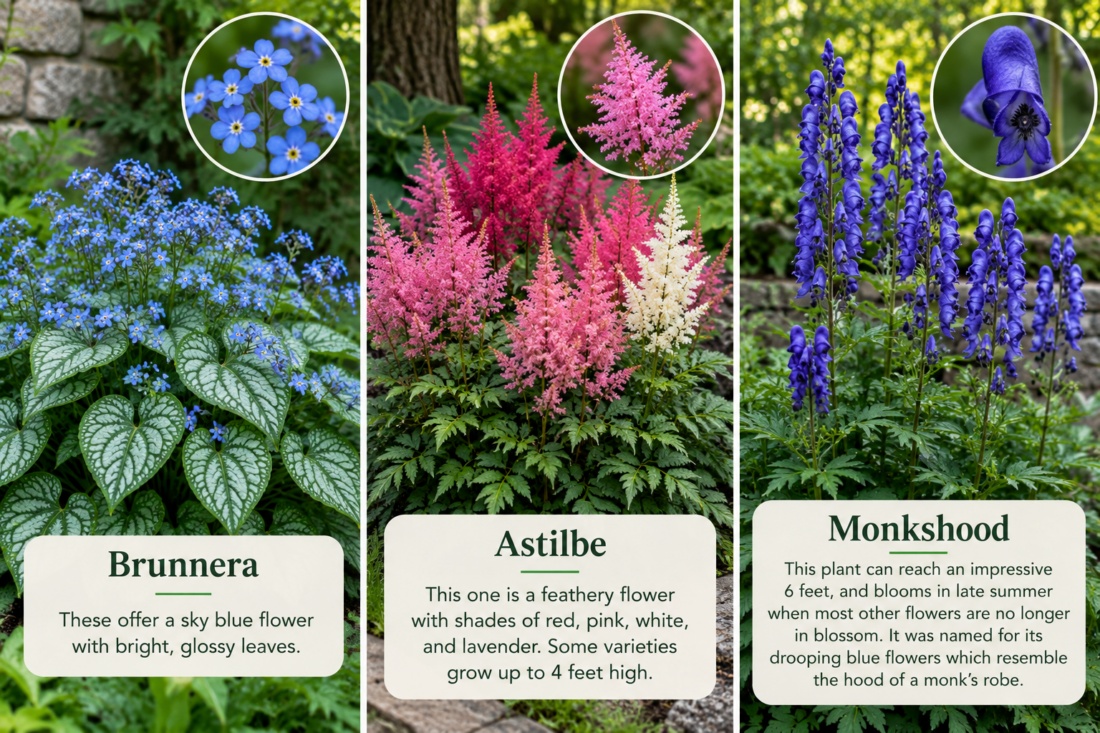
- Brunnera– These offer a sky blue flower with bright, glossy leaves.
- Astilbe– This one is a feathery flower with shades of red, pink, white, and lavender. Some varieties grow up to 4 feet high.
- Monkshood– This plant can reach an impressive 6 feet, and blooms in late summer when most other flowers are no longer in blossom. it was named for its drooping blue flowers which resemble the hood of a monk’s robe.
Sun-Loving Perennials
While this post is mainly focused on shade perennials, we understand that you may be interested in options you can propagate in the full-sun portions of your yard:
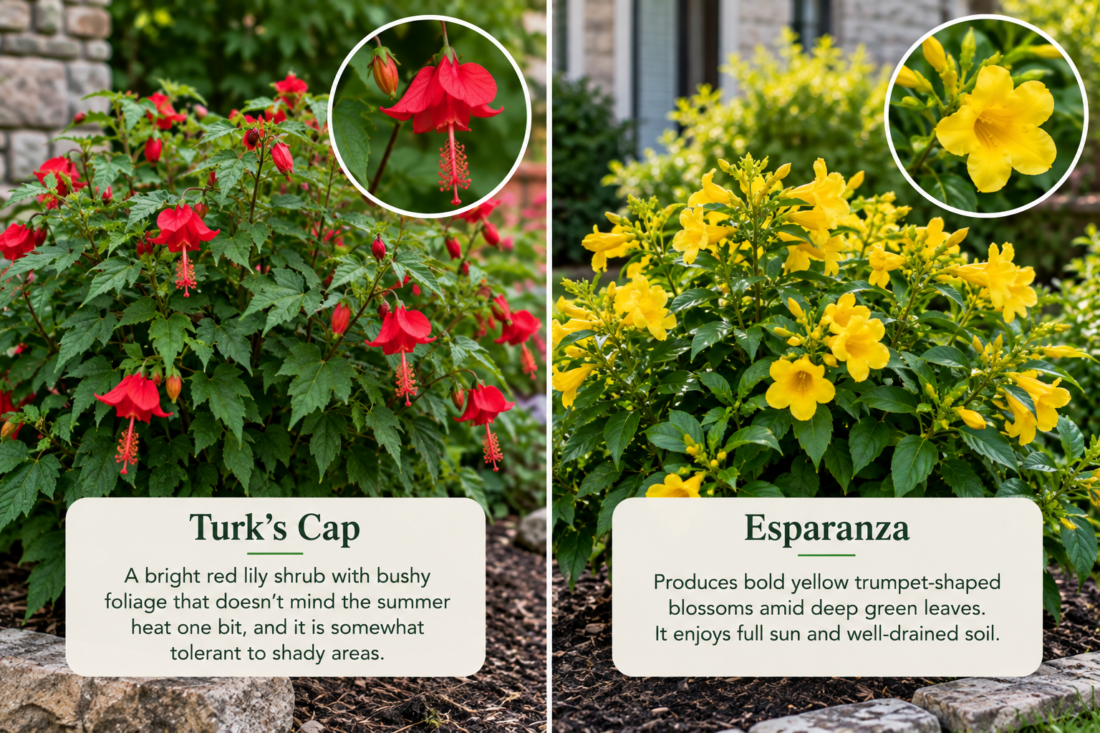
- Turk’s Cap is a bright red lily shrub with bushy foliage that doesn’t mind the summer heat one bit, and it is somewhat tolerant to shady areas.
- Esparanza produces bold yellow trumpet-shaped blossoms amid deep green leaves. It enjoys full sun and well-drained soil.
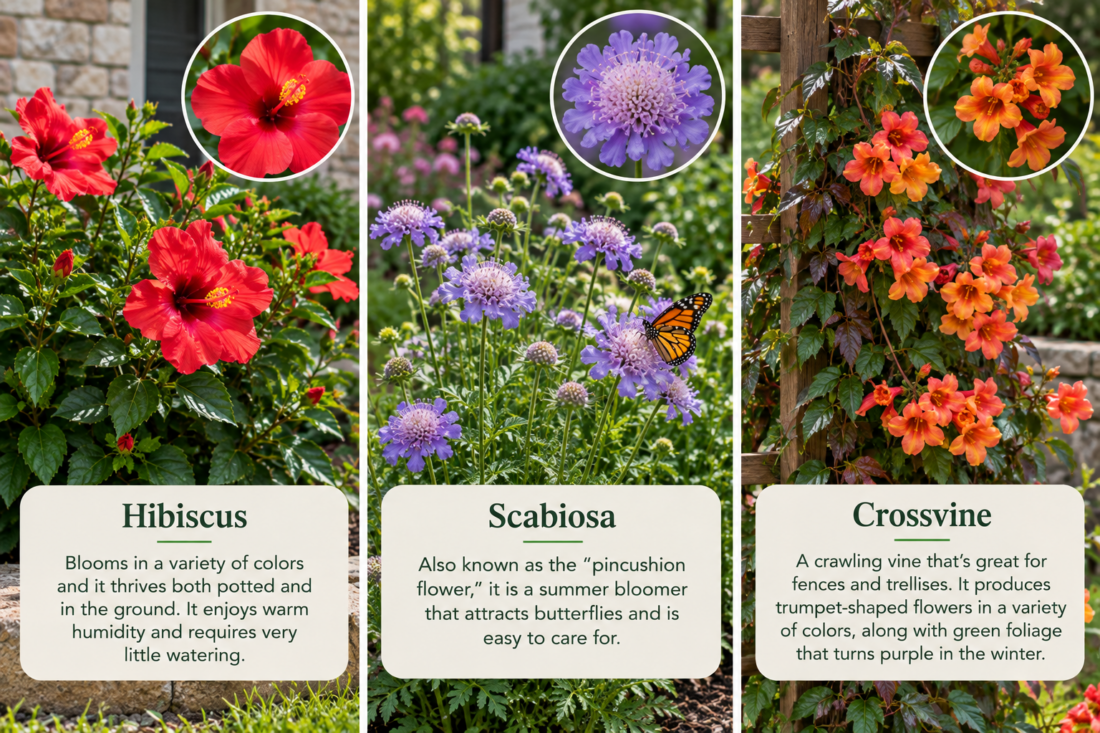
- Hibiscus blooms in a variety of colors, and it thrives both potted and in the ground. It enjoys warm humidity and requires very little watering.
- Scabiosa, also known as the “pincushion flower,” is a summer bloomer that attracts butterflies and is easy to care for.
- Crossvine is a crawling vine that’s great for fences and trellises. It produces trumpet-shaped flowers in a variety of colors, along with green foliage that turns purple in the winter.
Perennial Plant Comparison Chart
Not sure which perennial is right for your landscape? Use the chart below to compare some popular shade- and sun-loving perennial plants and find an option that fits your garden's growing conditions.
| Perennial Plant | Sun Requirements | Typical Height | Flower Color | Best Feature |
|---|---|---|---|---|
| Bleeding Heart | Partial to full shade | Up to 4 ft. | Pink and white | Heart-shaped flowers |
| Hosta | Partial to full shade | 1–3 ft. | White, lavender, purple | Colorful, attractive foliage |
| Lungwort | Partial to full shade | About 1 ft. | Pink, blue, purple | Spotted foliage and early blooms |
| Yellow Corydalis | Partial to full shade | About 1 ft. | Yellow | Long-lasting blooms |
| Brunnera | Partial to full shade | 1–2 ft. | Sky blue | Attractive foliage and delicate flowers |
| Astilbe | Partial to full shade | Up to 4 ft. | Pink, red, white, lavender | Feathery flower plumes |
| Monkshood | Partial shade | Up to 6 ft. | Blue or purple | Tall, late-season blooms |
| Turk's Cap | Full sun to partial shade | 3–6 ft. | Red | Heat tolerance and hummingbird appeal |
| Esperanza | Full sun | 3–6+ ft. | Yellow | Trumpet-shaped flowers |
| Hibiscus | Full sun to partial shade | 3–8 ft. | Various | Large, colorful flowers |
| Scabiosa | Full sun | 1–2 ft. | Purple, pink, white | Attracts butterflies |
| Crossvine | Full sun to partial shade | 30–50+ ft. as a vine | Orange, red, yellow | Great for trellises and fences |
Three Categories of Perennials
Container-grown plants
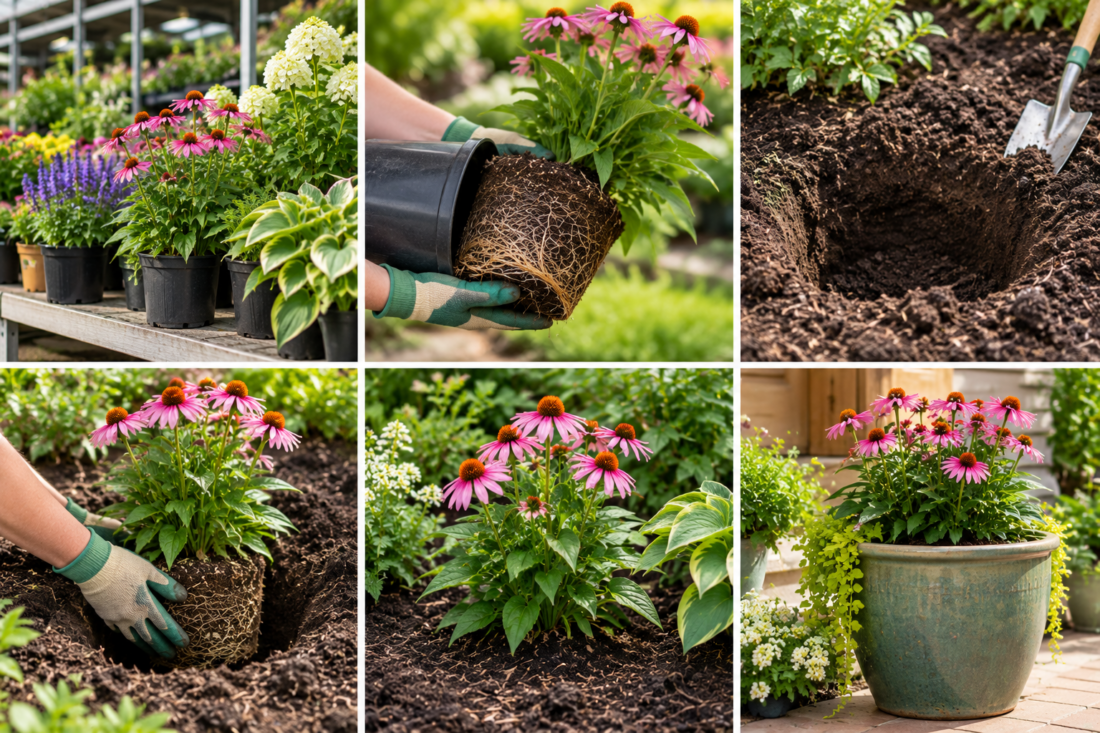
These are perennial plants that you can buy pre-potted at your local gardening store. Depending on whether you choose to keep it inside or place it in your garden, they’re generally quite easy to transplant.
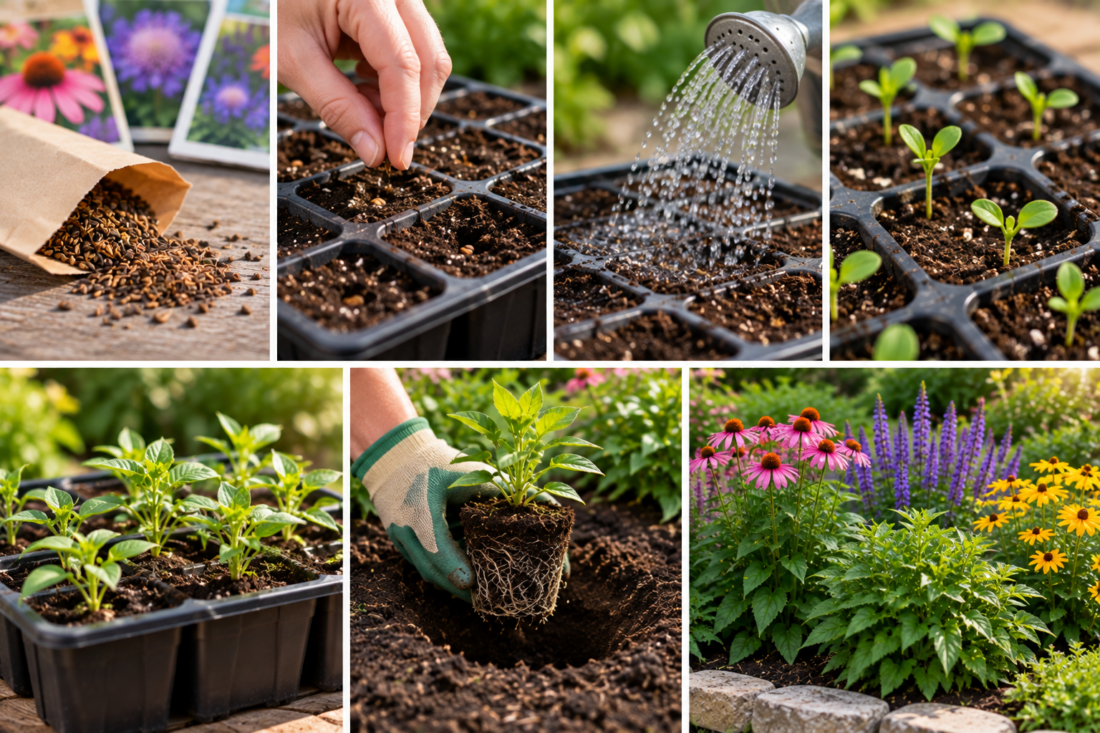
For garden placement, you’ll need to dig a hole about as deep as the original container, and twice as wide. Be sure you remove the plant slowly and carefully when placing it in the ground. If you re-pot the plant in a larger container, make sure you’ve added an adequate amount of soil.
Bare-root plants
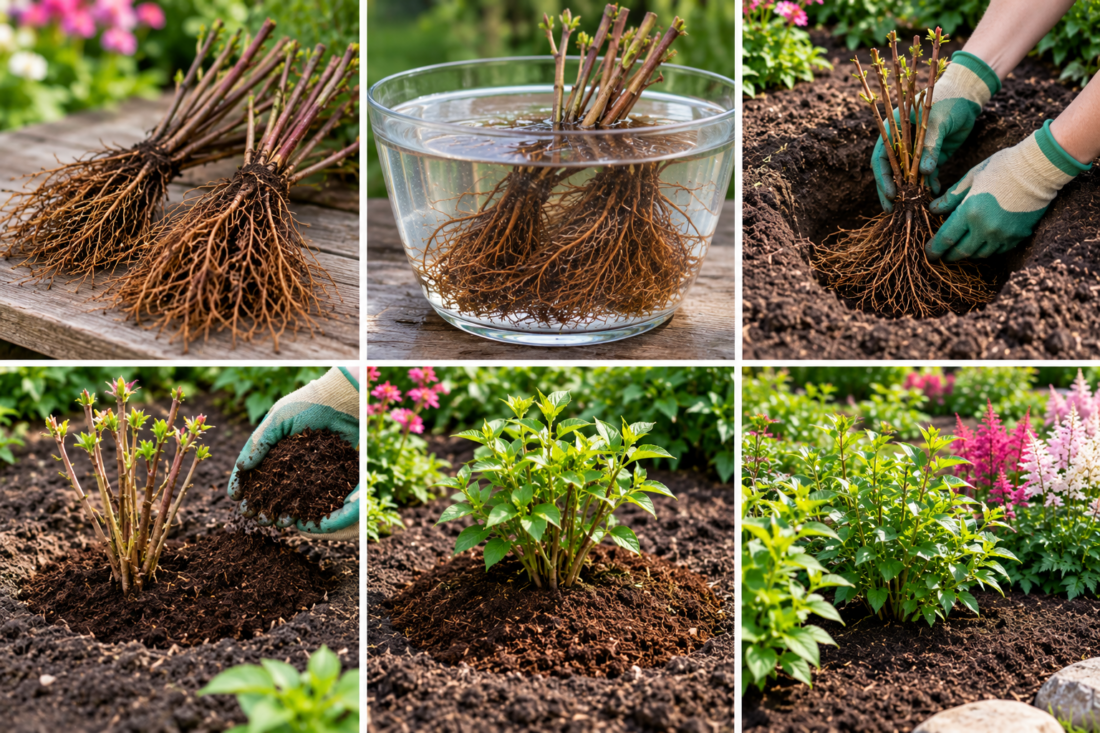
Bare-root plants are less expensive than their container-grown counterparts, but the loose root system makes them a bit more complicated to handle. You need to soak them in water before potting or planting in the ground. At the time of planting, add some compost atop the soil to encourage root growth.
River rock landscaping is a great way to improve drainage and reduce water usage.
Seeds
This, of course, is the simplest and least expensive way to grow your perennials, but it takes the most patience. Make sure you follow any available instructions to take proper care as the seeds germinate.
For more landscaping ideas, read this article, “No-Maintenance Landscaping Ideas.”
Choosing the Right Perennial for Your Landscape
When selecting perennial plants, don't choose based on flower color alone. Consider how much sunlight the planting area receives, how much space the plant will have to grow, and how much maintenance you're willing to provide.
For shady areas, plants such as hostas, bleeding hearts, brunnera, lungwort, and astilbe can add texture and seasonal color. Sunny areas provide more opportunities for plants such as hibiscus, scabiosa, esperanza, and Turk's cap.
If you're planting beneath trees, remember that mature trees can create both shade and competition for moisture and nutrients. Choosing plants suited to those conditions can make establishing your garden much easier.
Create a Beautiful Perennial Garden
Perennial plants are an excellent way to add lasting beauty to your landscape, whether you're working with a shady corner beneath a tree or a sunny flower bed along your home's foundation.
The key is choosing plants that match the growing conditions of each area. By considering sunlight, soil, moisture, mature plant size, and maintenance requirements, you can create a landscape that looks beautiful while giving your plants the conditions they need to thrive.
Conclusion
With a vast array of colors and sizes, perennial shade plants are a great way to brighten your space. Don’t let limited sunlight stop you from adding a touch of beauty to your home or garden. As always, Ryno Lawn Care is eager to assist with your landscaping projects, so let us know if you need a helping hand!
Frequently Asked Questions About Perennial Shade Plants
What is the easiest perennial plant to grow in shade?
Hostas are among the easiest perennial plants to grow in shady areas. They are valued for their attractive foliage and can thrive in partial to full shade when provided with appropriate soil moisture and growing conditions.
What perennial plants grow well in full shade?
Several perennials can tolerate low-light conditions, including hostas, lungwort, bleeding heart, and brunnera. However, "full shade" does not necessarily mean an area receives no light. Most shade-loving plants still benefit from some indirect or filtered sunlight.
What is the difference between an annual and a perennial plant?
An annual plant completes its life cycle in one growing season, while a perennial plant can live for multiple years. Perennials typically return from year to year under suitable growing conditions, making them a popular choice for established gardens.
Can perennial plants grow in Texas?
Yes. Many perennial plants can grow successfully in Texas, but the best choice depends on your specific region and growing conditions. Texas has several different climate zones, so consider your area's heat, soil, moisture, and sunlight when selecting plants.
What are the best shade plants for North Texas?
North Texas gardeners can consider shade-tolerant perennials such as hostas, lungwort, brunnera, bleeding heart, and astilbe. The best option depends on the amount of shade, soil conditions, available moisture, and the location of the planting bed.
Can you grow perennials in containers?
Yes. Many perennial plants can be grown in containers as long as the container provides adequate drainage and enough room for the plant's root system. Container-grown perennials can also be transplanted into garden beds when conditions are appropriate.
When is the best time to plant perennials?
The ideal planting time depends on the plant and your local climate. In general, spring and fall can be good times to establish many perennials, because moderate temperatures can reduce stress while plants develop their root systems.
Do perennial plants come back every year?
Most perennials are capable of returning year after year under suitable growing conditions. Some die back to the ground during colder weather and reemerge when conditions become favorable, while others may remain evergreen depending on the plant and climate.
How much maintenance do perennial plants require?
Perennials are generally considered lower-maintenance than annuals because they can return for multiple growing seasons. However, they still require appropriate watering, pruning or deadheading when necessary, weed control, and occasional fertilization depending on the plant.
Can I plant sun-loving and shade-loving perennials together?
You can, but it's important to group plants according to their sunlight and moisture requirements. Shade-loving plants may struggle in a sunny location, while plants that require full sun may not flower well in heavy shade. Consider the amount of sunlight each area receives before deciding where to plant.
Are perennial plants good for landscaping?
Absolutely. Perennials can add color, texture, height, and seasonal interest to flower beds and landscape designs. Because many return year after year, they can also reduce the need to replant the same areas every growing season.

T. Stafford
Writing about gardening, lawn care, etc. to share what I've learned with others. I've lived in Texas my whole life, so I'm more familiar with this region's native plants.
Comments (3)
Thanks for the great post! I love perennial shade plants as well- they brighten up any shady nook! I recently started my lawn care company in Athens, Georgia called Athens Lawn Care and Service, and I’m always looking for blogs with informative content! Love it!
By the way, feel free to check us out at athensgalawncare.com
great post! I have a new backyard and need some new flowers to plant!