

Keeping your lawn healthy and weed-free in North Texas starts with preventing weeds before they appear. If you’ve heard the term pre-emergent herbicide but aren’t sure what it means, you’re not alone. Pre-emergent treatments are an important part of a seasonal lawn care plan, helping prevent common weeds from taking over your grass.
But timing matters. Applying pre-emergent too early, too late, or incorrectly can reduce its effectiveness. Knowing when to apply it, which weeds it targets, and how to activate the treatment can help you maintain a thicker, healthier lawn throughout the year.
In this guide, we’ll explain how pre-emergent herbicides work, when to apply them in North Texas, which weeds they help prevent, and when professional weed control may be the best option.
What Are Pre-Emergent Herbicides?
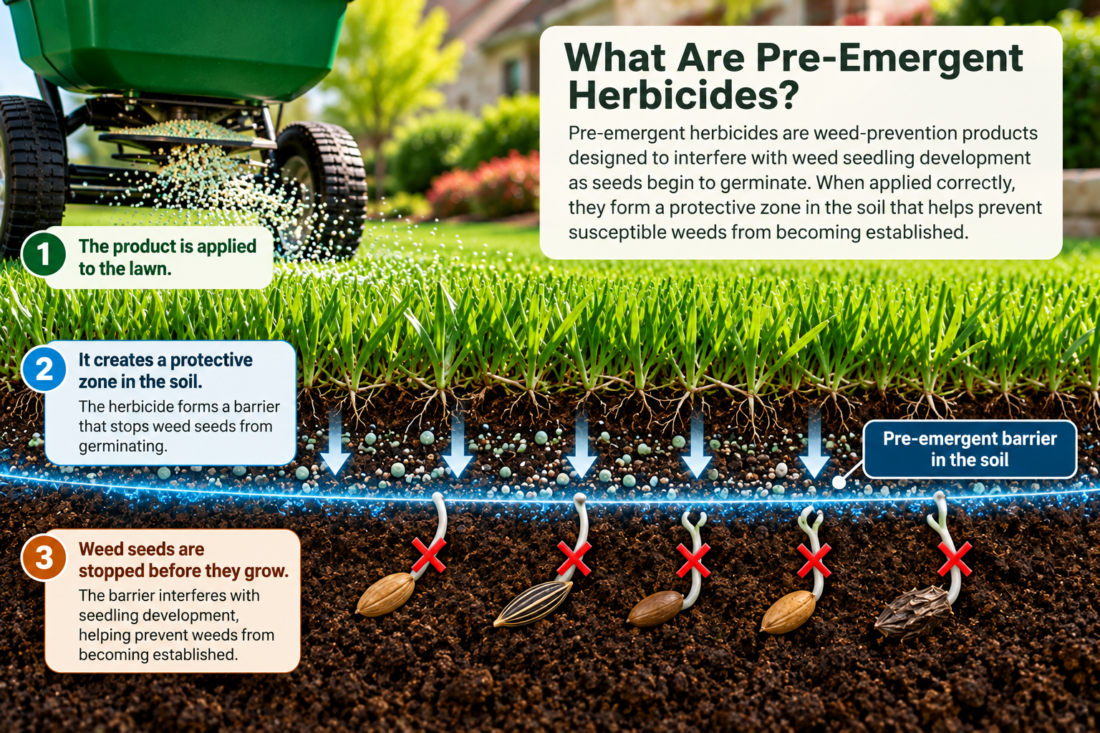
Pre-emergent herbicides are weed-prevention products designed to interfere with weed seedling development as seeds begin to germinate. When applied correctly, they form a protective zone in the soil that helps prevent susceptible weeds from becoming established.
Unlike post-emergent herbicides, which target weeds that have already emerged, pre-emergent treatments work before you see the weeds growing above the soil.
Pre-emergent herbicides are particularly useful for managing annual weeds that return each year from seed. However, they do not prevent every type of weed, and they generally won't eliminate established perennial weeds with existing roots or underground structures.
The right treatment depends on your grass type, the weeds in your lawn, and the product's labeled uses.
Learn more about pre-emergence herbicides from Texas A&M AgriLife Extension.
When Should You Apply Pre-Emergent in North Texas?
In North Texas, the two main pre-emergent application windows are late winter to early spring and late summer to fall. These applications target different groups of weeds, so applying treatments at the right time is essential.
Use soil temperature as a guide rather than relying exclusively on calendar dates. Local weather conditions can shift the ideal application window from year to year.
Spring Pre-Emergent: Prevent Summer Weeds
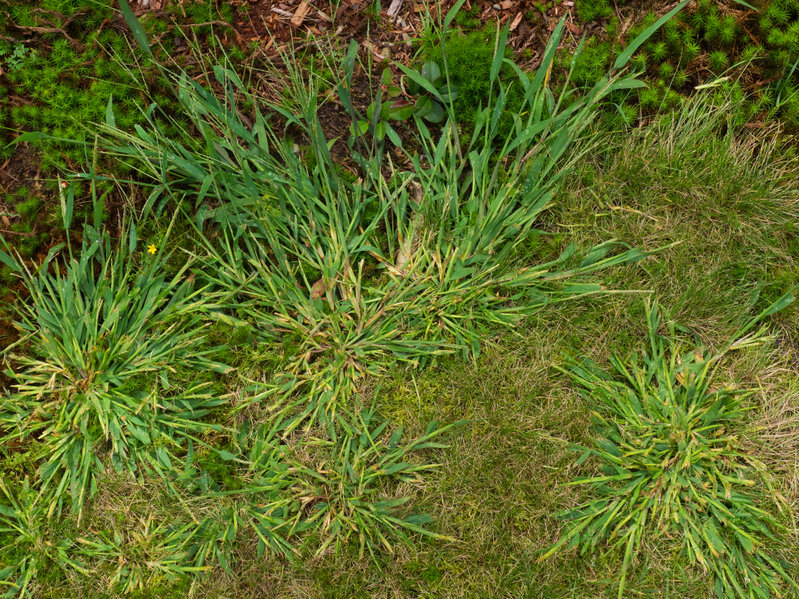
Spring pre-emergent treatments target summer annual weeds, including crabgrass, before their seeds germinate.
In North Texas, the spring application window often falls between February and early March. The general soil-temperature guideline is approximately 55°F for four to five consecutive days.
Waiting until crabgrass is already growing can mean missing the ideal prevention window. Once weeds have emerged, a suitable post-emergent treatment or another control method may be necessary.
If your lawn has a history of crabgrass or other summer annual weeds, plan ahead rather than waiting until your lawn is already covered in unwanted growth.
Fall Pre-Emergent: Prevent Winter Weeds
Fall applications help prevent cool-season annual weeds that germinate as temperatures begin to decline.
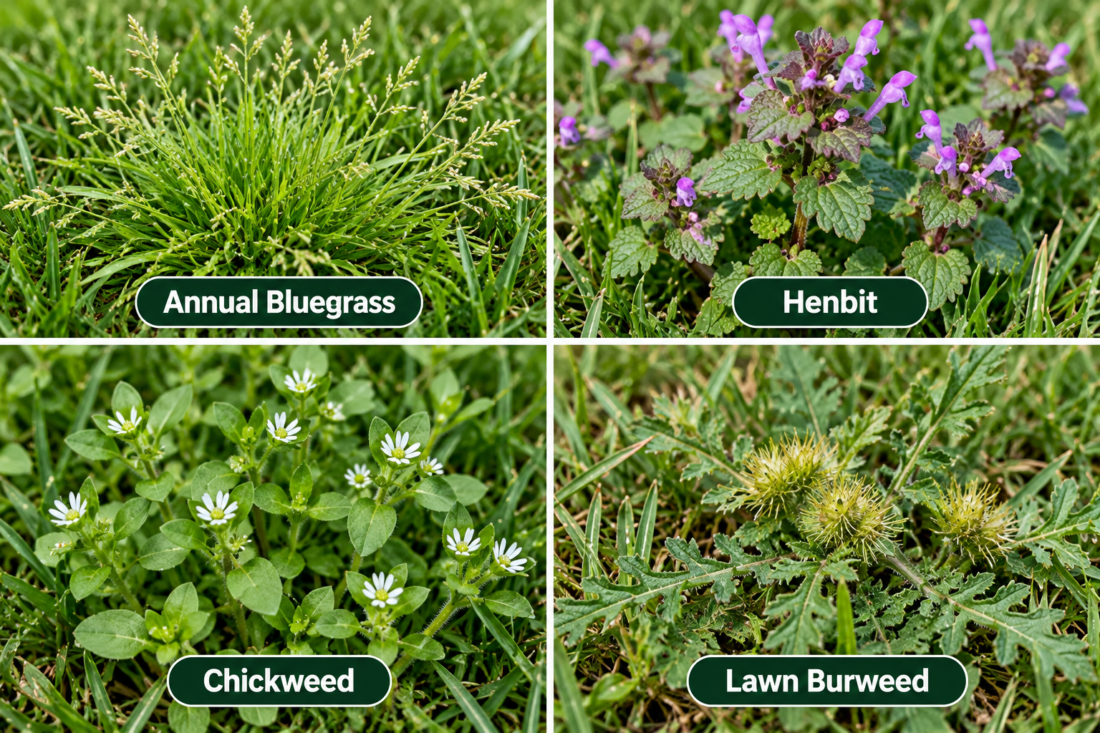
Common targets include annual bluegrass, henbit, chickweed, and lawn burweed, depending on the herbicide selected.
For fall applications, homeowners want soil temperatures to decrease to approximately 70°F for several consecutive days. In North Texas, this often means applying treatments in late summer or early fall, depending on weather conditions and the weeds you want to control.
Fall weed prevention is especially important for homeowners who experience recurring winter weeds or troublesome lawn burs.
Remember: These temperature guidelines are general recommendations, not guarantees. Follow the product label and consider local weather, soil conditions, and the weeds present in your lawn.
How to Choose the Right Pre-Emergent Herbicide
Not every pre-emergent product controls the same weeds. Before choosing a treatment, identify the weeds you want to prevent and confirm that the product is labeled for your grass type and intended use.
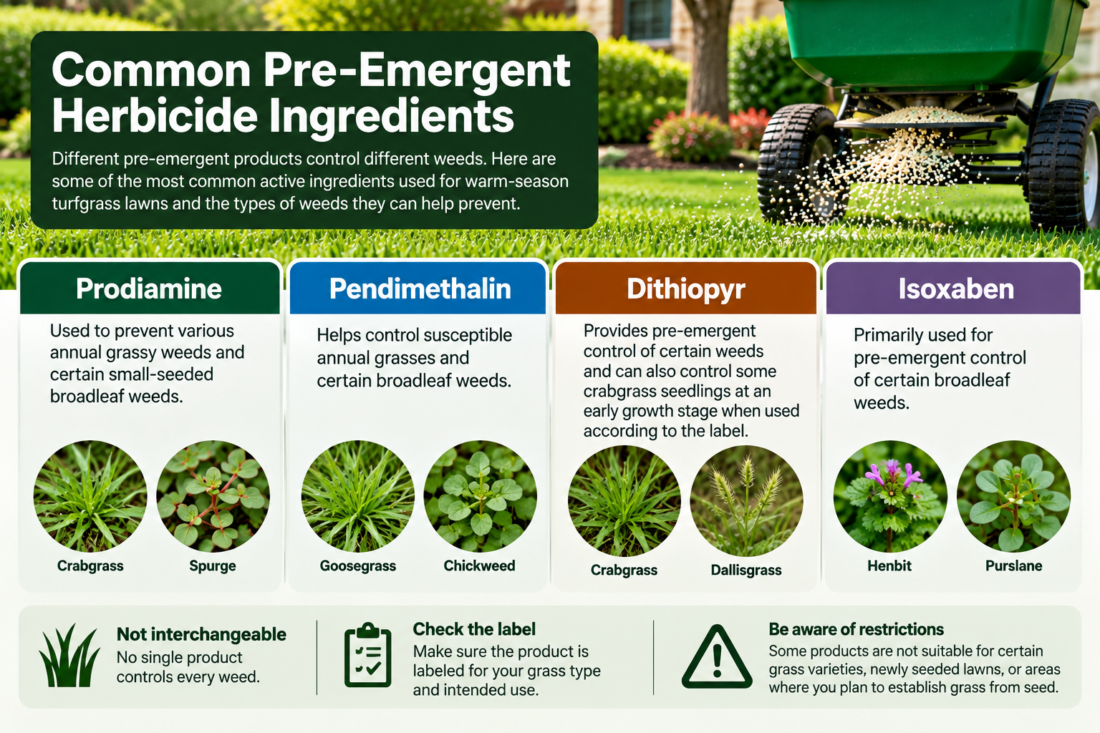
Common active ingredients in products intended for warm-season turfgrass lawns include:
-
Prodiamine: Used to prevent various annual grassy weeds and certain small-seeded broadleaf weeds.
-
Pendimethalin: Helps control susceptible annual grasses and certain broadleaf weeds.
-
Dithiopyr: Provides pre-emergent control of certain weeds and can also control some crabgrass seedlings at an early growth stage when used according to the label.
-
Isoxaben: Primarily used for pre-emergent control of certain broadleaf weeds.
These ingredients are not interchangeable, and no single product controls every weed. The appropriate choice depends on the target weed, your turfgrass, application timing, and product restrictions.
Always read the label before applying an herbicide. Some products are unsuitable for certain grass varieties, newly seeded lawns, or areas where you plan to establish grass from seed.
How to Apply Pre-Emergent for Best Results
Even the right product can perform poorly if it's applied incorrectly. Follow these steps to help improve your results.
1. Apply at the Right Time
Apply pre-emergent before the target weeds begin germinating. Monitor soil temperatures and local conditions instead of relying only on a specific date.
2. Distribute the Product Evenly
Uneven application can leave untreated areas where weeds may still emerge. Use the application method and rate specified on the product label.
3. Water It In as Directed
Many pre-emergent products need rainfall or irrigation to move the active ingredient into the soil where it can work. The required amount of water varies by product, so follow the label instructions.
4. Avoid Applying Too Much
More herbicide does not mean better weed prevention. Excessive or overlapping applications can injure turfgrass and create environmental concerns. Check whether another lawn treatment, such as a weed-and-feed product, already contains a pre-emergent ingredient.
5. Check Before Seeding or Sodding
Pre-emergent herbicides can interfere with the germination of desirable grass seeds. If you're planning to overseed, establish a new lawn, or repair bare spots, check the product's restrictions and waiting periods before applying a treatment.
Common North Texas Weeds That Pre-Emergent Can Help Prevent
Different weeds germinate at different times of year. Identifying the problem weeds in your lawn can help you choose an effective prevention strategy.
Spring and Summer Weeds
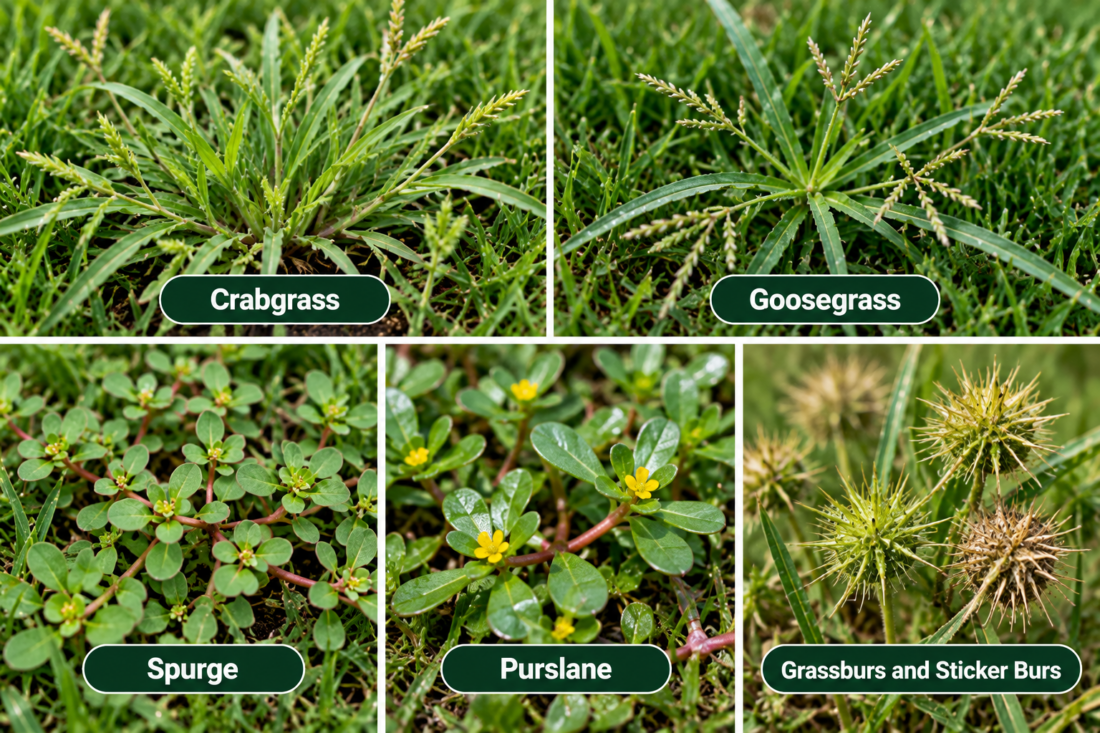
Crabgrass
Crabgrass is a common summer annual weed that can spread through thin or stressed turf. Spring pre-emergent applications help prevent susceptible crabgrass seeds from germinating.
Learn more about crabgrass identification and control.
Goosegrass
Goosegrass is a grassy weed that can thrive in compacted soil and heavily trafficked areas. The right pre-emergent product may help prevent it from becoming established.
Spurge
Spurge is a low-growing broadleaf weed that often appears in warm weather. Certain pre-emergent products can help prevent susceptible spurge species, depending on the product label.
Purslane
Purslane is a heat-tolerant weed that can spread across bare soil and thin turf. Appropriate prevention and healthy lawn maintenance can help reduce its establishment.
Grassburs and Sticker Burs
Grassburs can produce painful, spiny seed structures that attach to shoes, clothing, and pets. Prevention requires identifying the specific weed and choosing a treatment suited to its life cycle. Not every bur-producing grass can be controlled with a standard lawn pre-emergent.
For more information, see our guide to how to get rid of grassburs.
Fall and Winter Weeds
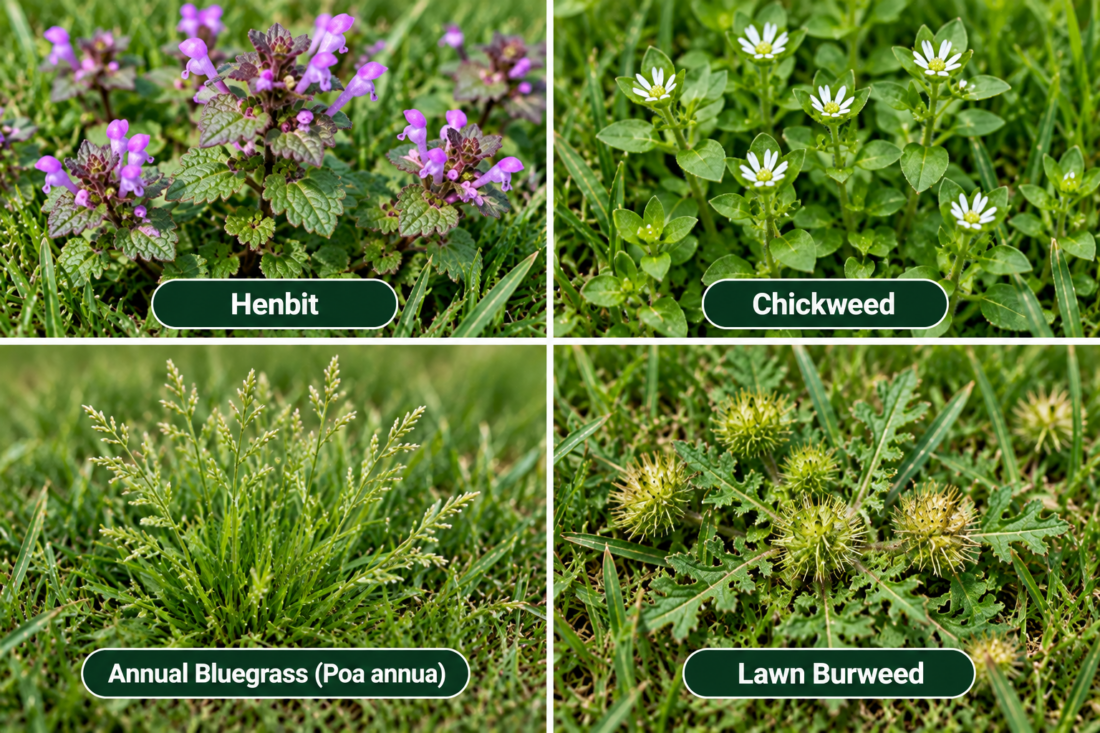
Henbit
Henbit is a cool-season broadleaf weed that commonly appears in North Texas lawns during cooler months. Fall prevention may help reduce new plants before they become established.
Chickweed
Chickweed is another cool-season broadleaf weed that can spread in favorable conditions. Some pre-emergent products help prevent certain chickweed species when applied at the correct time.
Annual Bluegrass (Poa annua)
Annual bluegrass is a cool-season grassy weed that may appear as temperatures drop. A properly timed fall pre-emergent treatment can help prevent susceptible seeds from germinating.
Lawn Burweed
Lawn burweed can produce painful burs that become especially noticeable in spring. Because prevention must occur before the plant becomes established, fall is an important time to consider a suitable treatment.
If you're dealing with existing winter weeds, read our guide on how to kill winter weeds in your yard.
For additional weed management advice, see when to hand-pull weeds versus using herbicides.
Does Pre-Emergent Kill Existing Weeds?
No. Pre-emergent herbicides are primarily designed to prevent susceptible weeds from becoming established, not to kill mature weeds that are already growing.
If weeds are visible in your lawn, you may need to pull them, use an appropriate post-emergent herbicide, or combine several weed-management methods.
The best approach depends on the type of weed, how far it has spread, and the condition of your grass. Some weeds are easier to manage while young, while others require a more targeted treatment plan.
Using pre-emergent and post-emergent treatments for their intended purposes can help you address existing weeds while reducing future weed growth.

DIY vs. Professional Pre-Emergent Application
Applying pre-emergent yourself can be an option if you know which weeds you're targeting, select an appropriate product, and follow its instructions carefully. However, timing, coverage, product selection, and application rates can make a significant difference in the results.
Professional lawn care can help take the guesswork out of seasonal weed prevention. A lawn care professional can assess your lawn, identify recurring weed problems, and recommend treatments based on your turfgrass and local growing conditions.
Professional application can also help reduce missed areas and prevent mistakes involving product rates or timing.
If you're looking for help maintaining a healthier, weed-resistant lawn, Ryno Lawn Care offers lawn care services to help homeowners manage weeds and maintain their turf throughout the year.
Explore our lawn fertilization and weed control services to learn more or request a quote.

Final Thoughts: Prevent Weeds Before They Take Over
The best time to apply pre-emergent in North Texas depends on the weeds you're targeting and the conditions in your lawn. Spring treatments help prevent summer annual weeds such as crabgrass, while fall applications help manage cool-season weeds such as annual bluegrass and henbit.
For the best results, monitor soil temperatures, select a product labeled for your lawn, and follow application and watering instructions carefully. Remember that pre-emergent works best as part of a broader lawn care plan that includes proper mowing, watering, and maintaining healthy turf.
Need help planning your next weed control treatment? Contact Ryno Lawn Care to learn how professional lawn care can help you maintain a healthier, more attractive lawn.
Frequently Asked Questions About Pre-Emergent Herbicides
1. When should I apply pre-emergent in North Texas?
North Texas homeowners generally apply pre-emergent in late winter or early spring to prevent summer weeds and in late summer or fall to prevent winter weeds. Use soil temperatures as a guide: approximately 55°F for several consecutive days in spring and approximately 70°F as temperatures decline in fall.
2. What is the best month to apply pre-emergent in Texas?
There is no single best month for every Texas lawn. In North Texas, spring applications often occur in February or early March, while fall applications commonly occur in late summer or early fall. Weather and soil temperatures can shift these windows, so monitor local conditions.
3. Does pre-emergent kill existing weeds?
No. Pre-emergent herbicides primarily prevent susceptible weed seedlings from becoming established. Existing weeds may require hand-pulling, an appropriate post-emergent herbicide, or another targeted control method.
4. Do I need to water after applying pre-emergent?
Many pre-emergent products need rainfall or irrigation to activate or move the active ingredient into the soil. The amount of water required varies by product, so follow the label instructions.
5. How long does pre-emergent last?
The length of control varies according to the active ingredient, application rate, soil conditions, weather, and product label. Some treatments provide several weeks or months of control. Follow label directions to determine whether and when another application is appropriate.
6. Can I apply pre-emergent to a newly seeded lawn?
Many pre-emergent herbicides interfere with grass seed germination. Some products also restrict use on newly established turf. Check the label for seeding, sodding, and lawn-renovation restrictions before applying a treatment.
7. What is the difference between pre-emergent and post-emergent herbicides?
Pre-emergent herbicides help prevent susceptible weeds from becoming established before they emerge. Post-emergent herbicides target weeds that are already growing. The appropriate treatment depends on the weed species and its stage of development.
8. Will pre-emergent prevent all weeds?
No. Different products target different weeds, and some weeds are not effectively controlled by standard pre-emergent treatments. Correct identification, product selection, and timing are essential.
9. Can I apply pre-emergent and fertilizer at the same time?
Some products combine pre-emergent herbicide and fertilizer, while others contain only herbicide. Whether they should be applied together depends on your lawn's needs and the product label. Avoid adding unnecessary fertilizer or duplicating herbicide applications.
10. Is professional pre-emergent application worth it?
Professional application may be helpful if you're unsure which weeds you have, when to treat your lawn, or which product is appropriate for your grass type. A lawn care professional can help plan seasonal treatments and integrate weed prevention into a broader lawn maintenance program.

Michelle Valdivia
Michelle brings expertise in educational communication to lawn care content creation. She holds degrees in Human Development and Family Studies and Education. Over four years, she has created professional web content for landscaping and lawn care businesses, collaborating with experienced lawn care teams to ensure each blog post is rooted in real-world expertise.