
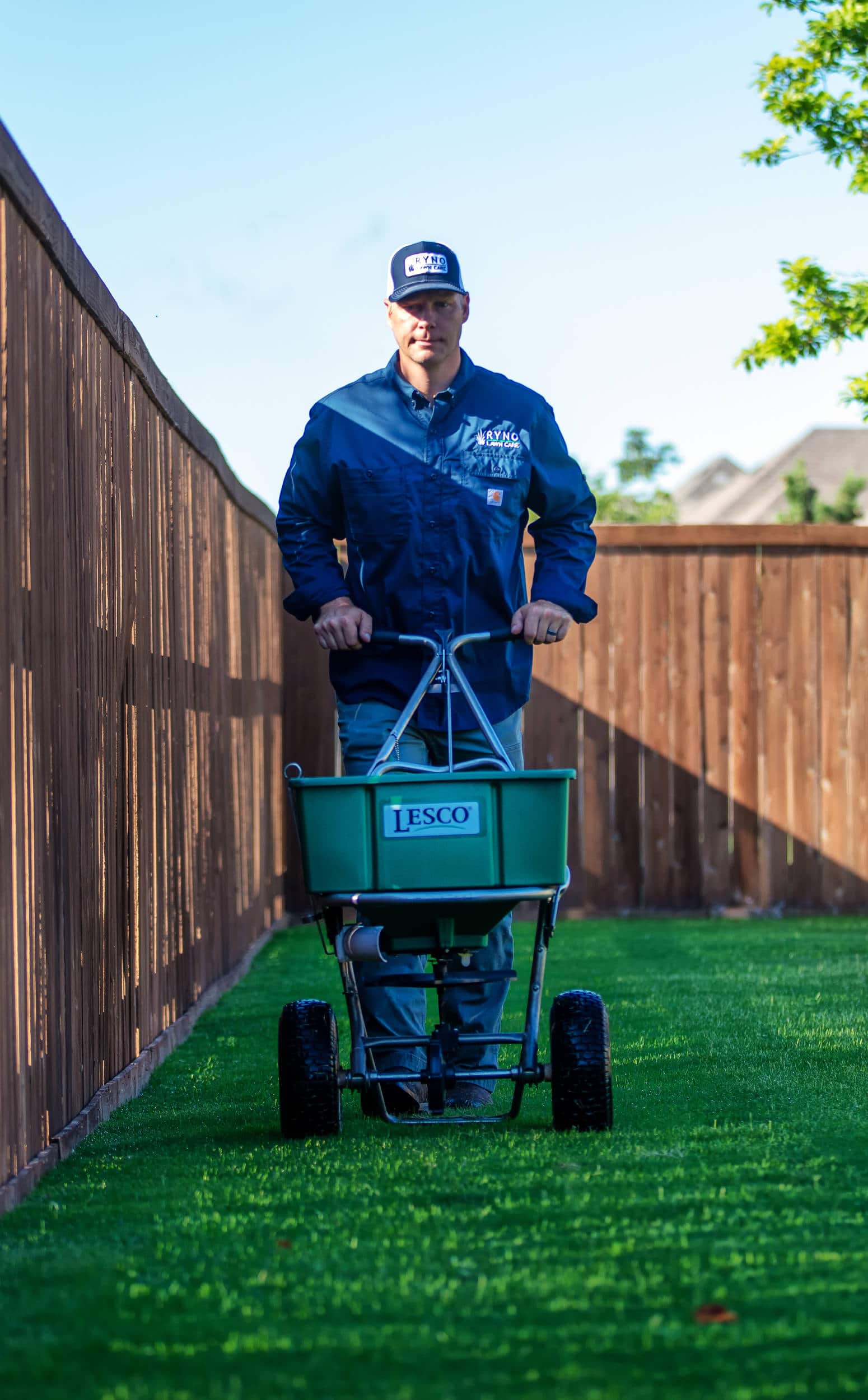
As summer heat finally breaks and temperatures start to cool, North Texas homeowners often shift their attention away from the lawn — mowing less, watering less, and assuming the hard work is behind them until spring. But fall is actually one of the most important windows in the entire lawn care calendar, and how you spend it determines whether your yard bounces back thick and green next spring, or struggles with thin patches, compaction, and weed pressure all over again.
The reason fall matters so much comes down to timing. Grass roots grow most aggressively when air temperatures cool but the soil is still warm. That makes it the ideal window to repair the damage summer heat and foot traffic leave behind: compacted soil, thin or bare patches, and weakened turf that struggled to keep up during the hottest months.
But getting real results out of fall lawn care isn't just about doing a handful of tasks — it's about doing them in the right order. Aerate before you overseed, and apply pre-emergent fertilizer and post emergent fertilizer at the right times. Done correctly, though, this sequence sets your lawn up to come out of winter dense, healthy, and far more resistant to the weeds and stress that come with next summer.
Here's the right order and technique for each step, so your lawn goes into winter strong and comes back even stronger in spring:
Quick Reference: Fall Lawn Care Order
| Step | Timing | Purpose |
|---|---|---|
| 1. Aeration | Early-to-mid fall | Relieves compaction, opens soil for seed/nutrients |
| 2. Overseeding | Immediately after aeration | Fills thin spots, improves density |
| 3. Pre-emergent application | After overseeding germinates | Prevents winter/spring weeds |
| 4. Post-emergent application | 6–8 weeks after pre-emergent | Treats any weeds that emerge |
Step 1: Aerating Your Lawn in Fall
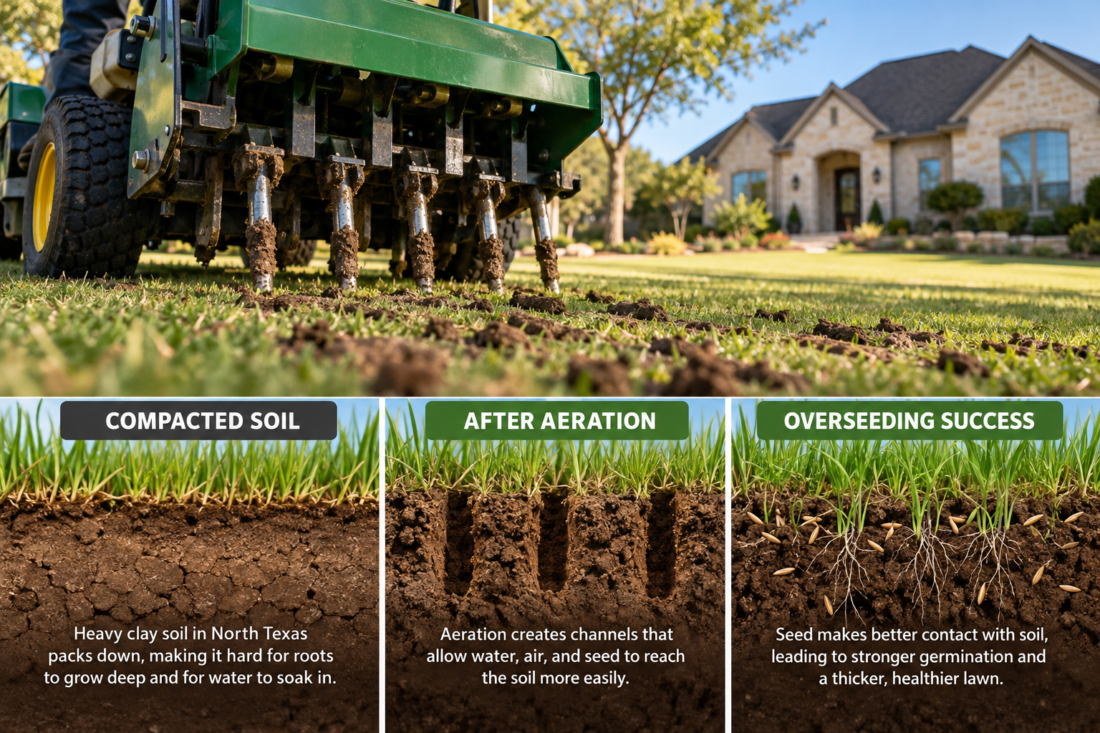
Before you overseed or fertilize, your lawn needs to be aerated. Core aeration involves pulling small plugs of soil out of the lawn, which relieves compaction and creates channels for air, water, and nutrients to reach the root zone.
North Texas lawns are especially prone to soil compaction thanks to the region's heavy clay soil, which packs down tightly over a season of foot traffic, mowing, and summer heat. Compacted soil makes it difficult for grass roots to grow deep, for water to soak in rather than run off, and — critically for this time of year — for grass seed to actually make contact with soil during overseeding.
Why aeration comes first: Skipping this step means overseeding on top of hard, compacted ground, where seed often just sits on the surface instead of settling into the soil. That dramatically reduces germination rates and wastes both seed and effort. Aerating first opens up direct channels for seed to fall into, giving it far better contact with soil and a much stronger shot at germinating.
When to aerate: Early-to-mid fall is ideal, while the grass is still actively growing and can recover quickly from the process. Aerating too late, once the lawn is heading into dormancy, gives the grass less time to bounce back before winter.
Learn more about our core aeration service if you'd rather leave this step to the professionals.
Step 2: Overseeding
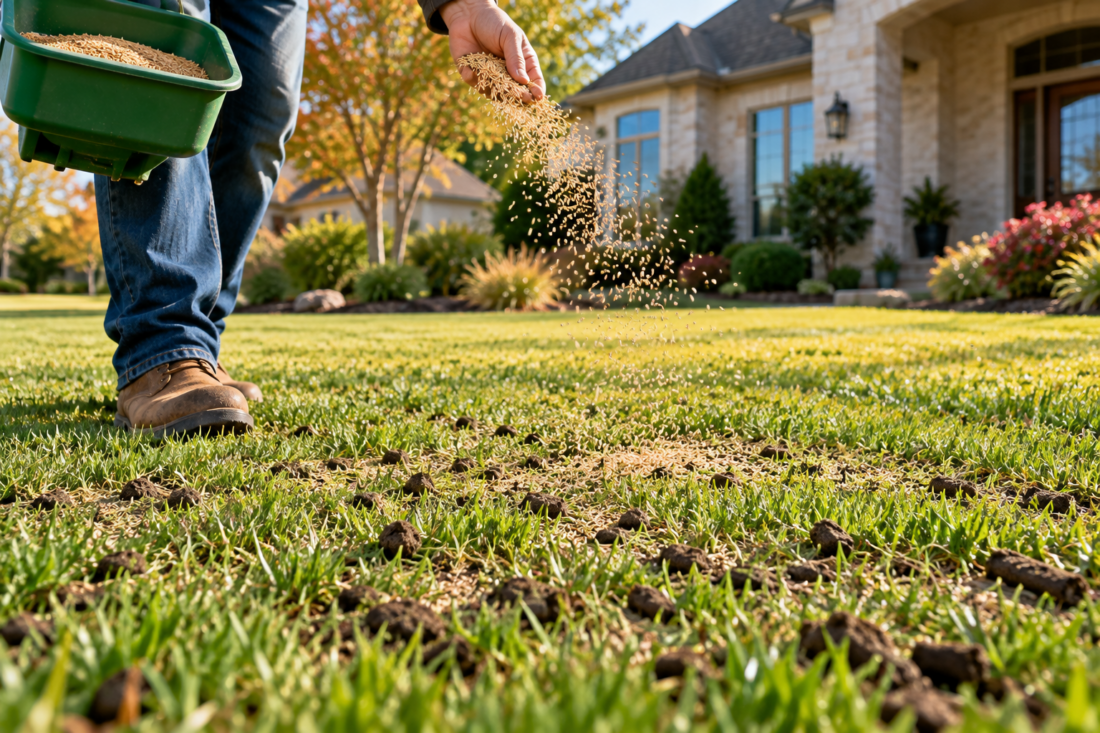
Once your lawn has been aerated, it's ready for overseeding — one of the most effective things you can do for lawn health and appearance.
Overseeding is a great way to compensate for thin spots that make the lawn look visually uneven. Spreading seed and watering is the basic process, but doing it correctly is where most of the difficulty lies.
Not every grass type requires overseeding. The main types that benefit include fine fescue, tall fescue, perennial and annual ryegrass, and occasionally Bermuda grass. Since Bermuda grass is such a popular turf choice in North Texas, it's worth knowing that even this grass type can benefit from occasional overseeding, particularly depending on your area's seasonal temperature trends.
Why fall is the ideal overseeding window: Cooler fall weather gives young grass two to three months of favorable conditions to grow and establish itself before summer heat returns — resulting in deeper roots and a more resilient lawn. Fall overseeding can also help crowd out weeds that would otherwise take hold the following summer, such as crabgrass and foxtails.
Fall also typically brings more rainfall, which supplies extra nutrients and helps speed up germination and growth once seed is down.
Step 3: Pre-Emergent Weed & Feed
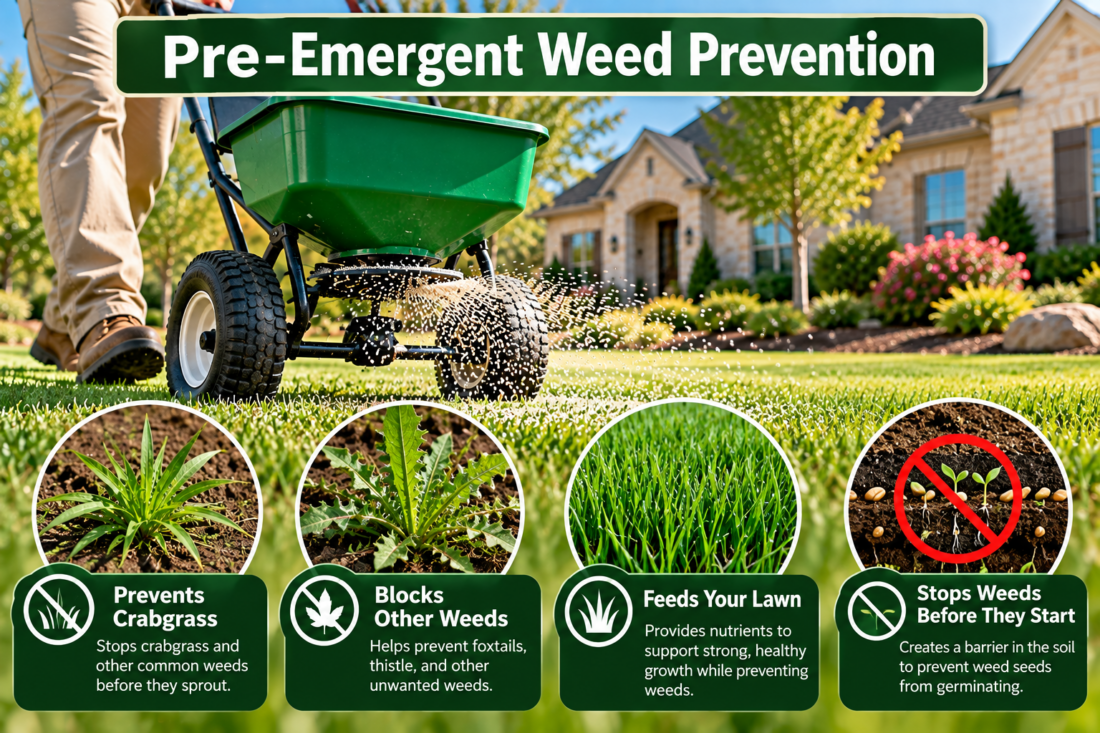
Now that the ground has been aerated and overseeded, it's time to think about fertilization and weed prevention. Start with a pre-emergent product that prevents crabgrass and other common weeds from taking hold while fortifying your lawn.
Timing matters more than almost anything else with pre-emergents:
- Too early: The product can wash away before properly soaking into the soil, wasting money and reducing effectiveness.
- Too late: Once your lawn begins heading into dormancy, the enzyme activity that makes pre-emergents effective drops significantly.
After applying the pre-emergent (always check the product label for specific instructions), wait 6–8 weeks before your secondary application. This follow-up treatment helps eliminate any dormant seedlings that might otherwise try to sprout the following spring or summer.
Learn more about when to use pre-emergent vs. post-emergent herbicides.
Step 4: Post-Emergent Weed & Feed
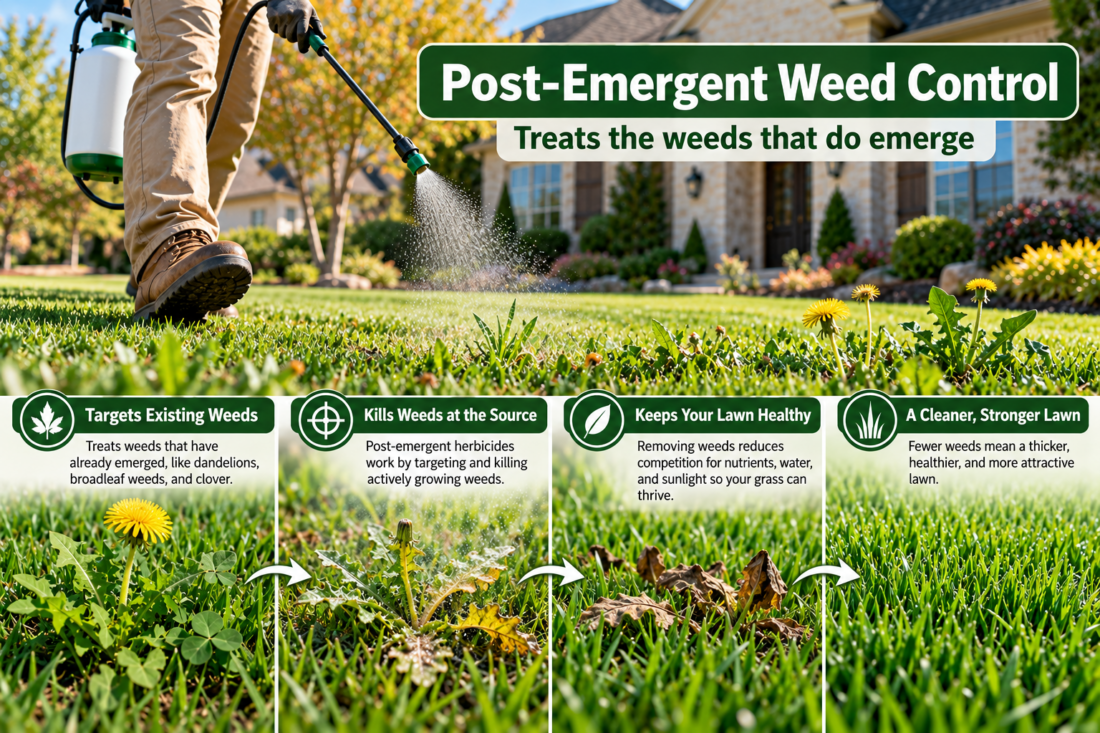
After the pre-emergent stage, post-emergent treatment addresses any weeds that do manage to emerge. These are typically applied while the lawn is in a state of active growth, generally 6-8 weeks after the pre-emergent application.
Always consult the product label, since different post-emergents call for different application windows. Some are actually designed to be applied while the lawn is dormant.
As with the pre-emergent step, applying post-emergent to properly aerated ground gives your grass the best possible chance to grow in healthy and strong. Once the turf is growing well, you're ready for your first mow of the season.
Check out our weed and feed schedule for more information about annual lawn fertilization and weed control treaments.
Frequently Asked Questions
Should I aerate before or after overseeding?
Always aerate before overseeding. Aeration relieves soil compaction and creates open channels that let grass seed make direct contact with soil, which significantly improves germination compared to seeding on compacted, unaerated ground.
How often should I aerate my North Texas lawn?
Most North Texas lawns benefit from aeration once a year, ideally in early-to-mid fall, though heavily compacted or high-traffic lawns may need it more often.
Can I skip aeration if I'm just overseeding a small thin patch?
It's not recommended. Even small patches typically sit on the same compacted soil as the rest of the lawn, so skipping aeration usually results in poor seed-to-soil contact and lower germination rates.
How long after aerating can I apply fertilizer?
You can typically apply fertilizer shortly after aerating — in fact, aeration is an ideal time to fertilize, since the open soil channels allow nutrients to reach the root zone more effectively than on compacted ground.
Why is fall better than spring for overseeding in North Texas?
Fall's cooler temperatures and increased rainfall give new grass seed several months to establish deep roots before summer heat arrives, resulting in a more resilient lawn than spring-seeded grass, which has to contend with heat stress much sooner.
Let the Professionals Handle it
Getting the order and timing right — aeration, overseeding, pre-emergent, and post-emergent — makes a real difference in how your lawn performs through winter and into spring. If you'd rather leave the process to the professionals, check out our lawn fertilization service page to learn how Ryno Lawn Care can help keep your yard healthy year-round.

Blog Admin
Hello, hope you enjoy these blog posts and get some useful lawn care tips from reading the info. Let me know if you have any questions or comments below.