
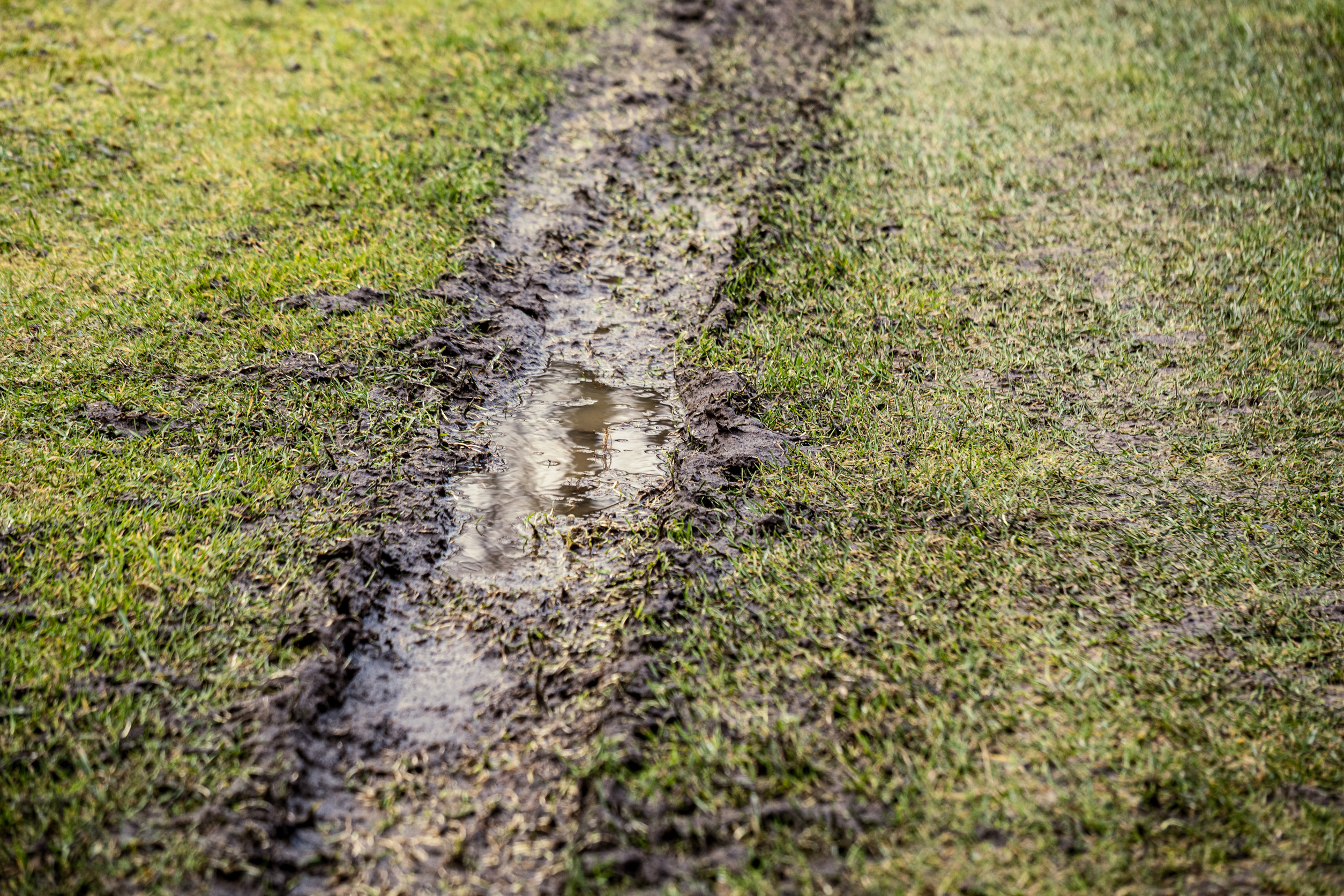
Winter in North Texas often means rain, frost, and muddy lawns. We’ve dealt with muddy lawns ourselves, and here’s how we handled it to keep our grass healthy all season. With the right strategies, you can prevent damage, improve drainage, and enjoy a strong lawn come spring.
1. Limit Foot Traffic on Muddy Areas
Walking on wet soil can compact it and damage grass roots. To prevent this:
- Keep foot traffic to a minimum in soggy areas.
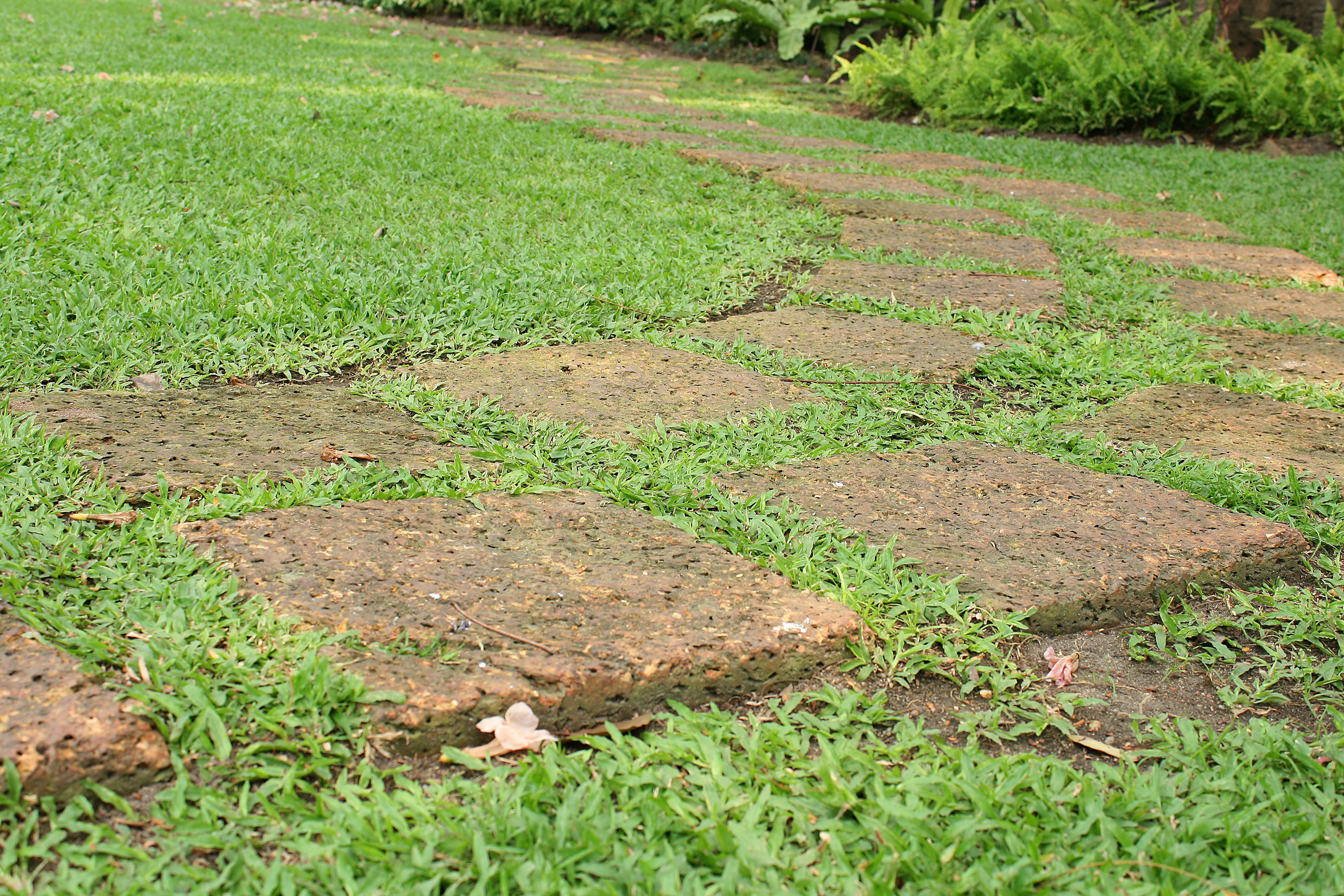
- Use wooden planks or stepping stones for necessary paths.
- Encourage kids and pets to play on firmer ground until the lawn dries.
2. Improve Drainage
Poor drainage is often the main cause of muddy lawns. Solutions include:
- Aeration: Poke holes in the soil to allow water to penetrate. Best done when the soil is slightly moist but not frozen. Go to our aeration service page.
- Topdressing: Add a thin layer of sand or compost to improve soil structure. Set up a topdressing service today.
- Grading: Ensure low spots are leveled to prevent water pooling.
Read our article titled, “How to Deal with Drainage Problems in the Garden.”
3. Protect Grass Roots with Fertilizer
Even in winter, applying a slow-release fertilizer strengthens grass roots. Healthy roots help grass recover faster from muddy damage. Apply fertilizer in late fall or early winter for best results.
Hire us for Lawn Fertilization and Weed Control Services.
4. Mowing Tips for Winter
Even though growth slows, occasional mowing helps prevent disease:
- Keep the blade high to protect grass crowns.
- Avoid mowing when the lawn is wet or frozen to prevent further damage.
5. Monitor Watering
Too much water makes muddy areas worse, but too little can stress your grass:
- Water only when necessary, especially if rainfall is frequent.
- Water early in the morning to reduce frost issues.
Winter Muddy Lawn Care Schedule (North Texas)
| Task | Timing | Tips |
|---|---|---|
| Limit Foot Traffic | Ongoing | Use planks or redirect traffic |
| Aeration | Late Fall / Early Winter | Reduces soil compaction in muddy spots |
| Topdressing | Winter | Thin layer of sand or compost for better drainage |
| Fertilization | Late Fall | Slow-release to strengthen roots |
| Mowing | As needed | Keep blades high, avoid wet soil |
| Watering | Weekly / As needed | Deep watering only if necessary |
Conclusion
Muddy lawns don’t have to ruin your winter. By limiting foot traffic, improving drainage, fertilizing roots, mowing carefully, and managing water, you can repair soggy spots and prepare your lawn for a strong spring.
Struggling with a muddy lawn? Contact Ryno Lawn Care today and use our Express Quote tool for instant, transparent pricing for your property. Let us help you get your lawn in top shape this winter!
FAQ about Muddy Lawns
1. What to put on a muddy lawn in winter?
Apply a thin layer of sand, compost, or topsoil to help absorb excess water and improve traction without smothering the grass.
2. How do you firm up a muddy ground?
Aerate the soil and mix in coarse sand or organic matter to improve drainage and make the ground more solid.
3. How to fix a soggy muddy lawn?
Improve drainage by adding soil amendments like sand or compost, level low spots, and avoid walking on it until it dries.
4. What soaks up mud for a muddy yard?
Materials like straw, wood chips, sand, or shredded leaves can help absorb moisture and reduce slipperiness on muddy areas.

Michelle Valdivia
Michelle brings expertise in educational communication to lawn care content creation. She holds degrees in Human Development and Family Studies and Education. Over four years, she has created professional web content for landscaping and lawn care businesses, collaborating with experienced lawn care teams to ensure each blog post is rooted in real-world expertise.