
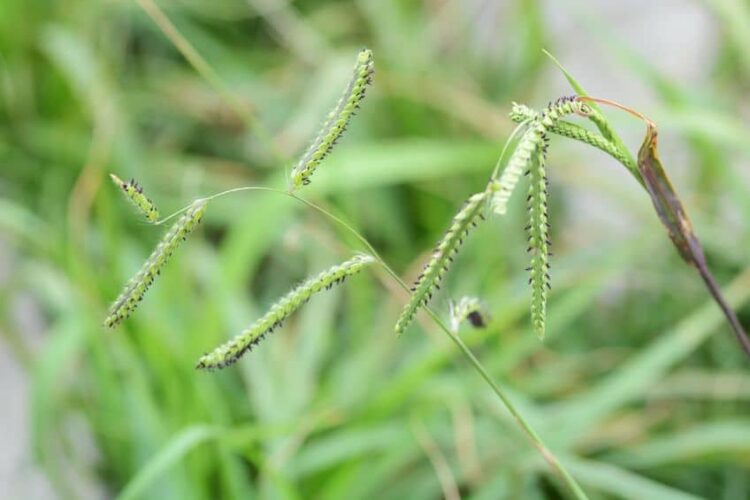
Winter weeds can quickly take over a North Texas lawn, especially when warm-season grasses such as Bermuda, St. Augustine, and Zoysia slow their growth or become dormant. Once winter weeds have emerged, post-emergent winter weed control can help remove existing weeds before they become more difficult to manage.
Post-emergent herbicides are designed to control weeds that are already growing. However, successful winter weed control involves more than simply spraying weeds after they appear. Identifying the weed, choosing a treatment that is safe for your turfgrass, and applying it under the right conditions can all make a difference.
For North Texas homeowners, winter weed control often works best as part of a larger lawn-care strategy that combines post-emergent treatments with pre-emergent applications and healthy turf management.
What Is Post-Emergent Winter Weed Control?
Post-emergent weed control refers to treating weeds after they have germinated and emerged from the soil.
This makes post-emergent herbicides different from pre-emergent herbicides. Pre-emergent products are applied before targeted weed seeds germinate, creating a barrier that helps prevent new weeds from becoming established. Post-emergent products, on the other hand, are used when weeds are already visible.
Post-emergent winter weed control is particularly useful when winter annual weeds have already appeared in your lawn.
Learn More: How Do I Kill Winter Weeds in My Lawn?
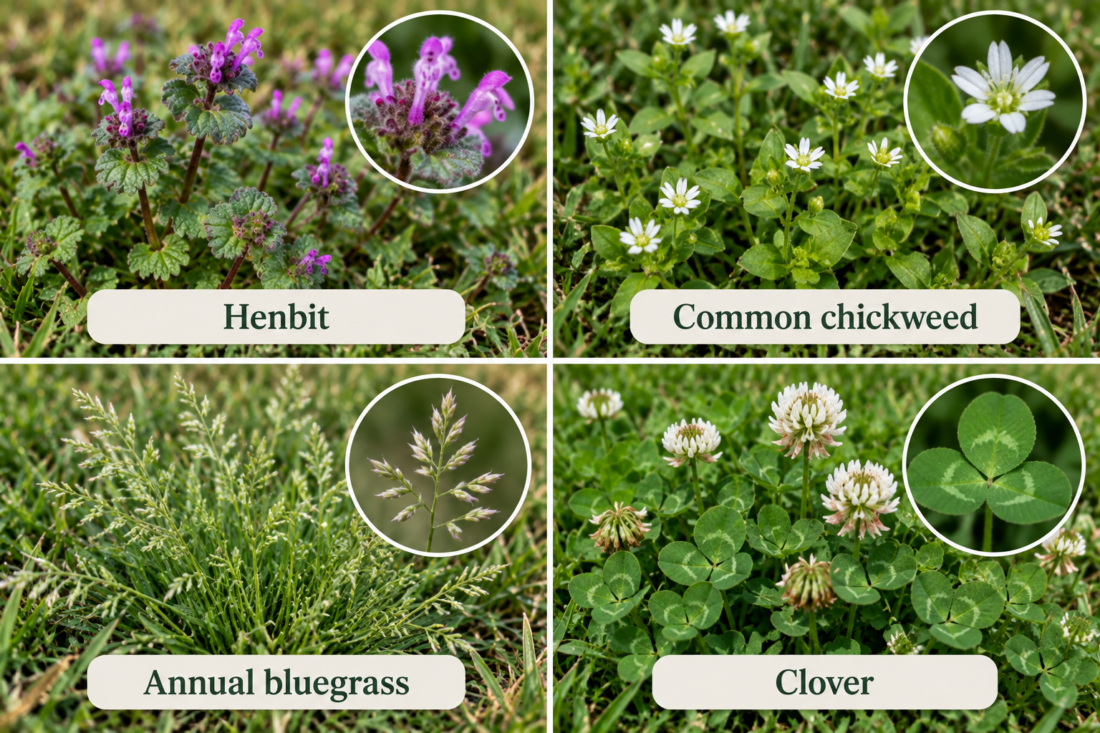
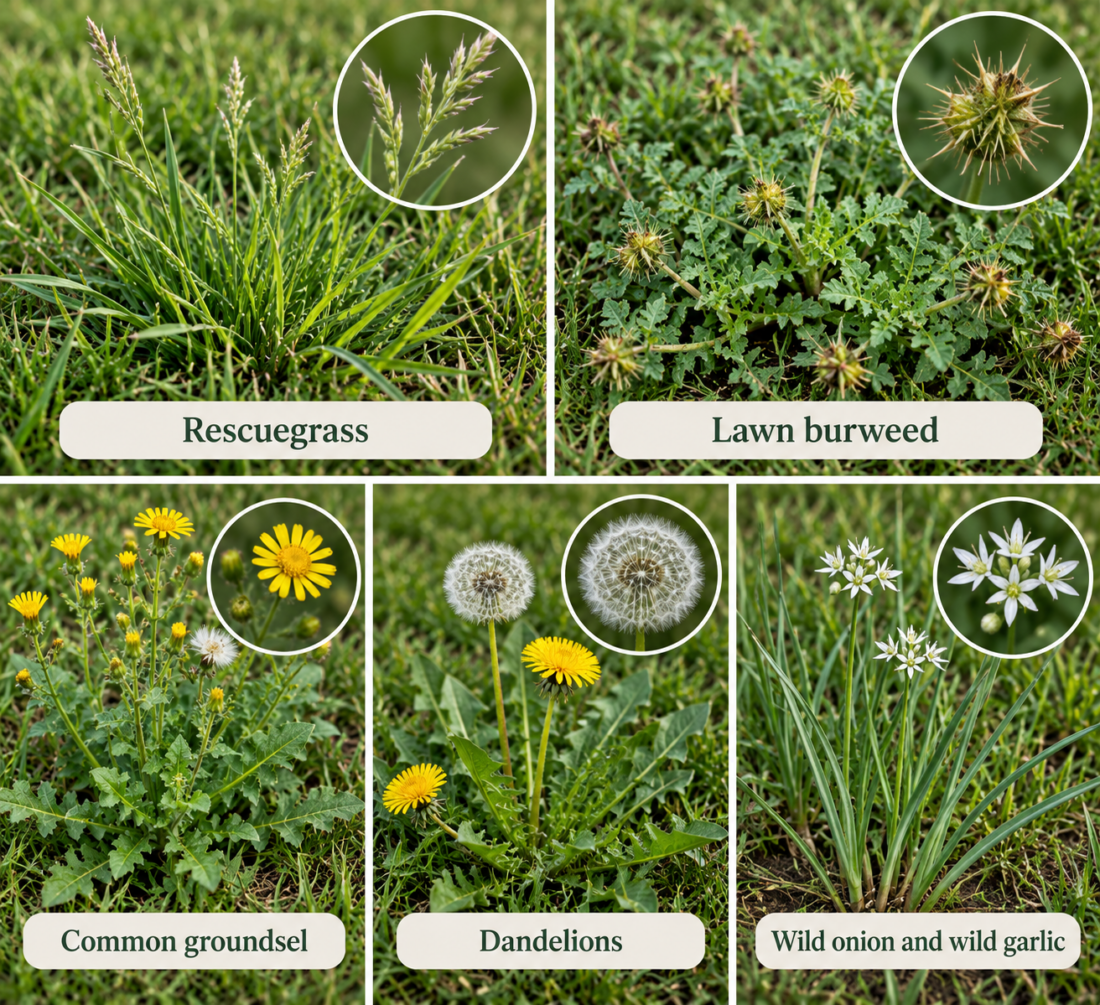
Common winter lawn weeds in North Texas include:
-
Henbit
-
Common chickweed
-
Annual bluegrass
-
Clover
-
Rescuegrass
-
Lawn burweed
-
Common groundsel
-
Dandelions
-
Wild onion and wild garlic
The best treatment depends on the specific weed, the type of turfgrass in your lawn, and the herbicide being used.
When Should You Use Post-Emergent Winter Weed Control?
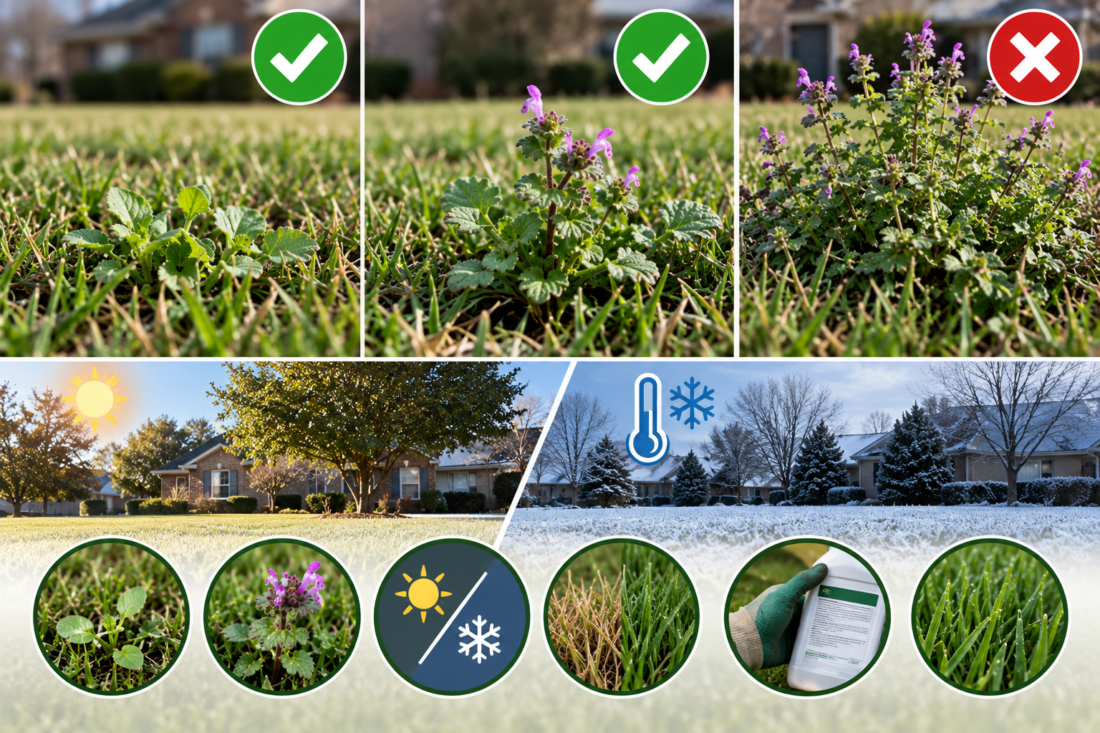
Post-emergent treatments are most useful after winter weeds have emerged but while they are still relatively small and actively growing.
Waiting until weeds become large and well established can make control more difficult. However, winter weather can affect how quickly weeds grow and how effectively a treatment works.
In North Texas, winter weed control can be complicated by fluctuating temperatures. A lawn may experience warm days followed by freezing temperatures, and these conditions can influence both turfgrass growth and weed activity.
Rather than relying on one specific calendar date, homeowners should consider:
-
Whether the target weed has emerged
-
The size and maturity of the weed
-
Current weather conditions
-
Whether the turfgrass is dormant or actively growing
-
The specific herbicide label
-
The type of grass being treated
Post-Emergent vs. Pre-Emergent Weed Control
Understanding the difference between pre-emergent and post-emergent weed control is important when developing a winter weed-control strategy.
| Type | When It Is Used | Purpose |
|---|---|---|
| Pre-emergent | Before weeds emerge | Prevents targeted weed seeds from germinating |
| Post-emergent | After weeds emerge | Controls weeds that are already growing |
If you can see winter weeds in your lawn, a post-emergent treatment may be appropriate. If you are trying to prevent the next generation of winter weeds, pre-emergent applications may be part of your prevention strategy.
Using both approaches at the right times can provide more comprehensive weed management.
Learn More: Pre-Emergent Herbicides: What They Are and When to Apply
Why Weed Identification Matters
One of the biggest mistakes homeowners can make is treating every weed with the same product.
Different weeds respond differently to herbicides. A product that works well against a broadleaf weed may not control a grassy weed such as annual bluegrass.
Turfgrass tolerance also matters. An herbicide that is appropriate for one type of lawn may cause injury to another.
Before applying a weed-control product, identify:
-
The weed you are trying to control
-
The type of turfgrass in your lawn
-
Whether the product is labeled for that turfgrass
-
The appropriate application rate
-
The recommended weather and application conditions
When you're unsure what is growing in your lawn, professional identification can help prevent an ineffective or damaging treatment. Check out our weed identification guide to find out which weeds are invading your lawn.
How Do Post-Emergent Herbicides Work?
Post-emergent herbicides work in different ways depending on their active ingredients and formulation.
Some products are selective, meaning they are designed to control certain weeds while minimizing damage to desirable turfgrass when used according to the label.
Other products are nonselective and can damage or kill many plants they contact. These products are generally not appropriate for spraying directly over an established lawn unless the product is specifically labeled for that use.
Post-emergent herbicides can also be classified as contact or systemic products.
Contact Herbicides
Contact herbicides damage the portions of the weed that the product contacts. They may work relatively quickly but may not provide the same level of control on weeds that can regenerate from roots or other plant structures.
Systemic Herbicides
Systemic herbicides are absorbed by the plant and move within its tissues. They can be useful for controlling certain weeds more thoroughly because the treatment affects more than the plant surface.
The appropriate product depends on the target weed and the turfgrass being treated.
Common Herbicide Active Ingredients
Different active ingredients are formulated to control different types of weeds.
Some ingredients commonly found in turfgrass herbicides include:
-
2,4-D – commonly used for post-emergent broadleaf weed control
-
Dicamba – used against certain broadleaf weeds
-
Triclopyr – useful against certain broadleaf weeds, including some difficult-to-control species
-
MCPP/MCPA – commonly included in combinations designed to control broadleaf weeds
-
Quinclorac – used against certain grassy and broadleaf weeds, depending on the product
-
Penoxsulam – used in certain turfgrass weed-control products
-
Metsulfuron – used for control of certain broadleaf weeds
-
Carfentrazone – often used for fast-acting control of certain broadleaf weeds
The active ingredient alone does not determine whether a product is appropriate for your lawn. Always check the product label for the specific turfgrass, target weed, application rate, and restrictions.
Can You Apply Weed Killer to a Dormant Lawn?
Whether an herbicide can be applied to a dormant lawn depends on the turfgrass, the product, and environmental conditions.
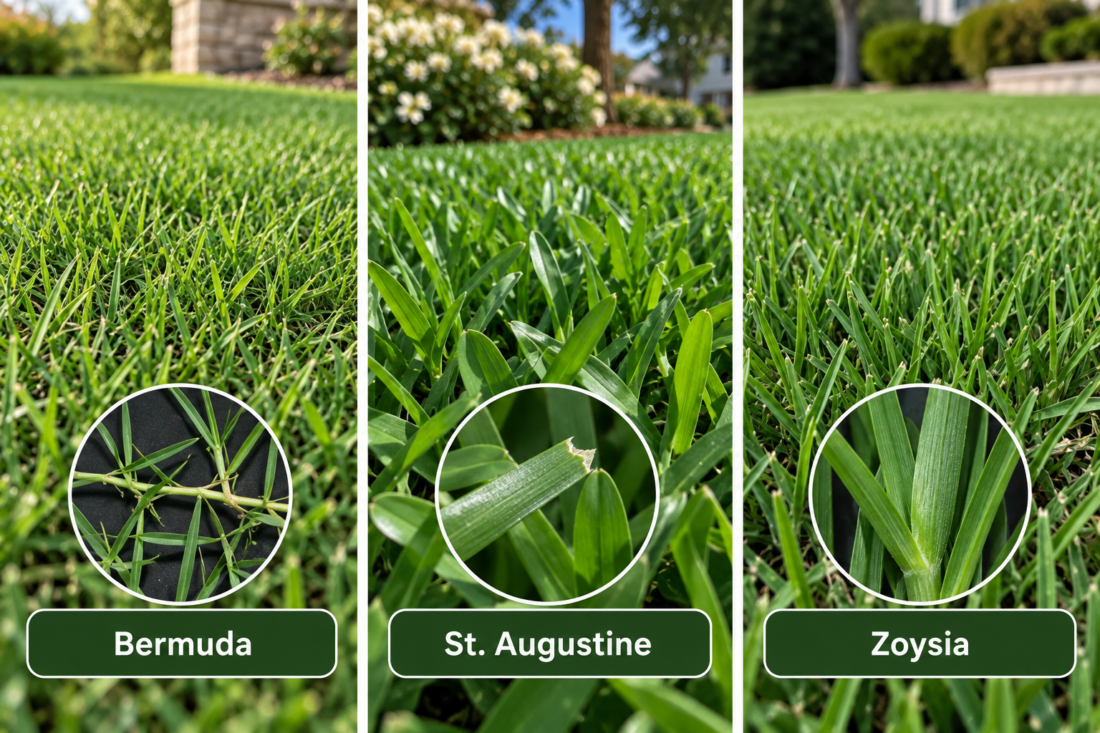
Warm-season grasses such as Bermuda, St. Augustine, and Zoysia naturally slow down or become dormant during cold weather. However, dormant does not automatically mean that every herbicide is safe to apply.
Some turfgrasses are more sensitive to particular herbicides than others. For example, St. Augustinegrass can be sensitive to certain herbicide products.
Always verify that the product is labeled for your specific grass before applying it.
Learn More: What Does a Dormant Lawn Look Like?
Avoid Treating a Stressed Lawn
Weather conditions are another important consideration when applying post-emergent weed control.
Avoid treating turfgrass when it is experiencing significant environmental stress, such as:
-
Extreme heat
-
Severe drought
-
Freezing conditions
-
Excessive moisture
-
Other conditions that may increase the risk of turf injury
Herbicide labels provide specific instructions regarding temperature, rainfall, irrigation, mowing, and other application conditions.
Following those instructions can help improve weed control while reducing the risk of damage to desirable turfgrass.
Why Are Winter Weeds Growing in My Lawn?
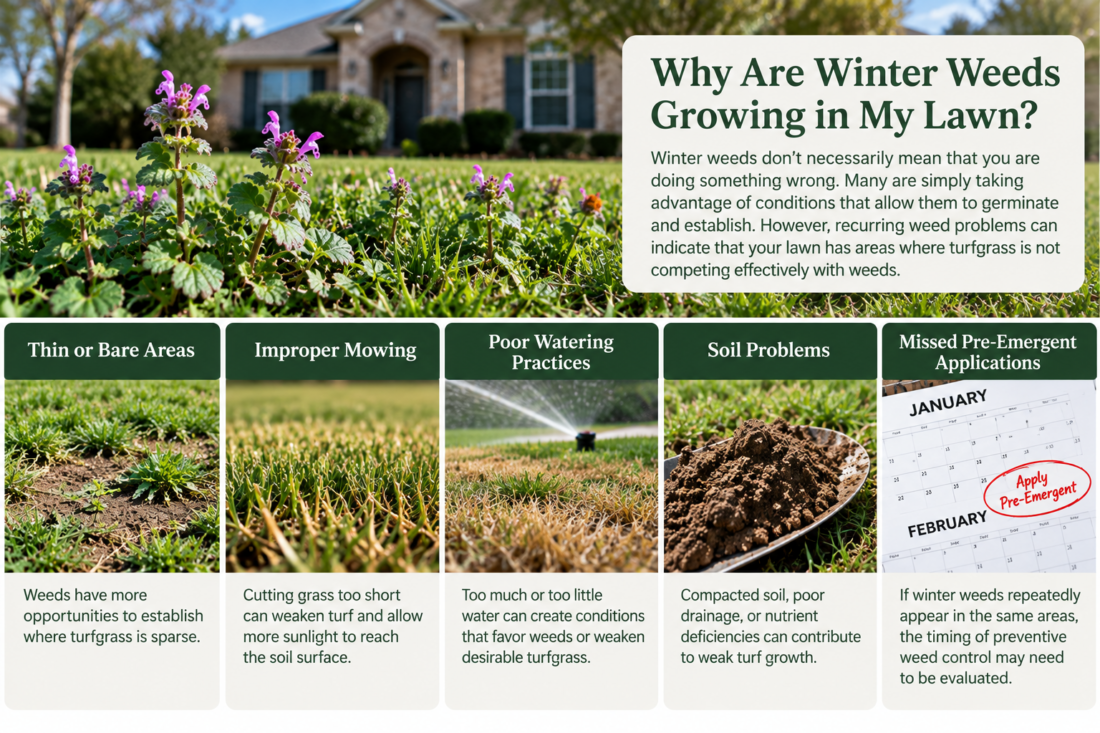
Winter weeds don't necessarily mean that you are doing something wrong. Many are simply taking advantage of conditions that allow them to germinate and establish.
However, recurring weed problems can indicate that your lawn has areas where turfgrass is not competing effectively with weeds.
Common causes include:
Thin or Bare Areas
Weeds have more opportunities to establish where turfgrass is sparse.
Improper Mowing
Cutting grass too short can weaken turf and allow more sunlight to reach the soil surface.
Poor Watering Practices
Too much or too little water can create conditions that favor weeds or weaken desirable turfgrass.
Soil Problems
Compacted soil, poor drainage, or nutrient deficiencies can contribute to weak turf growth.
Missed Pre-Emergent Applications
If winter weeds repeatedly appear in the same areas, the timing of preventive weed control may need to be evaluated.
How to Prevent Winter Weeds
Post-emergent treatments address weeds that are already growing, but prevention is an important part of long-term lawn care.
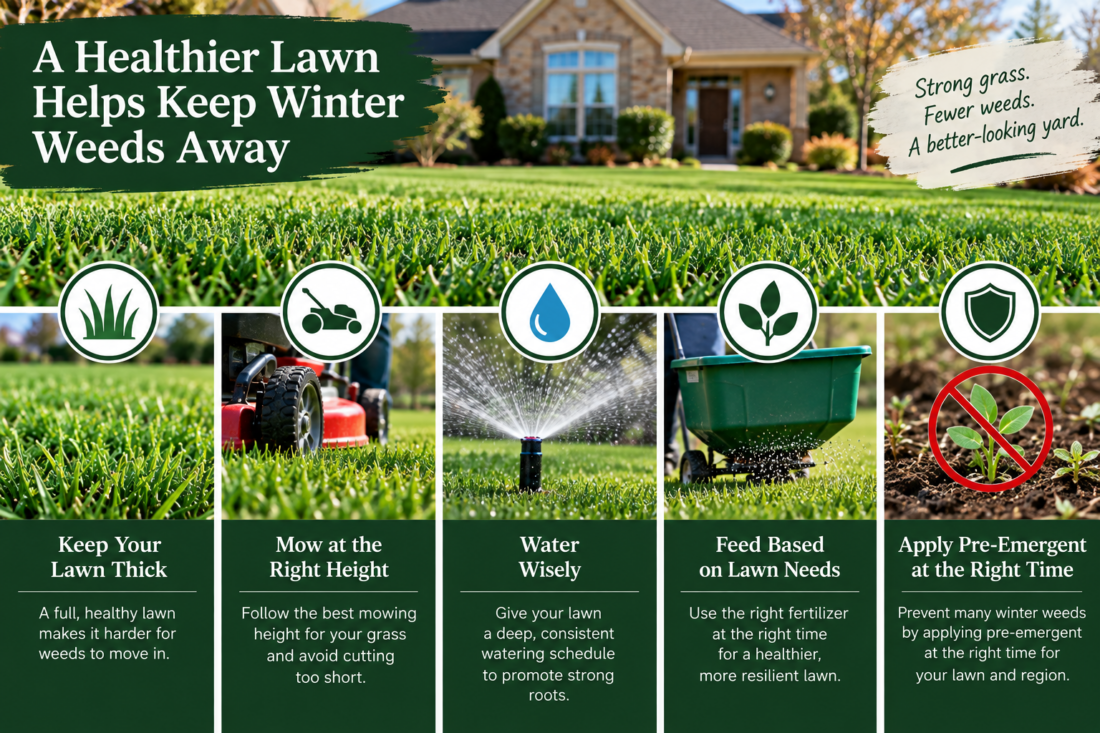
Maintain a Dense Lawn
Healthy, dense turf leaves fewer openings for weed seeds to germinate and establish.
Mow Correctly
Follow the recommended mowing height for your particular grass. Avoid consistently cutting the lawn too short.
Water Properly
Deep, appropriate watering encourages healthier turf roots while reducing conditions that can contribute to weak grass.
Fertilize Appropriately
Fertilizer should be applied according to the needs of the turfgrass and soil. Excessive fertilizer does not necessarily produce a healthier lawn and can create other problems.
Use Pre-Emergent Weed Control
Pre-emergent herbicides can help prevent certain winter weeds before they emerge when applied at the appropriate time.
Pre-emergent applications are most effective when they are properly timed for the weeds being targeted.
What About Hand-Pulling Winter Weeds?
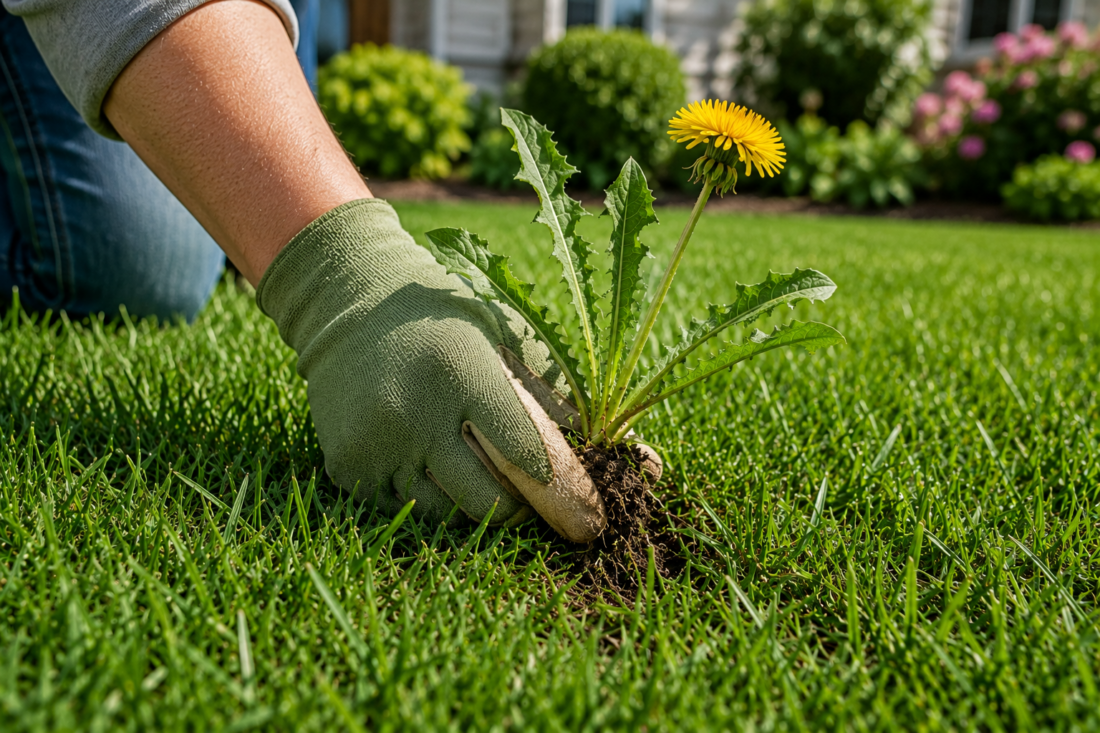
For a few isolated weeds, hand-pulling can be an effective option.
This may make sense when:
-
There are only a handful of weeds
-
The weeds are easy to remove
-
You want to avoid herbicide use
-
The weeds can be removed without disturbing surrounding turf
However, hand-pulling becomes much less practical when weeds are widespread across an entire lawn.
It is also important to remove weeds carefully enough to avoid leaving portions of the root system behind when the species can regrow from remaining plant material.
Responsible Herbicide Use
If you apply an herbicide yourself, always read and follow the product label.
Important considerations include:
-
Identify the weed before treating it.
-
Confirm that the product is labeled for your turfgrass.
-
Use the recommended application rate.
-
Calibrate your sprayer or spreader when necessary.
-
Avoid spraying in windy conditions that could cause drift.
-
Keep herbicides away from desirable plants.
-
Follow label instructions regarding rainfall and irrigation.
-
Wear the personal protective equipment specified on the label.
-
Store products safely and according to label directions.
More herbicide is not necessarily better. Applying too much can increase the risk of turf injury and environmental problems without improving weed control.
An Integrated Approach to Winter Weed Control
The most effective lawn weed-control programs don't rely on a single treatment.
Instead, they combine several practices to create conditions that favor healthy turfgrass over weeds.
This approach is often referred to as integrated pest management (IPM).
For a North Texas lawn, an integrated weed-control strategy may include:
-
Identifying weeds correctly
-
Maintaining healthy turf
-
Mowing at the proper height
-
Watering appropriately
-
Addressing soil or drainage problems
-
Applying pre-emergent at the appropriate time
-
Using post-emergent treatment when weeds emerge
-
Monitoring the lawn throughout the year
This combination can help address existing weeds while reducing the conditions that allow new weeds to become established.
Winter Weed Control for North Texas Lawns
North Texas lawns can face a wide range of winter weeds because our weather can shift dramatically throughout the season. Warm temperatures can encourage weed growth, while cold weather slows warm-season turfgrass.
That makes winter weed control a matter of timing, identification, and turfgrass-specific treatment.
If you already see henbit, chickweed, clover, annual bluegrass, lawn burweed, or another winter weed growing in your lawn, post-emergent treatment may be appropriate.
If weeds have not emerged yet, preventive measures such as properly timed pre-emergent applications may be more effective.
The key is to treat the problem based on the weed and the condition of the lawn rather than applying the same treatment to every lawn at the same time.
Let Ryno Lawn Care Help With Winter Weed Control
Winter weeds can be frustrating, especially when they begin appearing throughout an otherwise healthy lawn. Proper identification and treatment can help keep weeds from taking over while protecting your existing turfgrass.
Ryno Lawn Care provides professional weed control and lawn care services throughout North Texas. Our lawn care professionals can identify common lawn weeds and develop a treatment approach based on your grass type, lawn conditions, and the weeds present.
Don't wait for winter weeds to take over your lawn. Contact Ryno Lawn Care to learn more about professional weed control in North Texas.

T. Stafford
Writing about gardening, lawn care, etc. to share what I've learned with others. I've lived in Texas my whole life, so I'm more familiar with this region's native plants.