

Chrysanthemums, commonly called mums, are a favorite fall flower for adding bright color to porches, flower beds, and front-yard landscapes. Their cheerful blooms in shades of yellow, red, orange, purple, and white make them a seasonal favorite for North Texas homeowners.
But how do you keep mums looking beautiful in fall and help them survive the winter? The answer depends on the type of mum you have, whether it’s planted in the ground or a container, and how cold the weather gets.
With the right sunlight, watering, soil, and winter protection, you can enjoy your mums longer and give hardy garden varieties a better chance of returning next year.

How to Care for Mums in Fall and Winter
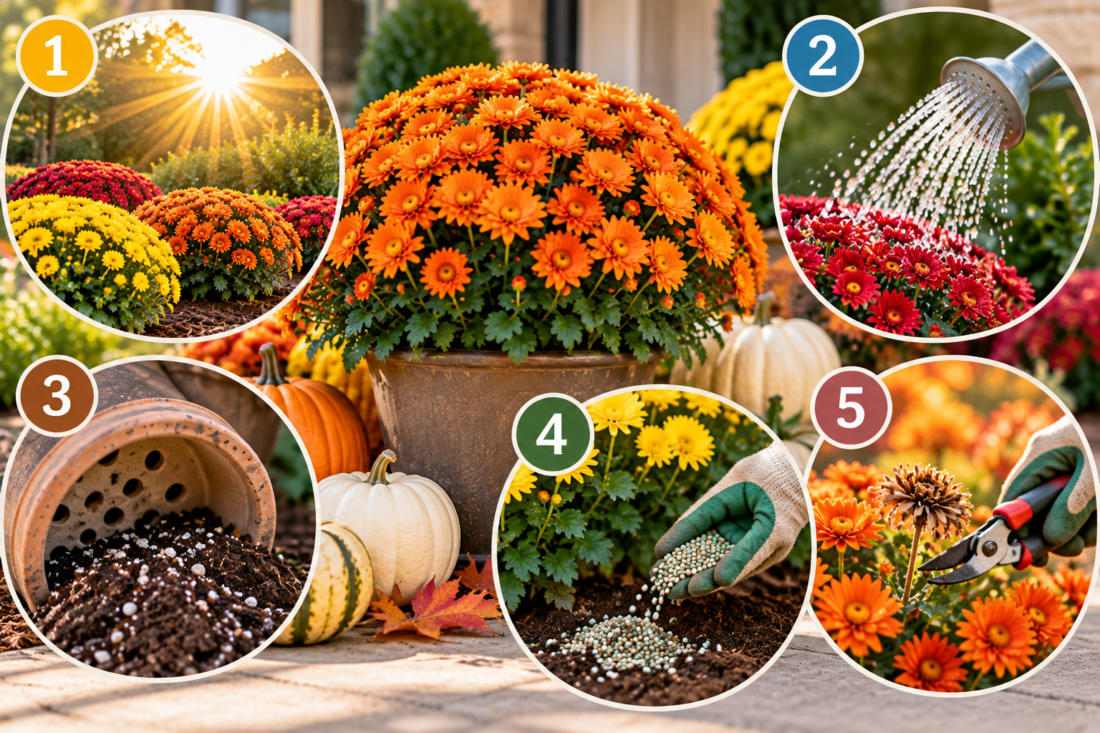
Mums need plenty of sunlight, well-drained soil, and consistent moisture while they’re actively growing. As temperatures drop, their care routine should change to help protect their roots from cold weather.
Here are the essentials:
-
Sunlight: Choose a location that receives at least six hours of direct sunlight daily.
-
Watering: Water when the soil begins to dry, keeping it moist but not waterlogged.
-
Drainage: Use well-drained soil and containers with drainage holes to help prevent root rot.
-
Winter protection: Protect potted mums from hard freezes and add mulch around in-ground plants.
-
Pruning: Leave the stems of hardy garden mums in place through winter and prune them in spring.
Before choosing a care routine, it helps to understand which type of mum you have.

Florist Mums vs. Hardy Garden Mums: What's the Difference?
Although florist mums and hardy garden mums look similar, they serve different purposes in the home and landscape.
Florist or Cutting Mums
Florist mums, sometimes called cutting mums, are grown primarily for their decorative flowers. They often have large, showy blooms and long stems that work well in bouquets and floral arrangements.
Florist mums are frequently grown in greenhouses, where growers can control temperature, light, and other growing conditions. They’re also commonly sold as potted plants during the fall season.
These mums are generally treated as seasonal decorations rather than long-term landscape plants. After flowering, they may be composted if they’re no longer healthy or useful.
Hardy or Garden Mums
Hardy mums, also known as garden mums, are the better choice for homeowners who want to add seasonal color to flower beds and landscapes. They come in a wide range of colors and bloom shapes, with flowers that typically appear in late summer and fall.
With suitable growing conditions and winter protection, hardy mums can return in future growing seasons. However, their ability to survive winter depends on the variety, planting conditions, and local weather.
Garden mums are available in nursery pots and decorative containers, making them a versatile choice for entryways, patios, and garden beds.
Looking for more ways to refresh your landscape? Explore these front yard makeover ideas.

Are Mums Annuals or Perennials?
Hardy garden mums are perennials, while florist mums are often grown and enjoyed as seasonal annuals.
Perennial mums can return year after year when they’re planted in suitable conditions and survive the winter. However, a mum purchased in full bloom during fall may not have enough time to establish strong roots before freezing weather arrives.
If you want mums to return next year, choose a hardy garden variety, plant it early enough to establish roots, and provide appropriate winter care.
How to Care for Mums in Fall
Fall is when mums put on their colorful display, so proper care helps keep the flowers looking their best.
1. Give Mums Plenty of Sunlight
Mums generally need at least six hours of direct sunlight per day to grow and flower well. Choose a sunny spot in your yard, flower bed, or patio.
If your mums are in containers, you can move them to a sunnier location when needed. Avoid placing them in areas where nearby structures or trees block most of the daylight.
2. Water Mums Properly
Mums need regular moisture, especially while they’re flowering. Check the soil frequently and water when the top layer begins to dry.
Water deeply enough to moisten the root zone, allowing excess water to drain away. Avoid keeping the soil constantly soggy, because overly wet roots can develop problems.
Container-grown mums may dry out faster than plants growing in the ground, so check their moisture levels more frequently during warm, dry North Texas weather.
3. Use Well-Drained Soil
Good drainage is essential for healthy mums. Soil that stays waterlogged can damage roots, particularly during cool weather when plants use less water.
If your garden soil drains poorly, consider improving the planting area with suitable organic matter or growing mums in containers with drainage holes.
4. Fertilize at the Right Time
Mums benefit from adequate nutrients while they’re actively growing. However, established plants that are already blooming in fall generally don’t need frequent fertilizing to maintain their flowers.
Follow the fertilizer label and the needs of your particular plant. Avoid pushing tender new growth late in the season, when freezing temperatures may be approaching.
5. Remove Spent Flowers
As individual flowers fade, you can remove them to keep your mums looking tidy. Also, remove damaged or diseased plant material as needed.
For hardy garden mums, wait until spring to cut back the main stems if you want to give the plants additional winter protection.
How to Protect Mums in Winter
North Texas winters can bring mild stretches followed by sudden freezes. Protecting mums from temperature swings is especially important for plants growing in containers, where roots are more exposed to cold.
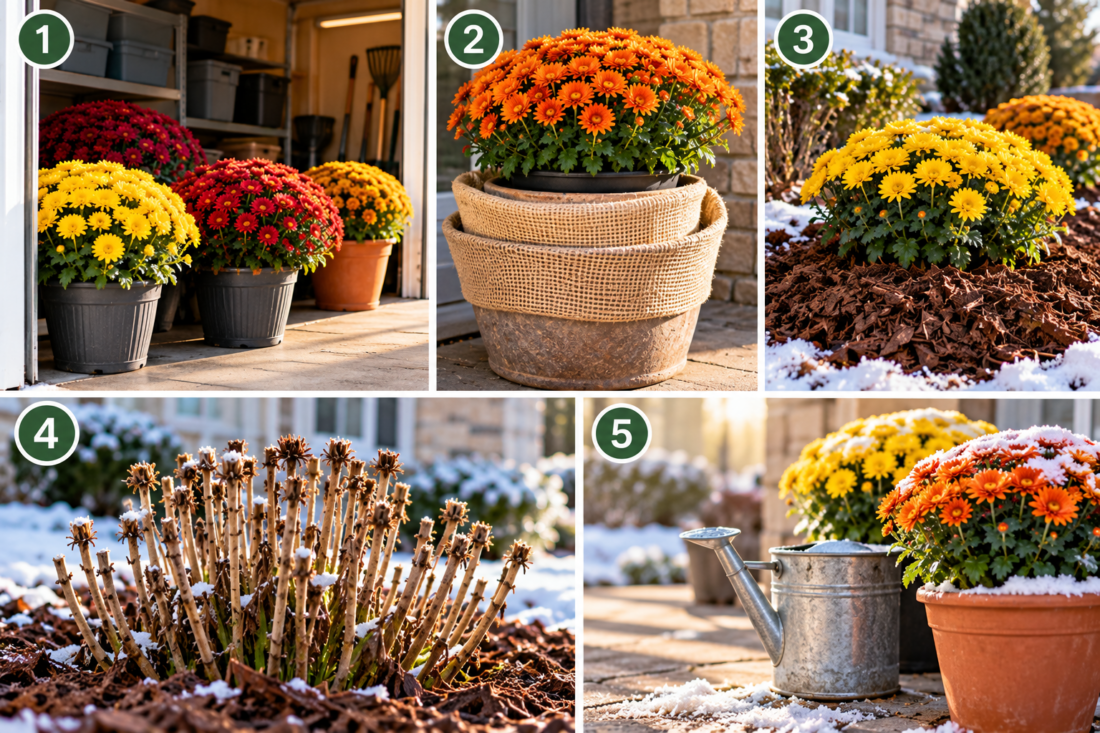
1. Protect Potted Mums From Freezing Weather
Container-grown mums are more vulnerable to cold because their roots aren’t insulated by the surrounding ground.
When a hard freeze is forecast, move potted mums to a sheltered location, such as an unheated garage or shed, if practical. You can also group containers together in a protected area to help shield them from wind and temperature extremes.
Avoid relying on a single temperature threshold for every variety. Cold tolerance varies, so check the plant label and protect tender or newly purchased mums when freezing weather threatens.
2. Insulate Outdoor Containers
If you can’t move your mums indoors, help protect their roots by placing containers in a sheltered location and insulating the pots. You can set a smaller pot inside a larger container and fill the space between them with insulating material.
Make sure drainage remains unobstructed. Containers that trap water around the roots can create additional problems during cold weather.
3. Add Mulch Around In-Ground Mums
A layer of mulch can help insulate the soil around hardy mums and reduce temperature fluctuations. Apply mulch around the base of the plants before freezing weather arrives, without piling it tightly against the stems.
If your landscape needs fresh mulch for the colder months, learn more about Ryno Lawn Care's mulch installation services.
4. Leave Hardy Mum Stems in Place
It may be tempting to cut back mums after their flowers fade, but leaving the stems in place through winter can help protect the plant.
Wait until spring to prune hardy garden mums. Once the risk of severe cold has passed and new growth begins to appear, cut back the old stems as needed.
5. Reduce Watering During Winter
Mums typically need less water during cold weather because their growth slows. Check the soil before watering, and avoid adding water when the soil is already wet or frozen.
Container-grown plants still need occasional moisture during dry periods, so don’t assume they can go all winter without water. Adjust watering to the weather and the condition of the soil.
What Do All Mums Need to Thrive?
Whether you grow mums in containers or garden beds, a few basic care practices make a big difference:
-
Full sun: Aim for at least six hours of direct sunlight daily.
-
Well-drained soil: Prevent water from collecting around the roots.
-
Consistent moisture: Water when needed without leaving the soil soggy.
-
Suitable varieties: Choose hardy garden mums if you want plants that may return in future years.
-
Seasonal maintenance: Remove faded flowers and damaged foliage, and prune hardy mums in spring.
If you purchase mums from a garden center, inspect the roots before repotting. If the plant is tightly root-bound, gently loosen the outer roots and move it into a suitable container with fresh potting mix and drainage holes. Water thoroughly after repotting, then allow excess water to drain.
For more seasonal container gardening advice, read our guide to keeping outdoor potted plants alive in winter.
When Is the Best Time to Plant Mums?
Late summer is often a good time to plant hardy garden mums, giving them time to establish roots before winter. Early fall planting may also work, but plants installed closer to the first freeze have less time to become established.
In North Texas, consider local temperature patterns and the variety you choose. Planting earlier generally gives hardy mums a better opportunity to settle into their new location before cold weather arrives.
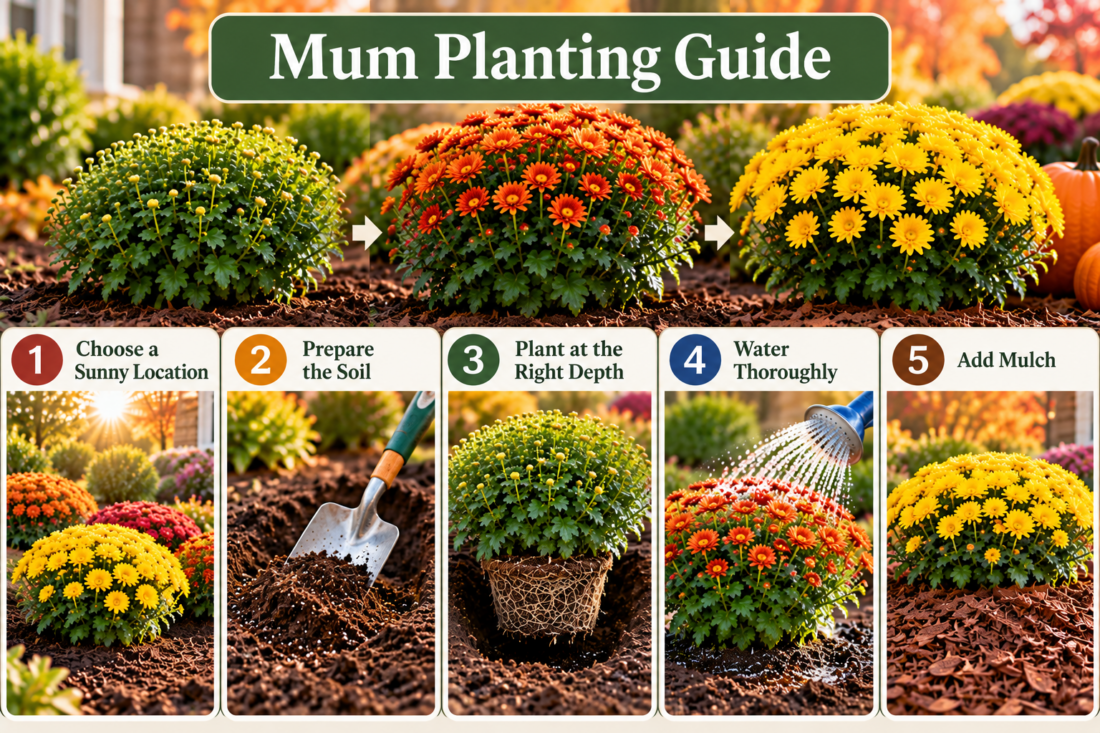
When planting mums in the ground:
-
Choose a sunny location with good drainage.
-
Prepare the soil so excess water can drain away.
-
Plant at the appropriate depth for the root ball.
-
Water thoroughly after planting.
-
Apply mulch around the plant to help retain soil moisture and moderate temperature changes.
Mums purchased in full bloom during fall can still provide beautiful seasonal color, even if they don’t survive long-term in the landscape.
Add Seasonal Color With Professional Landscaping
Mums are an easy way to brighten up your front porch, entryway, or garden beds during fall. Pair them with ornamental grasses, seasonal foliage, pumpkins, or other plants suited to North Texas conditions for a welcoming seasonal display.
If your flower beds need a refresh, Ryno Lawn Care offers landscaping services that include seasonal planting and flower bed maintenance. Explore our landscaping services to learn more about options for your outdoor space.

Frequently Asked Questions About Caring for Mums
Can mums survive winter in North Texas?
Hardy garden mums may survive North Texas winters when planted in suitable locations and given appropriate care. However, sudden hard freezes, poor drainage, and insufficient root establishment can affect their survival.
Should I cut back mums before winter?
For hardy garden mums, it’s generally best to leave the stems in place through winter and prune them in spring. You can remove individual faded flowers and damaged plant material as needed.
How often should I water mums in fall?
Water when the soil begins to dry rather than following a rigid schedule. Mums in containers may need more frequent checks than those planted in the ground, especially during warm, dry weather.
Do mums need to be covered during a freeze?
Potted mums are particularly vulnerable to freezing temperatures and may benefit from being moved to a sheltered location. Hardy mums planted in the ground may benefit from mulch around their roots. The level of protection needed depends on the variety and forecast conditions.
Will mums come back every year?
Hardy garden mums can return as perennials if they survive winter and have suitable growing conditions. Florist mums and other tender varieties are more commonly treated as seasonal plants.
Enjoy a Colorful Fall Landscape
With plenty of sunlight, well-drained soil, appropriate watering, and a little winter preparation, mums can bring vibrant color to your landscape throughout fall. Choosing hardy garden varieties and planting them early enough to establish roots can also improve their chances of returning in future seasons.
For help refreshing your flower beds or preparing your landscape for cooler weather, go to our landscaping service page and explore our landscaping services.

Michelle Valdivia
Michelle brings expertise in educational communication to lawn care content creation. She holds degrees in Human Development and Family Studies and Education. Over four years, she has created professional web content for landscaping and lawn care businesses, collaborating with experienced lawn care teams to ensure each blog post is rooted in real-world expertise.